
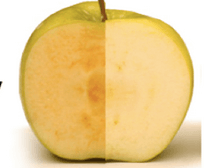
Genetically modified Arctic apples from Okanagan Specialty Fruits in British Columbia, Canada, are awaiting deregulation by the USDA’s Animal and Plant Health Inspection Service, which has completed its review process, -including -public comment periods.
GMO crops are controversial and have spurred debate.
The debaters include apple marketers who, while not sharing concerns about the safety of genetically modified crops, fear the pristine image of apples could be tarnished and the mere presence of GMO apples could cause consumer backlash and cause consumption of all apples to fall.
Opponents of GMOs pose many objections. For example, they do not believe organic crops can share the environment with GMO crops, since GMO traits could contaminate non-GMO crops through cross-pollination in the field.
But one basic concern is potentially insurmountable: The process by which GMO crops are “deregulated,” basically cleared-for-market, doesn’t address the key issues. They have asked the Food and Drug Administration to change the way it regulates GMO crops.
In 1992, the FDA declared that genetically modified crops are “substantially equivalent,” meaning they are not materially different from crops produced by ordinary breeding processes, the Federation of American Scientists explains. Unless there are special circumstances, GMO crops are designated as “Generally Recognized as Safe” under the Federal Food, Drug, and Cosmetic Act and do not require premarket approval. They do not need to be labeled or otherwise treated as different.




GMO opponents don’t buy that.
Read full original article: GMO debate rages