General Mills buys Annie’s, GMO opponents go berserk

Annies Homegrown Logo

The news broke a week ago: General Mills will buy Annie’s Homegrown for $820 million. This is no big deal, figuratively speaking. Yes it’s a close to billion dollar deal, but companies get bought and sold all the time.

If you’re unfamiliar with Annie’s Homegrown, it makes “all-natural,” “healthy,” organic, GMO-free packaged foods like pastas, cookies, crackers and frozen meals. They’re considerably pricier than their counterparts, and marketed to parents that buy into an all-natural lifestyle. Fair enough. I certainly won’t pay a premium for boxed foods purporting to be “healthier” than other boxed foods, but I certainly don’t knock a business for capitalizing on a demographic that will.

I should have been surprised (but wasn’t) over the raving commotion on social media about Annie’s selling out to a supposedly uncaring, pro-GMO conglomerate. I can’t possibly include all of the hubbub in this post, but here’s a representative Facebook thread.

I broadly categorized much of the backlash after perusing the uproar. I can only broadly categorize because the sheer volume of hostile comments is astounding. I’ll discuss a typical comment from each category. I’m not going to post the screen caps, but feel free to pore over the Annie’s Facebook page, you’ll see them.

  • Buying “all-natural,’ organic food is part of my carefully crafted image

“Sadly, you are missing the bigger picture. We purchased your products as a way to show the world we were anti-GMO…Even if you want to stay true to your mission, you no longer have that control. You gave that up, along with your consumers that chose you over General Mills.”

Of course, nobody openly admits s/he buys certain products to sustain a high-end image. Still, the above demonstrates how important it is for some people to “show the world” their stance. Clearly, for some people it’s not only important to choose so-called healthy foods, but to show that they are connoisseurs of elite brands.

  • GMOs are bad

“GM DOES support GMO harmful ingredients in their foods.”

“I will not support ANY organic food company which is owned by a large corporation intent on killing GMO labeling and killing us with all of the additives in what they have the nerve to call food. Luckily for me, I have a Whole Foods near by and their Mac n Cheese and kid snacks are just as tasty as Annie’s and they have pledged to keep GMOs out of their stores.”

Here we go again with the “GMOs are dangerous” theme. I thought the public was starting to see the light, but apparently Annie’s most outspoken fans still haven’t. I’ll say it again: GMOs are inherently harmless. Here is one of my posts on why GM tech is safe. I also encourage everyone to check out this resource on GENERA (GENetic Engineering Risk Atlas), demonstrating that a whopping half of all research showing the safety of genetic engineering is independently conducted and not industry-funded.

  • General Mills is against GMO labeling, and is therefore evil

“They use their money to try to stop GMO labeling at every opportunity and that is in direct opposition with my beliefs. Sorry Annie’s, I’m gone.”

Ah, the old label GMOs argument. The Annie’s Facebook page comments were saturated with the “label GMOs, let the consumer decide” refrain. In my opinion (a rather conventional opinion in the pro-GM camp), labeling GMOs would prove problematic at best. Genetic modification of food is necessary to sustain and nourish the world’s population with the resources at hand. At worst, mandatory GMO labeling will hinder or halt the GMO technology needed to achieve these goals. As anti-GMO advocate and hawker of pricey organic products Dr. Mercola has stated,

“I believe GM foods must be banned entirely, but labeling is the most efficient way to achieve this. Since 85 percent of the public will refuse to buy foods they know to be genetically modified, this will effectively eliminate them from the market.”

Far from supporting consumers’ so-called right to know, pro-labeling advocates hope to play on stigma of GMOs and effectively prey on the scientifically illiterate subset of the American public to wipe out demand.


Annies Trash
More than one person has commented about disposing of unopened Annie’s products. People are actually trashing perfectly good food to make a point. Need I say more?
  • Annie’s is selling out

“It’s really sad to see your company ended up folding to money and greed. 25 years of higher standards and caring about others health all gone for the old mighty dollar. Yet another customer lost here. I can’t, for my health and the health of my family, ever purchase from General Mills.”


“We will NO longer purchase your products BECAUSE you SOLD OUT! We will be letting our friends and family of the awful choice to partner with General Mills”

Wait, am I to believe that for-profit companies conduct business to…wait for it…maximize profit?! The nerve.

The selling out themed comments are the most ubiquitous on the page as of the writing of this post. I hate to break it to you, but most pro-organic, anti-GMO companies like Annie’s are in it for profit. They know that a subset of consumers will pay an unnecessary premium for organic, non-GMO food that is no more nutritious and no safer than its non-organic counterparts. Companies like Annie’s and Whole Foods capitalize on the “natural is better” mentality to the tune of tens of billions of pure, unadulterated organic bucks per year.

Stay calm folks. If what you care about is elite image, you can go on believing that whichever organic, all-natural brand you choose next is inherently better than Kraft Mac and Cheese or Teddy Grahams.

The bottom line is, people will always fleetingly protest over a company “selling out” until it’s yesterday’s news. It’s no big deal. In all likelihood, Annie’s deal to be purchased by General Mills for close to a billion dollars will pan out, and they’ll probably thrive. The loudest protesters are undoubtedly merely a sliver of Annie’s customer base. They’ll continue marketing to the same “all natural” demographic, GMOs will remain inherently safe, and the world will keep on turning.

This post originally appeared at Grounded Parents.

Kavin Senapathy is a contributor at Genetic Literacy Project and other sites. She works for a genomics/bioinformatics R&D in Madison, WI. She is not a scientist, but loves all things genetics, genomics, and bioinformatics. Her interests span the human and agricultural realms. Opinions expressed are her own and do not reflect her employer. Follow Kavin on twitter @ksenapathy and Google +

Costa Rican activists demand right to know GM field locations

On September 11, 2014, the Sala IV declared the country’s approval process for GMO projects unconstitutional because it violates the right of Costa Ricans to access information that could affect their health and well-being.

The case was brought to the court by the Ombudsman’s Office on behalf of several anti-GMO groups including Bloque Verde.

The ruling does not ban GMOs in the country, but will require the Agriculture and Livestock Ministry to design a more transparent GMO approval process, and release information that has been kept from the public in the past.

The Ombudsman’s Office also argued that because the GMO approval process does not require an environmental impact assessment it violates the constitutional right to a safe and healthy environment, but the court disagreed.

“For us this is a great triumph,” Fabián Pacheco, the leader of Bloque Verde, told The Tico Times. “What we want now is to know exactly where each GMO crop is planted.”

The Agriculture and Livestock Ministry has yet to declare how this ruling will affect GMO projects that were previously approved, including a request from biotechnology giant Monsanto to grow 35 hectares of genetically modified corn that was approved last January. There are currently no GMO corn projects in Costa Rica, and the request’s approval set off a firestorm of protests from environmentalists and health advocates. Because corn pollinates using the air, GMO opponents worry that Monsanto corn seeds could mix with and eventually wipe out native corn species.

Read the full, original story here: Following court ruling, anti-GMO activists ask for map of transgenic farms

Do cancers act as a DNA time machine?

bpldna

Why has cancer proven so resistant to cures, why is it so widespread, and why has the War on Cancer gained such precious little ground?

One argument is that we’re looking at cancer all wrong. Rather than a motley collection of cells gone berserk, they might better be seen as “atavisms” evolutionary throwbacks to the dawn of multicellular life, when single cells began cooperating and forming rudimentary aggregations.

Basically: early life was akin to tumors, and cancer is just what happens when some switch gets flipped and the cells of body “revert” to this tumor-state. This idea was first formally proposed by physicists Paul Davies and Charles Lineweaver in 2011 in a paper in Physical Science, and Davies has been advocating it in numerous articles, arguing that cancer can only be properly understood as an evolutionary time-machine.

This idea has drawn ire from mainstream evolutionary biologists, and igniting a spate of highly critical responses. Chief among the critics is PZ Myers, author of the Pharyngula blog, who challenged the idea that cancers are evolutionary throwbacks. He called the idea “embarrassing” for its fundamental misunderstandings of modern biology.

In particular, “peculiar notions about molecular biology that allow them to imagine whole invisible networks of primeval genes lurking as atavisms beneath the polished exteriors of urbane and civilized modern cells.” There is no “layer” of primordial genes somehow hidden from the forces of evolution, yearning to be set free as tumors.

Additional Resources:

How will religious authorities deal with lab-grown meat?

In Genesis, God granted humans dominion over animals. In modern times, that dominion has spawned one of the planet’s biggest threats: a livestock industry that spews greenhouse gases, guzzles resources, and renders the lives of billions of animals brutish and short.

Last August, vexed by the problem, a Dutch physiologist named Mark Post came up with a solution: a burger no cow had to die for. He called it the “test-tube burger.”

The result is “biochemically indistinguishable” from cow flesh, he says. “The only difference is we didn’t have to slaughter the cow.”

For rabbis, the first question is: Is it kosher? Certainly, there are many Jewish legal hurdles test-tube meat would have to clear before a definitive answer could be reached. Some, such as Rabbi Carl Feit, chair of the biology department at Yeshiva University, say cultured meat could still be kosher even if the donor animal isn’t.

Feit points to the Jewish legal principle of nullification, which states that a trace amount of a forbidden substance can be fully absorbed into an acceptable one without rendering the second treif, or forbidden.

Judaism is not the only religion grappling with the ramifications of test-tube meat. Playing God may also be a concern for some Muslims, for whom fitra, or God-given naturalness, is a primary value, says Ebrahim Moosa, a professor of Islamic studies at the University of Notre Dame.

On the other hand, since the purpose of test-tube meat is to preserve the environment—by preventing environmental degradation and allowing more animals to live—it could also be seen as supporting the mandate of naturalness, Moosa says.

From a Hindu perspective, using an animal’s cells to make meat constitutes an example of human arrogance, says Shaunaka Rishi Das, a Hindu priest and director of the Oxford Centre for Hindu Studies. Rishi Das explains that Hindus—most of whom abstain from meat—do not subscribe to the Western principle of dominion over nonhuman beings. Even if the animal is not killed, he says, humans are still asserting that its cells are theirs to use.

Read the full, original article:  Would lab-grown meat ever be kosher?

Anti-GMOers accused of ‘fear mongering’ as fight over Maui GMO bill ramps up

mexico gmo meme

There’s only a few weeks more until the vote in Maui County to place a “moratorium” on the biotech crops.

So it shouldn’t be surprising that activists are going strong with the fear mongering. Here’s the latest scare image that passing around again to spook parents to buy into the ideology.

mexico-gmo meme

However, when you do a bit of searching on this image you’ll see a completely different story of the source. The actual source of the image comes from a well-known anti-GMO website. The story is completely different from the one being told by the poster.  It has NOTHING to do with GMO corn fields!

It’s clear that this is fear mongering at best when you dig further for the truth!

Read the full, original article: Succumbing to Fear: The Mexican limbless baby born near GMO crops

Ugandan committee questions safety of biotech bill

Considering GMOs to be dangerous, a report generated from consultations by the committee on science and technology has cautioned government and parliament against rushing to pass the National Biotechnology and Biosafety Bill.

These consultations were done last month and the committee has written a report which outlines the various concerns from the stakeholders.

Briefing New Vision about the content of the report over the weekend, the committee chairman Anthony Ssemuli said, “We have a very big challenge because even scientists disagree on this bill. The bill is highly technical. We have to go slow and make more consultations and research. There is no reason to rush this bill.”

Going by the contradicting views from various stakeholders including disagreements among scientists, Parliament will have an uphill task in refining the National Biotechnology and Biosafety Bill to especially safeguard the interests of Uganda against the interests of multinational seed giants like Monsanto.

Considering that there are already GMO products in the market coupled with so many unregulated field trials for GMOs, Ssemuli said there is need for a law to regulate the use of GMOs.

Read the full, original story: Report cautions parliament on GMO bill

Conventional plant breeding outpaces GM technology for drought tolerance

goodcorn

Old-fashioned breeding techniques seem to be leading genetic modification in a race to develop crops that can withstand drought and poor soils.

The need for tougher crops is especially acute in Africa, where drought can reduce maize (corn) yields by up to 25 percent. The Drought Tolerant Maize for Africa project, which launched in 2006 with U.S. $33 million, has developed 153 new varieties to improve yields in 13 countries. In field trials, these varieties match or exceed the yields from commercial seeds under good rainfall conditions, and yield up to 30 percent more under drought conditions.

An analysis published earlier this year reported that by the project’s end in 2016, the extra yields from drought-tolerant maize could help to reduce the number of people living in poverty in the 13 countries by up to 9 percent (R. La Rovere et al. J. Dev. Areas 48(1), 199–225; 2014). In Zimbabwe alone, that effect would reach more than half a million people.

Breeders from the International Maize and Wheat Improvement Center (CIMMYT) and the International Institute for Tropical Agriculture in Ibadan, Nigeria, searched the collection for maize varieties that thrive in water-scarce regions. The researchers cross-bred these var­ieties and then mated the most drought-tolerant of their offspring.

Drought tolerance is a complex trait that involves multiple genes. Transgenic techniques, which target one gene at a time, have not been as quick to manipulate it. But CIMMYT and six other research organizations are also developing genetically modified (GM) varieties of drought-resistant maize, in collaboration with agricultural biotechnology giant Monsanto in St Louis, Missouri. Coordinated by the African Agricultural Technology Foundation in Nairobi, the Water Efficient Maize for Africa project aims to have a transgenic variety ready for African farmers by 2016 at the earliest.

Read the full, original article: Cross-bred crops get fit faster

Cervical cancer virus DNA can be detected in urine

Dread going for a smear test? A simple urine test can pick up the human papilloma virus (HPV) that causes cervical cancer. Though it’s not as accurate as sampling viral DNA from the cervix itself, the test might benefit women who are too busy or scared to have a cervical swab taken, or who live in developing countries where the infrastructure for conventional smear tests is less developed.

Traditional cytology-based smear tests involve using a speculum to hold the vagina open, while a small brush is used to collect cells from the cervix, which are then assessed for pre-cancerous changes using a microscope. “The advantage is that if you have an abnormal result, there is a reasonable chance that you have an underlying abnormality,” says Henry Kitchener at the Institute of Cancer Sciences in Manchester, UK, who was not involved in the current study.

More recently, DNA tests have been developed that test for HPV directly – again by taking a sample from the cervix. This is more sensitive than a conventional smear test meaning that those who test negative are very unlikely to develop cervical cancer in the near future. But those who test positive don’t necessarily have cancer – their cervix may be perfectly healthy – so a positive DNA test needs to be followed up with a physical examination.

DNA testing for HPV is being piloted in the UK, and was recently incorporated into US guidelines for cervical cancer screening .

Read the full, original story: Simple urine test detects cervical cancer virus

Love of music likely in our genes

music genes

Are you clueless about why your partner has an innate drive for music while you just cannot understand hip-hop or all that jazz? Blame it on your genes, says IANS.

Research suggests that genes that affect hearing and cognitive function may play roles in one’s musical aptitude – the ability to understand and perceive rhythm, pitch, timbre, tone durations and formal structure in music.

“The results show that genomic approaches can be applied to musical traits, that will, in effect, reveal new biological mechanisms affecting human evolution, brain function and civilisation,” explained Irma Jarvela from the department of medical genetics at the University of Helsinki, Finland.

The authors explained that extremes in musical aptitude (extreme capacity/no capacity) are rare within a population, with the majority of individuals having moderate aptitude.

“This is a typical feature of a complex trait attributable to several underlying genes and it is influenced to varying degrees by environmental factors, such as exposure to music or musical training,” Jarvela added.

Read the full, original story: Genes decide why some people love music

Evolution do-over might lead to the same place

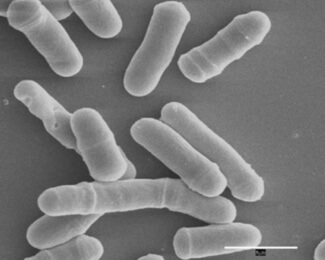
Fission yeast

In the world of science fiction, the ‘what ifs’ of evolution make great plot fodder. Think of Planet of the Apes, where on a planet other than our own primates evolved to be the intelligent masters of their environment while humans remained primitive.

In real life, it’s a bit harder to answer the question. If evolution happened all over again, what would life on Earth be like? Would it still be carbon-based? What organisms would flourish? Would the same organisms even exist?

To test these ideas, Harvard physicist turned biologist Michael Desai uses robots and yeast. He grows hundreds of yeast colonies under different but rigorously controlled conditions, picks out the fastest replicating ones and follows them for hundreds of generations. The different growth environments essentially represent different worlds.

These colonies all naturally start off with a bunch of random, different mutations. Some biologist theorize creates the potential for many different types of yeast colonies at the end of the experiment.

But Desai hasn’t found that. No matter what the initial mutations were in the yeast, they all ended up able to live in very similar conditions, at the same evolutionary endpoint.

This might have profound impacts on how we think about single mutations and the fitness of an organism overall and the fitness of populations of organisms writes Emily Singer at Quanta:

The findings also suggest a disconnect between evolution at the genetic level and at the level of the whole organism. Genetic mutations occur mostly at random, yet the sum of these aimless changes somehow creates a predictable pattern. The distinction could prove valuable, as much genetics research has focused on the impact of mutations in individual genes. For example, researchers often ask how a single mutation might affect a microbe’s tolerance for toxins, or a human’s risk for a disease. But if Desai’s findings hold true in other organisms, they could suggest that it’s equally important to examine how large numbers of individual genetic changes work in concert over time.

Because the study involves only yeast, a one celled organism, we can’t be sure it applies to others. But the idea that life, at least on this planet, would remain largely the same even if we started out all over again has some profound ideological implications.

Meredith Knight is a blogger for Genetic Literacy Project and a freelance science and health writer in Austin, Texas. Follow her @meremereknight.

Additional Resources:

Alzheimer’s, heart disease and other age-related conditions share risk factors and genetics

The two seemingly unrelated conditions may be driven by similar unhealthy states, including high blood pressure and diabetes.

According to the Alzheimer’s Association, the risk factors for the neurodegenerative disease affecting more than 5 million Americans aren’t all in the brain.

A new report highlights the connection between Alzheimer’s and the heart, says Heather Snyder, PhD, director of medical and scientific operations for the Alzheimer’s Association. In the report, blood pressure, diabetes, and smoking are highlighted as risk factors for Alzheimer’s disease and dementia, which strikes women far more than men. There’s also evidence that obesity and physical activity might play a part.

Many people view Alzheimer’s as a disease over which they have no control. But while factors like age and genetics do contribute to its development, the latest data indicate that other factors, which can be modified, may also be important. For example, hypertension in middle age may increase dementia risk, and mid-to-late-life diabetes is also associated with increased risk for all kinds of dementia. Both can be avoided with changes in lifestyle and, if needed, medications.

Read the full, original story: Alzheimer’s disease and Heart disease share risk factors

Random events in human development important for both nature and nuture

Is our behavior determined by genetics, or are we products of our environments? What matters more for the development of living things—internal factors or external ones? Biologists have been hotly debating these questions since shortly after the publication of Darwin’s theory of evolution by natural selection.

Charles Darwin’s half-cousin Francis Galton was the first to try to understand this interplay between “nature and nurture” (a phrase he coined) by studying the development of twins.

But are nature and nurture the whole story? It seems not. Even identical twins brought up in similar environments won’t really be identical. They won’t have the same fingerprints. They’ll have different freckles and moles. Even complex traits such as intelligence and mental illness often vary between identical twins.

Of course, some of this variation is due to environmental factors. Even when identical twins are raised together, there are thousands of tiny differences in their developmental environments, from their position in the uterus to preschool teachers to junior prom dates.

But there is more to the story. There is a third factor, crucial to development and behavior, that biologists overlooked until just the past few decades: random noise.

In recent years, noise has become an extremely popular research topic in biology. Scientists have found that practically every process in cells is inherently, inescapably noisy. This is a consequence of basic chemistry. When molecules move around, they do so randomly. This means that cellular processes that require certain molecules to be in the right place at the right time depend on the whims of how molecules bump around.

Read the full, original story: Life is random

Cutting edge DNA test needed in rape case involving identical twin

The rape suspect, court papers said, was identified by a longtime friend who said they committed the crime together. The suspect’s DNA was tied to the crime. But prosecutors hoping to present an airtight case had a concern: The suspect, Dwayne McNair, has an identical twin, meaning the DNA testing pointed not to one person, but two.

It was a twist worthy of a crime novel, but one that has cropped up from time to time in cases both in the United States and Europe, including an earlier one in Boston. Because monozygotic twins, the scientific name for identical twins, come from a single fertilized egg — the same genetic material — they cannot be distinguished by conventional DNA testing, confounding prosecutors who might otherwise be able to build a solid case.

Prosecutors here are hoping that McNair’s case will be a breakthrough for criminal cases involving identical twins. On Monday, McNair pleaded not guilty to eight counts of aggravated rape and two counts of armed robbery in two separate attacks he is accused of committing in 2004.

To make their case in court, prosecutors want to present evidence from a cutting-edge DNA test, performed by a European company, that they say shows that McNair, and not his twin brother, Dwight, committed the attacks.

“We’ll be the first jurisdiction in the U.S. to bring this evidence forward, if it is acceptable,” said Daniel F. Conley, the Suffolk County district attorney, after McNair was taken into custody on Monday.

Read the full, original story: New DNA test sought in identical twin’s rape case 

Rhino poacher caught through DNA bank

Customs officials spotted the horn in the luggage of a passenger as he passed through Changi Airport, Singapore.

When they opened his luggage they found the horns of eight black rhino, weighing 22kg and valued at about R15-million.

Samples were extracted from the horns and sent to South Africa for DNA analysis. The results revealed just how efficient the poaching network had become. Six days before the seizure one of those horns was on a living rhino in the Kruger National Park.

Kobus de Wet, the chief environmental officer for crime investigations at SANParks, said that the index of thousands of rhino DNA profiles that had been compiled made it possible for the authorities to gain such information.

Read the full, original story: Rhino DNA busts poacher

Grocery Manufacturers Association seeks October hearing to block Vermont GMO labeling bill

Late last week lawyers for the Grocery Manufacturers Association asked a federal judge to shelve the state’s GMO labeling law.

It’s the latest turn in the challenge to Vermont’s first-in-the-nation law, and responds to the Attorney General’s call for the case to be thrown out.

“Our hope is that the court will schedule a hearing for oral arguments sometime in October or November,” said Attorney General Bill Sorrell, D-Vermont.

“What they’ve done is try to pass through this in such a way that it gets resolved sooner rather than later,” said Daniel Richardson, Vermont Bar Association president-elect.

Richardson says both sides benefit from a speedy resolution.

The state could be saved costly legal fees, while the Grocery Manufacturers’ Association could be spared from the court of public opinion.

Read full original article: Fall hearing could determine fate of Vt. GMO labeling law

New CEO of Monsanto India says Bt cotton research to continue

Monsanto, the $15 billion agrochemical multinational, continues to conduct field trials of genetically modified cotton seeds in India, despite a raging controversy in the country over allowing GM crops.

The company will continue to invest in research and development in India and provide solutions to the various needs of the agricultural community, said its newly appointed India chief executive, Shilpa Divekar Nirula.

Some of the critics have gone to court, seeking a ban on the trails. The Genetic Engineering Appraisal Committee, which is responsible for giving clearances for GM trials, hasn’t suggested any ban saying that it was still studying the matter.

Read the full, original article: Monsanto says Bt cotton trials still on in India

GLP’s Jon Entine cautions National Academy of Sciences about views of anti-science NGOs

GMO rice

The National Research Council of the National Academy of Sciences held two days of discussions this week on the controversial issue of crop biotechnology as it collects information for a spring 2016 report. [View two days of presentations and discussions] 

Below are the remarks on September 16 from one of the invitees, Jon Entine of the GLP. [View Jon Entine presentation]

I’m Jon Entine, executive director of the Genetic Literacy Project. We are a non-profit NGO. We receive no industry funding. We welcome writing contributions from anyone from any ideological perspective—supportive of or critical of human or agricultural genetics—including everyone on this panel and those testifying over these two days. I am also a Senior Fellow at the World Food Center’s Institute for Food and Agricultural Literacy at the University of California-Davis.

Agricultural biotechnology is an important and evolving issue. I am not a scientist; I’m a science journalist dedicated to analyzing the politicization of biotechnology. I’ve written three books on genetics and more than a thousand articles, including in peer review journals.

I’m going to use the term “GMO” in this talk but want to make an important point: ‘Genetically modified organism’ is a meaningless term. GM is a process. Each GM crop is unique. You cannot group nutritionally enhanced Golden Rice with herbicide tolerant corn: Different crop, different trait, different consumer.

There exists a range of viewpoints about whether genetic engineering promotes deleterious farming and ecological practices—the so-called dangers of corporate controlled industrial agriculture; or the over-production of commodity crops that some say contribute to our collective weight problem. Those are important issues; they just don’t apply specifically to GMOs.

The central issue that you must assess is the safety of GM foods. Hopefully you will focus not just on specific facts, but also on the process of science:

  • Reproducibility of studies
  • Skepticism of one-off research
  • Weight of evidence
  • Willingness to revise theories in the light of new, reproducible data

In that context, many of those who maintain that GMOs are potentially harmful, while sincere for the most part, are engaging not in science but in politics. Let me give you an example. Anti-GMO NGOs often claim that the safety of genetically engineered foods cannot be assured because Big Ag funds most GMO research and there have been almost no long-term safety studies. On its website, the Union of Concerned Scientists claims: “It is … an exaggeration … to state that there are no health risks associated with GE. … not enough is known; research on the effects of specific genes has been limited—and tightly controlled by the industry.

That is just wrong.

Biology Fortified’s GENERA database lists more than 1,000 studies with another 1,300 or so to add. GM crops have been investigated for more than 20 years. There are nuances in conclusions, but the evidence is consistent whether the study was funded by industry or the European Commission: GM crops are as safe as other conventional or organic crops and foods—or safer.

What about the claim made by Charles Benbrook and repeated endlessly by anti-GMO activists that there have been few or no long-term studies? That’s false. GENERA lists more than three-dozen examples of multi-year studies showing no unusual health consequences from consuming GMOs. A recent updated review published last December of 33 studies—17 long-term and 16 multigenerational studies—by a team of scientists including Chelsea Snell andAgnès Ricroch found, “Results…do not suggest any health hazards…and there were no statistically significant differences within parameters observed.”

In early September came the publication of an unprecedented study that covers literally trillions of meals. Writing in the Journal of Animal Science, University of California-Davis geneticist Alison Van Eenennaam oversaw the longest term monitoring of the health impact of GM crops in history. She reviewed 29 years of feeding data covering more than 100 billion animals, from before 1996 when feed was 100 percent non-GMO, until after its introduction when it soared past 90 percent.

Screen Shot 2014-09-16 at 11.05.25 AMJust days ago came the publication of an unprecedented study that covers literally trillions of meals. Writing in the Journal of Animal Science, University of California-Davis geneticist Alison Van Eenennaam oversaw the longest term monitoring of the health impact of GM crops in history. She reviewed 29 years of feeding data covering more than 100 billion animals, from before 1996 when feed was 100 percent non-GMO, until after its introduction when it soared past 90 percent. She reviewed pre and post mortem records, as ill cattle cannot be approved for meat.

The study is unusual because of the vast trove of records examined. Van Eenennaam reviewed heath parameters including somatic cell count (SCC—an indicator of mastitis and inflammation in the udder) and pre and post mortem condemnation records in cattle, as ill cattle cannot be approved for meat, as well as mortality in the poultry industry. “It should be noted that if animals are sick they do not grow well, and growth rates have not be affected by GMO feed,” Van Eennaam told me.

The paper also summarizes the results of two thorough multigenerational studies that examined the long-term effects of feeding a GMO corn variety to food-producing animals, specifically, a German study in dairy cattle and an Irish study in pigs that included several papers looking specifically at health indicators. These studies were notable in that they included appropriate controls consuming isogenic non-GE lines of corn, and both comprehensively examined a range of phenotypes and indicators of health using sophisticated techniques including histopathology and hematological analyses. These papers found that that transgenerational consumption of these GMO corn diets was not detrimental to animal health.

It should be underscored that animal feeding studies are the basis for evaluating the safety of GMO crops; we do not do human studies on foods or drugs except for monitoring. The data also show that GM feed is safe and nutritionally equivalent to non-GMO feed. There was no evidence of any health risk to the animals and no evidence to suggest any health effect on humans who eat those animals.

There have been a few one-off outliers, such as the Seralini study, which was retracted and republished without peer review. But think about it: If his data were credible and 80 percent of food in the United States was poison, this Nobel Prize winning paper would not have had to be published in the Environmental Sciences Europe—an obscure ‘pay for play’ journal to which the French professor purchased access to. Good journals would not accept the tortured statistics, missing controls and over-interpretation of limited data.

You, this panel have an opportunity to end this charade, this faux debate over GMO safety: There are simply no credible studies in top flight journals—and none that has been repeated—that suggest serious likely safety issues that would not also apply to conventional or organic foods.

The scientific consensus does not mean the public embraces sound science on GMOs anymore than the certainty of natural selection closes the public debate over evolution. Polls indicate half of Americans believe in creationism or God-guided evolution. We see the same split between public opinion and science on the safety of vaccinations, on anthropogenic impacts on global warming—and with GMOs.

Existing GMO studies have been reviewed by nearly 100 of the world’s top independent organizations, including the NRC, and not one has concluded GMOs pose novel hazards. I’ve identified only two dissenting organizations: The American Academy of Environmental Medicine, which is not recognized by the board of Medical Specialties, is listed on the Quack Watch site, and, among other dubious beliefs, promotes the view that vaccines are dangerous.

And ENSSER—the European Network of Scientists for Social and Environmental Responsibility, founded by professor Seralini. Its deputy chair is a member of Seralini’s research team. Numerous GMO critics speaking at this meeting are members, including Seralini; Gurian-Sherman; Hansen; Benbrook and Janet Cotter of Greenpeace.

ENSSER is on record saying that many scientists at independent groups such as the World Health Organisation, European Food Safety Authority and the NRC—perhaps you—are shills—part of a global conspiracy of Monsanto, Big Ag and Big Chem; putting corporate profits ahead of consumer safety.

That’s just not responsible.

In recent months, many Academy members have expressed concern, even fury, about the low level of expertise of some of those invited. They could have invoked the words of Donald Kennedy, president emeritus of Stanford, former head of the FDA and distinguished member of the NAS. He has chided those “who give up the difficult task of finding out where the weight of scientific evidence lies, and instead attach equal value to each side in an effort to approximate fairness.” This results, he said, in “extraordinary opinions … promoted to a form of respectability that approaches equal status.”

If this meeting were being held at, say, the British Royal Society, I would wager many representatives from anti-GMO NGOs would not have been invited. Britain’s most senior scientist, president of the Royal Society Sir Paul Nurse, recently rebuked influential figures who he said distort science to support political, religious or ideological pre-conceived agendas. He was referencing in part, those who oppose transgenics in agriculture.

I don’t question the sincerity of the concerns of those invited about the future of food and farming any more than I would question the fervent belief of a Young Earth Christian that the earth is 6,000 years old. And I appreciate the bind that you faced in organizing this project. While not respected in the broader science community, some of those invited are part of the public conversation, just as creationists are part of the debate over evolution.

You face pressure to demonstrate to skeptics of GE that the NRC and by proxy the American people are listening to their concerns. Perhaps it made sense to invite science’s harshest critics. But panel members, don’t assume that those who will have spoken will ultimately embrace this process. Emboldened by the implicit endorsement that an appearance at the Academy confers, they will resume their campaigns to scare the public about a safe technology. Don’t be shocked that for years to come, they will make hay that they have been “consulted” by the National Academy of Sciences about GMOs. Don’t be surprised that when you issue your report in 2016, you will be ridiculed for holding what they will then characterize as a “rigged NRC process”.

That’s even more of a reason that if your goal is to demonstrate your leadership, it’s critical that you speak out about what the consensus science shows—no wavering or hedging to appease critics that fail to use good science. You may have to take a forceful and uncomfortable stand in the face of vocal criticism. Science is not a democracy. We don’t get to vote on whether a whale is a fish or a mammal.

As you move forward in this process, be wary of advocacy NGOs—organizations like the Center for Food Safety, Food and Water Watch, ETC Group, Union of Concerned Scientists and Consumers Union, among those represented here. They invariably present only one side of this complex issue.

Contrast that with the NGO that I founded three years ago—the Genetic Literacy Project. Its independent writers express their personal views—there is no “GLP editorial line” like you will find with the activist NGOs represented at this meetring. The GLP also daily aggregates a dozen published stories no matter what their ideological bent. Over the week before this meeting, for example, the GLP carried a report from Mother Jones criticizing biotech supporters who equate anti-GMOers with climate denialism; a defenseof Vandana Shiva’s critique of the Green Revolution; and a polemic claiming the overturning of Kauai’s anti-GMO law reflects the “corporate control” of our legal system.

The GLP is an NGO that believes that it has a responsibility to present a variety of viewpoints, even ones that I personally don’t agree with. That’s what journalists call “objectivity”. What we will not engage in is “false balance.”

False balance is a term in journalism that refers to presenting issues in which there is an overwhelming consensus in a way that makes it seem as if there are two fairly equal contrary viewpoints or two spokespeople of equal credibility. A cartoon about false balance illustrates this distressing phenomenon well.Screen Shot 2014-09-16 at 9.21.24 AM

A Larry King-like moderator of a two-person debate says: “So, we’ll be talking with Dr. Jenkins of the National Institute of Health about the result of his three-year study. And then for a different take, we’ll talk to Roger here, who I understand has reached the opposite conclusion by sitting on his couch and speculating.”

Biased journalists writing about GMOs often demonstrate false balance, such as a Reuters article by Screen Shot 2014-09-16 at 11.32.18 AMCarey Gillam on labeling that appeared two weeks ago:

“Consumer groups and lawmakers pushing for mandatory labeling of GMOs say there is no scientific consensus on their safety…,” she wrote. “But the food and agriculture industries, including the makers of genetically modified corn, soybeans, canola … say their products are proven safe.”

Note how Gillam associates activists and conscientious legislators with protecting consumer safety while she makes it seem that Big Ag is the only defender of the safety of GMOs. Yet as we know, it’s not industry that has concluded that GMOs pose no unusual harm but every major independent global science organization. The Reuters article illustrates false balance—the lowest form of journalism.

cotton-india1We all experienced an example of false balance in the September 15 presentation to the National Research panel by Glenn Stone, a sociocultural anthropologist at Washington University, St. Louis. He challenged claims that that the introduction of GM Bt cotton in India resulted in superior yields. The rise couldn’t have been from GMO crops, he told us, because only a fraction of India’s farmers were purchasing GM seeds when the yield rate began to soar in 2002. According to Stone, the India GM crops cause yield rise” is a post-modernist pro-GMO narrative. “Attribution of yield rises in Bt technology but trends fit adoption of Bt seeds poorly,” Stone concluded.

Simply said, Stone is wrong. He presented a chart of aggregate trends—not from a study mind you but from a news article—that is far too imprecise from which to draw any reasonable conclusions. However, data from actual farmers who switched from conventional to GM seeds and tracked their yields demonstrates conclusively that Bt crops do significantly bump yields.

Screen Shot 2014-09-16 at 11.45.29 AMHowever, data from actual farmers who switched from conventional to GM seeds and tracked their yields demonstrates conclusively that Bt crops do significantly bump yields. A gold standard journal, The Proceedings of the National Academy of Sciences, published a study in 2012, highlighted inNature, post-dating Stone’s aging critique, documenting exactly that.

Two independent researchers with no conflicts of interest interviewed 533 farm households that switched from conventional to Bt cotton between 2002 and 2008. “The analysis showed,” they wrote, “that the yield of plots planted with Bt cotton increased by 24 percent compared with conventional cotton plots. This translated to a 50 percent increase in profits.”

There are a half-dozen similar studies (here, here, here,here), and all show the identical thing: Bt crops increase yields substantially while the use of insecticides plunges. It’s not that a key element of Stone’s perspective is not without merit—issues are grey and simplistic narratives are almost always wrong in part—but that he was creating his own narrative by not presenting to the panel the contextualized information. The presentation on Monday was not a case of false balance; it was selective presentation of data.

Increased yields are not limited to cotton. GE papaya has seen s 20-fold increase, for example. If you do not cherry-pick individual studies, but review multiple studies, every GM crop out yields conventional and organic competitors even though the current generation of GM crops was never specifically designed to increase yield.

Screen Shot 2014-09-16 at 11.49.36 AMAs the authors of the PNAS study note, “Civil society groups tend to emphasize potential risks of GM crops and question reports about positive agronomic and economic effects.” They specifically cite a 2009 polemic by Doug Gurian-Sherman, “Failure to Yield,” which appears on the website of the Union of Concerned Scientists, where he used to work. What you will not find at UCS, or on most advocacy NGO sites, is a summary or link to the PNAS study or dozens of others that directly contradict Gurian-Sherman’s ideological perspective.

Anti-GMO NGOs are notorious for selectively presenting data. Consider claims made Monday by Charles Benbrook, a consultant for the organic industry, that GMOs are a “failure” and a “disaster”—those are his words. Why? In part, he says, because they’ve resulted in increased use of ag chemicals—a claim repeated as gospel on hundreds of websites. Such broad claims are misleading and contradicted by Benbrook’s own studies:

  • Benbrook in his published research focuses on herbicide weight, not toxicity. The use of herbicide resistant GMOs has led to the substitution of far less toxic pesticides, particularly biodegradable and non-carcinogenic glyphosate, for chemicals known to cause harm to humans and beneficial insects.
  • Bt crops have contributed to a dramatic drop in pesticide use—a 10-fold reduction in sprayed insecticides over the last 15 years according to the latest USDA report.

Many anti-GMO NGOs engage in sensationalism as a matter of course. I recently debated Hansen tomato
and noted that Consumer Reports, on its GMO page, features a tomato being shot up by a needle. Needless to say, there are no approved GM tomatoes and DNA is not injected into fruits with medical needles.

The most extreme example of this kind of demagoguery: Jeffrey Smith. He claims we are courting ecological and health catastrophe: GMOs cause autism, Alzheimer’s, Parkinson’s disease and obesity. The evidence? The rise in the incidences of those diseases vaguely correlates with GMO consumption—as does the increased consumption of organic foods. Does having a popular Internet following and appearances on Dr. Oz mean that this panel has to take this pseudo-science seriously? Notoriety should not be a substitute for good science.

The key challenge ahead for this panel: Will you resist the pressure from anti-GMO activists to legitimize their claims? Drawing a line down the 50-yard line and presenting with equal weight arguments from both sides is not only lazy journalism it is lazy science. That would be false balance.

Going forward, I urge you to focus on the many promising GM innovations that may never come to fruition if anti-GMO NGO views prevail: Golden Rice; nutrition-enhanced cassava; oranges, bananas, coffee beans, grapes and the like resistant to viruses or fungi; trees that can be rescued from near extinction, and dozens more cutting edge crops and plants. Will you leave innovations stillborn? If we don’t have all the tools available to combat global hunger—from organic farmers as well as from conventional agriculture—children will die.

I also hope you appreciate that your report will guide future regulation. Anti-GMO NGOs are urging you to tighten and lengthen the approval process. It’s already taken 17 years to run the regulatory gauntlet for a transgenic salmon that every US agency that has examined, has concluded is safe and nutritious, and it still remains unapproved. As Nina Fedoroff has written, “The three regulatory agencies need to coordinate a single set of requirements that focuses on the hazards presented by novel traits, not the method by which they were introduced. They need to accelerate the process, so that it takes months, not years, to get regulatory approval for a new crop modification. Above all, they need to stop regulating modifications for which there is no scientifically credible evidence of harm.”

The growth of the American economy depends upon innovation. Regulation that prevents The Next Big Thing is truly a lost opportunity—many once-touted biotech innovations have been killed in the crib by over-regulation: Triffid flax, Flvr Savr tomato, NewLeaf Potatoes and almost the entire field of transgenic animals. No longer can we expect breakthroughs in GE biorational pesticides, microorganisms to clean up toxic spills or transgenic animals.

Do we want to continue to thwart startups or university research projects? Or should we link science to regulatory sanity and revise the approval process to reflect what we’ve learned over decades of research and years of experience and trillions of meals?

And finally: Be bold. Bring public opinion along with you. It’s easy to scare people in the name of precaution; science sets a higher standard.

To summarize my presentation, I would make these points:

  • DON’T LEGITIMIZE IDEOLOGY: Ground your report in reproducible findings. Distinguish between science and social views.
  • INCLUDE SCIENTISTS IN THE TRENCHES: Seek a diversity of input that includes experts innovating novel traits, not just scientists who have spent a few years on a regulatory committee.
  • INVOLVE FARMERS: Ask farmers why they use BT crops; it’s because they use less toxic inputs. Interview a GM papaya farmer, who might otherwise be working at a 7/11 if not for this technology.
  • NO FALSE BALANCE: Call out selective presentation of viewpoints.
  • FOCUS ON BIOTECH 2.0: Don’t just review existing crops, focus forward on innovations such as nutrition-enhanced and disease resistant crops that could whither if you fumble your charge.
  • REVISE, STREAMLINE AND FAST TRACK REGULATION: Recognize this report will serve as a blueprint for legislation and oversight; the United States could squander biotech’s promise if the current regulatory framework remains in place or is larded with additional restriction.

Jon Entine, executive director of the Genetic Literacy Project, is a Senior Fellow, World Food Center, Institute for Food and Agricultural Literacy, University of California-Davis. Follow Jon on Twitter @JonEntine

For premature babies, epigenetics maybe link to high cholesterol later in life

n

It has been said that cardiovascular problems such as high blood pressure and elevated lipids have a beginning in childhood, or even earlier, in the womb. One author uses the analogy of a dynamite stick with a long fuse: the fuse gets lit once a baby is born, but the explosion takes place many years later.

In an upcoming edition of Pediatrics, a study done in Finland at the University of Oulu looked at the cardiovascular risk factors in adolescents who were born preterm. It is already known that adolescents and adults born before 34 weeks gestation (early preterm) have higher blood pressures and an altered glucose metabolism compared with their term-born peers. What prompted the authors to do their research is that it is unknown if the same risk factors apply to babies born less preterm, between 34 and 36 weeks.

Scandinavian countries are well-respected for their ability to do long-term epidemiological research. Their medical system allows for close followup of their populations — often from cradle to grave. In this particular study, 6,642 16-year-old adolescents of a population based in Northern Finland, born around 1986, were tracked well into their late teenage years.

Data showed that preterm birth was associated with higher blood pressure in adolescent girls and an abnormal lipid profile in boys, predisposing them to early atherosclerosis. These associations were the strongest among those born early preterm, but babies born between 34 and 36 weeks were also at an increased risk.

The bottom line is that the shorter the time a baby spends in the mother’s womb, the higher the risks are for cardiovascular disease later in life.

Read the full, original story: Cardiovascular risks for preemies: Are there other factors at play?

Breath test for lung cancer mutations

Scientists have shown that minimal genetic changes can be detected in vapour containing cells engineered to replicate early stage lung cancer. The findings could potentially be used to develop a breath test for lung cancer that is able to distinguish between different gene mutations.

Certain compounds detectable in the breath are known to be potential biomarkers for cancer, but it was not known is whether they reflected specific mutations. To study this, researchers from the University of Liverpool and the Technion – Israel Institute of Technology engineered bronchial airway cells to replicate early lung cancer, before analysing the vapour that had collected in the container used to grow them.

The researchers found that it was possible to distinguish between two different types of gene mutation that were present in the cells.

‘These findings tell us that it’s theoretically possible to develop a test that could diagnose early lung cancer in the breath of patients’, said Dr Mike Davies at the Roy Castle Lung Cancer Research Programme, who led the research.

The test could be used in early diagnostics to identify high-risk patients, explained the researchers. ‘It could also be used to help match patients to the right treatment by providing doctors with a snapshot of the genetic makeup of their individual tumour’, Dr Davies added.

Read the full, original story: Prototype lung cancer breath test checks for gene mutations