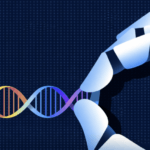
Random events in human development important for both nature and nuture

Is our behavior determined by genetics, or are we products of our environments? What matters more for the development of living things—internal factors or external ones? Biologists have been hotly debating these questions since shortly after the publication of Darwin’s theory of evolution by natural selection.

Charles Darwin’s half-cousin Francis Galton was the first to try to understand this interplay between “nature and nurture” (a phrase he coined) by studying the development of twins.

But are nature and nurture the whole story? It seems not. Even identical twins brought up in similar environments won’t really be identical. They won’t have the same fingerprints. They’ll have different freckles and moles. Even complex traits such as intelligence and mental illness often vary between identical twins.

Of course, some of this variation is due to environmental factors. Even when identical twins are raised together, there are thousands of tiny differences in their developmental environments, from their position in the uterus to preschool teachers to junior prom dates.

But there is more to the story. There is a third factor, crucial to development and behavior, that biologists overlooked until just the past few decades: random noise.

In recent years, noise has become an extremely popular research topic in biology. Scientists have found that practically every process in cells is inherently, inescapably noisy. This is a consequence of basic chemistry. When molecules move around, they do so randomly. This means that cellular processes that require certain molecules to be in the right place at the right time depend on the whims of how molecules bump around.

Read the full, original story: Life is random

{{ reviewsTotal }}{{ options.labels.singularReviewCountLabel }}
{{ reviewsTotal }}{{ options.labels.pluralReviewCountLabel }}
{{ options.labels.newReviewButton }}
{{ userData.canReview.message }}

Related Articles

Infographic: Global regulatory and health research agencies on whether glyphosate causes cancer

Infographic: Global regulatory and health research agencies on whether glyphosate causes cancer

Does glyphosate—the world's most heavily-used herbicide—pose serious harm to humans? Is it carcinogenic? Those issues are of both legal and ...

Most Popular

Screenshot-2026-04-23-at-11.00.36-AM
Regulators' dilemma: Thalidomide, Metformin, and the cost of getting drug approvals wrong
Picture1-5
Science Disinformation Gap: The transatlantic battle over social media and censorship
ChatGPT-Image-May-13-2026-11_56_08-AM
After slashing global health aid by $19 Billion, Trump moves to tap $2.1 billion more—to cover shutdown costs
ChatGPT-Image-May-12-2026-08_39_41-PM
GLP podcast: Big Pharma, Big Ag, Big Food—health harming industries or life-saving innovators?
Screenshot-2026-02-20-at-10.48.04-AM
Deepfakes raise profound ethical questions in science
Picture1-1
Cooling the planet with balloons: Could a geoengineering gamble slow global warming?
Screenshot-2026-05-01-at-1.29.41-PM
Viewpoint: What happens when whole grains meet modern food manufacturing? Labels don’t tell the whole story.
ChatGPT Image May 10, 2026, 08_16_59 PM 2
Overmedicalization? RFK Jr.’s antidepressant crackdown raises conflict questions over his fee stake in Wisner Baum, the tort firm built on suing drug makers
ChatGPT-Image-Apr-13-2026-02_20_22-PM
Viewpoint: Misinformation infodemic? Why assessing evidence is so challenging 
Screenshot-2026-05-12-at-9.58.31-PM
'He seems fine': Marty Makary out as FDA commissioner
S
As vaccine rejectionism spreads, measles may be taking a more dangerous turn
glp menu logo outlined

Get news on human & agricultural genetics and biotechnology delivered to your inbox.