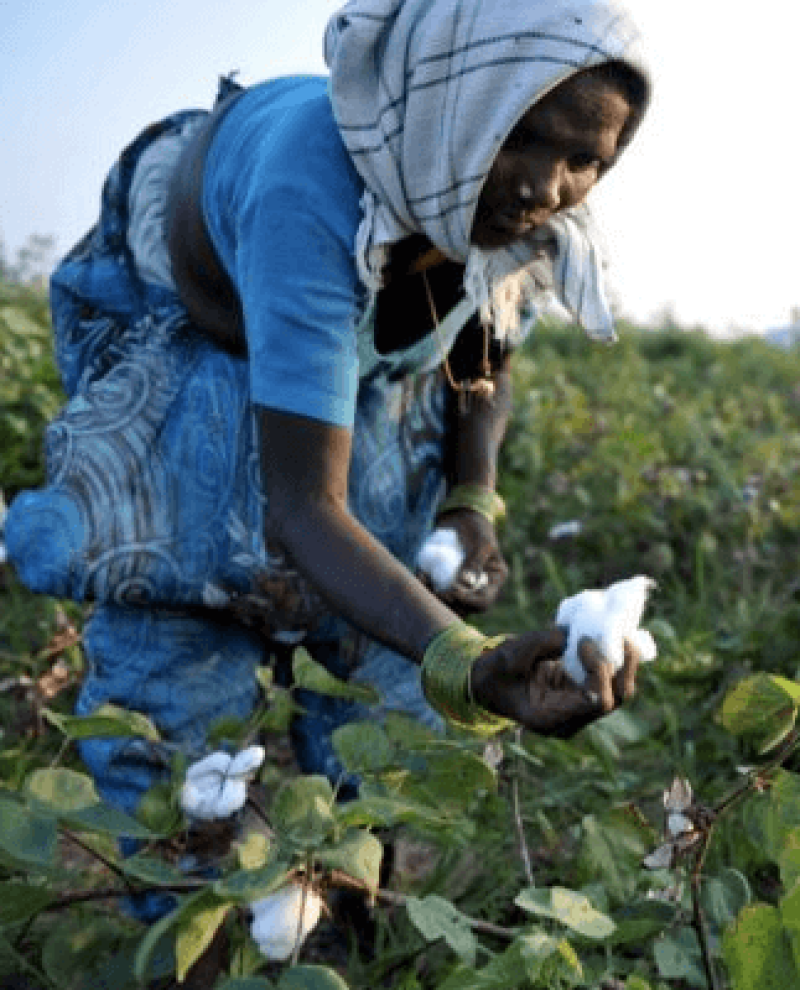
Resource-poor farmers in developing countries lead global biotech production

Screen Shot at PM

More than 90 percent of the 18 million growers that produced biotech crops were resource-poor farmers in developing countries. Since the commercial introduction of GM crops in 1994, their global acreage has increased 100-fold, to over 175 million hectares, or about one-eighth of Earth’s farmable land.

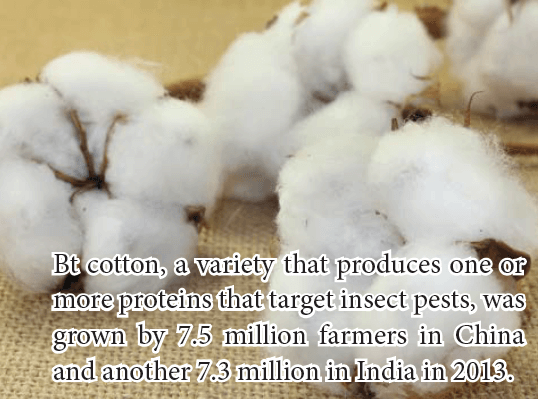
Genetically Modified foods are not grown in India, but more than 90 percent of the country’s cotton acreage is genetically engineered to produce Bt insecticidal proteins. Farming of Bt cotton officially began in 2002–2003. Over the next five years, yields increased by 70 percent and have since stabilized at near-historic levels, with cotton production up 75 percent since Bt cotton’s official introduction. Other factors, including irrigation and fertilizer use, have also changed, so Bt cotton is not India’s only source of yield improvements. Still, data indicate that Bt cotton alone accounts for a yield increase of at least 19 percent. Once reliant on cotton imports to feed its textile industry, India now exports cotton.
Screen Shot 2014-10-18 at 1.13.02 PM
Courtesy Jessica Radovich and Ania Wieczorek, College of Tropical Agriculture and Human Resources, University of Hawai‘i at Manoa

More than 90 percent of the 18 million growers that produced biotech crops were resource-poor farmers in developing countries. Since the commercial introduction of GM crops in 1994, their global acreage has increased 100-fold, to over 175 million hectares, or about one-eighth of Earth’s farmable land.

Genetically Modified foods are not grown in India, but more than 90 percent of the country’s cotton acreage is genetically engineered to produce Bt insecticidal proteins. Farming of Bt cotton officially began in 2002–2003. Over the next five years, yields increased by 70 percent and have since stabilized at near-historic levels, with cotton production up 75 percent since Bt cotton’s official introduction. Other factors, including irrigation and fertilizer use, have also changed, so Bt cotton is not India’s only source of yield improvements. Still, data indicate that Bt cotton alone accounts for a yield increase of at least 19 percent. Once reliant on cotton imports to feed its textile industry, India now exports cotton.

While Bt cotton’s production costs are higher than conventional cotton because GM seeds cost more, these costs are offset by increased yields and reduced use of pesticides. Bt cotton growers have seen a 50 percent average increase in profits, or an estimated $80 to $350 more per hectare. Because Bt hybrid seed offers reliably improved harvests, most farmers are willing to pay for it each year, even though Indian law gives farmers the right to sow, share, or sell seeds that they’ve saved.


Related Articles

Infographic: Global regulatory and health research agencies on whether glyphosate causes cancer

Infographic: Global regulatory and health research agencies on whether glyphosate causes cancer

Does glyphosate—the world's most heavily-used herbicide—pose serious harm to humans? Is it carcinogenic? Those issues are of both legal and ...

Most Popular

ChatGPT-Image-Mar-10-2026-01_39_01-PM
Viewpoint—“Miracle molecule” debunked: Why acemannan supplements don’t work
Screenshot-2026-10-07-at-1.03.15-PM
Anti-vaxxers’ double whammy: Exaggerated vaccine fears have fueled measles outbreaks and preventable deaths—and left survivors more vulnerable to other infections for years
Crossed-Out-Calendar-with-Milk-Carton
Viewpoint: The shocking consequences after a year of Robert F. Kennedy Jr.'s distortions, deceptions, and flat-out falsehoods
Frosted Blueberries Under Magnification
MAHA moms divided over RFK Jr.’s food‑safety efforts, as recall alerts grow and outbreaks spread
Pride and Patriotism in the Breeze
Retreat from identity labels: Does the sharply declining number of young teens identifying as gay and bisexual reflect an ideological shift?
Screenshot-2026-10-08-at-10.41.33-AM
Viewpoint: Wellness patches: Most vitamin supplements are useless and sometimes even dangerous, but this craze is even worse
Screenshot-2026-10-13-at-10.35.49-AM
Challenging health misinformation? People are more likely to believe AI when it responds with empathy
Cross and Syringe Standoff
Viewpoint: Hijacking Jesus: How anti-vaccine fanatics are exploiting religious exemptions and killing children
Golden Wheat Under a Starry Sky
Viewpoint: ‘Bureaucratic and economic obstacles’ to agricultural biotechnology: Europe creeps into the 21st century, but blocks remain
Screenshot-2026-10-12-at-10.44.38-AM
Widely condemned as unethical, hepatitis B vaccine study funded by RFK Jr’s CDC gets a final greenlight
Prescription Capsules Scattered on Twenty-Dollar Bills
Facts & Fallacies podcast: America's health care system is broken. A doctor explains how to fix it, Part 2
Screenshot-2026-09-22-at-12.26.15-PM
‘Forever chemical’ concerns: Separating hysteria from reasonable concern in the debate over PFAS danger
Dissolving-Tablets-in-Waves
Viewpoint: How the anti-abortion movement twists medical facts and promotes science misinformation
glp menu logo outlined

Get news on human & agricultural genetics and biotechnology delivered to your inbox.