Like the creators of in vitro burgers, the scientists behind yeast-culture dairy are concerned about animal welfare and agricultural sustainability—but also about creating a food that will find a mass market.
Because their petri dish milk will mirror the formula of the real thing—the yeast cultures will be churning out real milk proteins—it will retain the taste and nutritional benefits of cow milk, says Perumal Gandhi, a co-founder of the synthetic dairy start-up Muufri (pronounced Moo-free) in San Francisco, California. That will distinguish it from soy- and almond-based alternatives.
“If we want the world to change its diet from a product that isn’t sustainable to something that is, it has to be identical [to], or better than, the original product,” Gandhi says. “The world will not switch from milk from a cow to the plant-based milks. But if our cow-less milk is identical and priced right, they just might.”
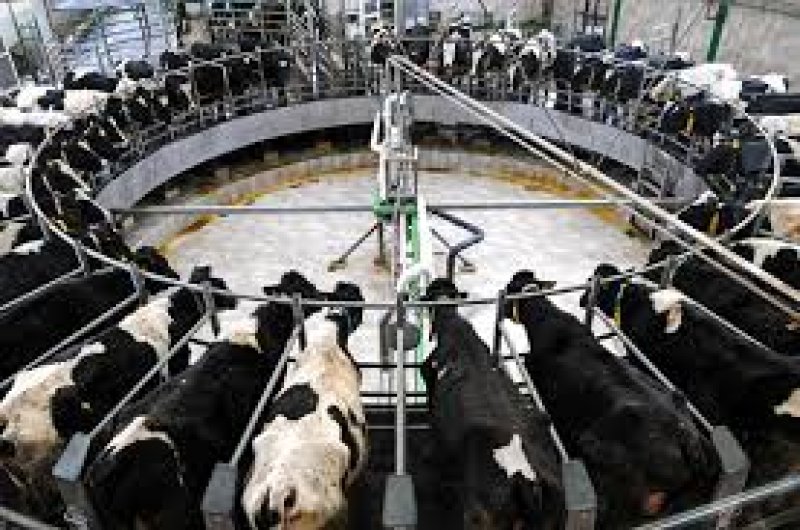
Gandhi and Muufri co-founder Ryan Pandya are both vegans who view the livestock industry’s practices as inhumane. The cows in a modern dairy, they argue, live in crowded barns. Their horns are removed to keep them from injuring themselves or farmworkers, their tails are often docked so that workers won’t get a feces-laden smack in the face, and they’re given growth hormones and antibiotics.
What’s more, the cows are artificially inseminated every year so they’ll keep producing milk—and then, as soon as they give birth, their calves are taken away, to make the milk available for humans.
“Fundamentally, you’re controlling the reproductive system of an animal. It’s incredibly invasive,” Pandya says. “A lot of people are motivated by the environmental factors, but imagine that happening to an animal. Really, if you consider yourself an environmentalist and then you consume dairy, it’s all for naught.”

The industry’s environmental impact is also substantial. Dairy production is responsible for roughly 3 percent of global greenhouse gas emissions each year, according to the Food and Agriculture Organization of the United Nations, mostly because cows belch methane. And although dairy is already a more efficient way than meat of converting plant feed into animal protein, bioengineers can do even better than nature, Gandhi says.
“Making an entire cow to make just the milk is inefficient,” he says. “You’re giving it all this feed and water, and most of it goes towards growing legs, growing a head, growing a liver and lungs—just living.” In contrast, Muufri’s system can be likened to “an out-of-body udder” that only churns out milk.
Read full, original article: Milk Grown in a Lab Is Humane and Sustainable. But Can It Catch On?