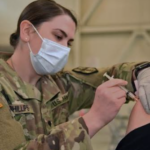
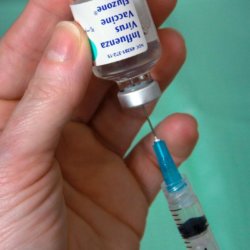
All flu vaccines start with flu viruses: genetic material packaged in an envelope of proteins and fats, studded with yet more proteins—antigens—that push the body’s immune system into action. With thousands of possible flu variants out there, the World Health Organization looks at info from 141 labs around the world to determine which variants are most likely to circulate each year. Since it can take more than six months to manufacture the shot, the WHO picks four strains about nine months before flu season: two A viruses (which can infect humans and animals, like swine flu) and two B viruses (which primarily affect humans).
Manufacturers grow the flu viruses in fertilized chicken eggs—hundreds of millions every year. Scientists inject the viruses into the allantoic fluid between the embryo and the shell, where the viruses replicate. Then the fluid goes for a spin in a centrifuge, along with layers of sucrose solutions of different concentrations to separate the denser virus from the rest of the egg proteins. Trace amounts of egg can remain in the final shot.
Without formaldehyde, this vaccine would just be infectious flu in a bottle. This water-soluble molecule crosslinks proteins in the virus so it can’t cause illness. Your shot can include up to 100 micrograms of formaldehyde, but your blood naturally contains 13,000 mcg—that extra 0.8 percent barely registers.



As the flu virus replicates, it steals some fatty membrane from the egg to hold its proteins and genetic material together. This detergent pulls the fat out like a grease stain, leaving free virus bits behind—they’re less likely to cause side effects than the whole virus.
Read full original article: Formaldehyde and Chicken Eggs: What’s Inside a Flu Shot