Regulatory hurdles may blunt future of open source GMO crops as patent expires for GMO soybeans

dna L

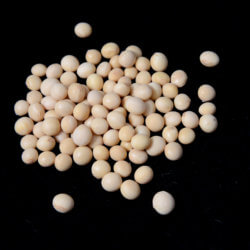
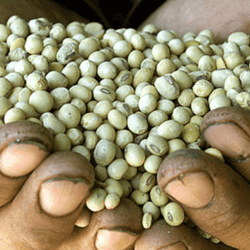
The development, testing, and regulation of genetically engineered crops usually takes a significant investment of time and resources, so these crops are patented so that their developers can recoup their investments. Farmers who grow these crops usually pay licensing fees for the use of the technology, and sign license agreements that restrict their ability to save the seeds. Now, a variety of GMO herbicide-tolerant soybeans has been released by the University of Arkansas with no technology fees, and no license agreements to sign. This is possible because the patent for the first genetically engineered trait in soybeans has expired. The world of “generic” or Open Source GMOs is upon us, however, there are still some practical challenges ahead.

It is likely, but not yet verified, that the new soybean variety will be protected under Plant Variety Protections (PVPA), so using these seeds for breeding purposes may still require a license from the breeders at the University of Arkansas. This new soybean variety demonstrates that off-patent GMOs can be useful for the development of new varieties with benefits, however, it would be necessary to have someone release a public variety with this off-patent transgenic trait for there to be truly Open Source GMOs.

The prospect of off-patent Open Source GMOs for public benefit is an exciting one, and is the right and intended outcome of the patent system. However, the enthusiasm for these off-patent GMOs must be reigned in by a looming threat that could jeopardize their continued use – the expiration of approvals in export markets.
Read full, original blog: Off-patent GMO soybeans: What happens now?

Related Articles

Infographic: Global regulatory and health research agencies on whether glyphosate causes cancer

Infographic: Global regulatory and health research agencies on whether glyphosate causes cancer

Does glyphosate—the world's most heavily-used herbicide—pose serious harm to humans? Is it carcinogenic? Those issues are of both legal and ...

Most Popular

ChatGPT-Image-Mar-10-2026-01_39_01-PM
Viewpoint—“Miracle molecule” debunked: Why acemannan supplements don’t work
AI Doctor with a Digital Neural Head
Utah becomes first state to empower AI to bypass doctors and prescribe certain drugs
Screenshot-2026-09-22-at-12.26.15-PM
‘Forever chemical’ concerns: Separating hysteria from reasonable concern in the debate over PFAS danger
Radioactive-Americana-Collage-2
The kooky logic behind the raft of spurious cancer claims from Harvard’s T.H. Chan School of Public Health
Screenshot 2026-07-29 at 10.40
The COVID vaccine turbo cancer scare is back. Science still proves it’s wrong.
AI-Force-Uniform-Insignia-Close-Up
Trump wants an AI Force like Space Force, but that could make AI’s risks harder to manage
Screenshot-2026-09-28-at-11.26.17-AM
Viewpoint: Wellness movement activists reposition nicotine from a killer addictive drug into a cure-all for brain ills
Screenshot-2026-09-22-at-10.54.12-AM
‘They misunderstand science’: Research attempting to tie autism to changes in the gut microbiome comes under fire
Screenshot-2026-10-07-at-2.00.02-PM
9 wellness myths busted
ChatGPT-Image-Jun-25-2026-12_23_17-PM
No, Bill Gates did not secretly engineer ticks to promote veganism
glp menu logo outlined

Get news on human & agricultural genetics and biotechnology delivered to your inbox.