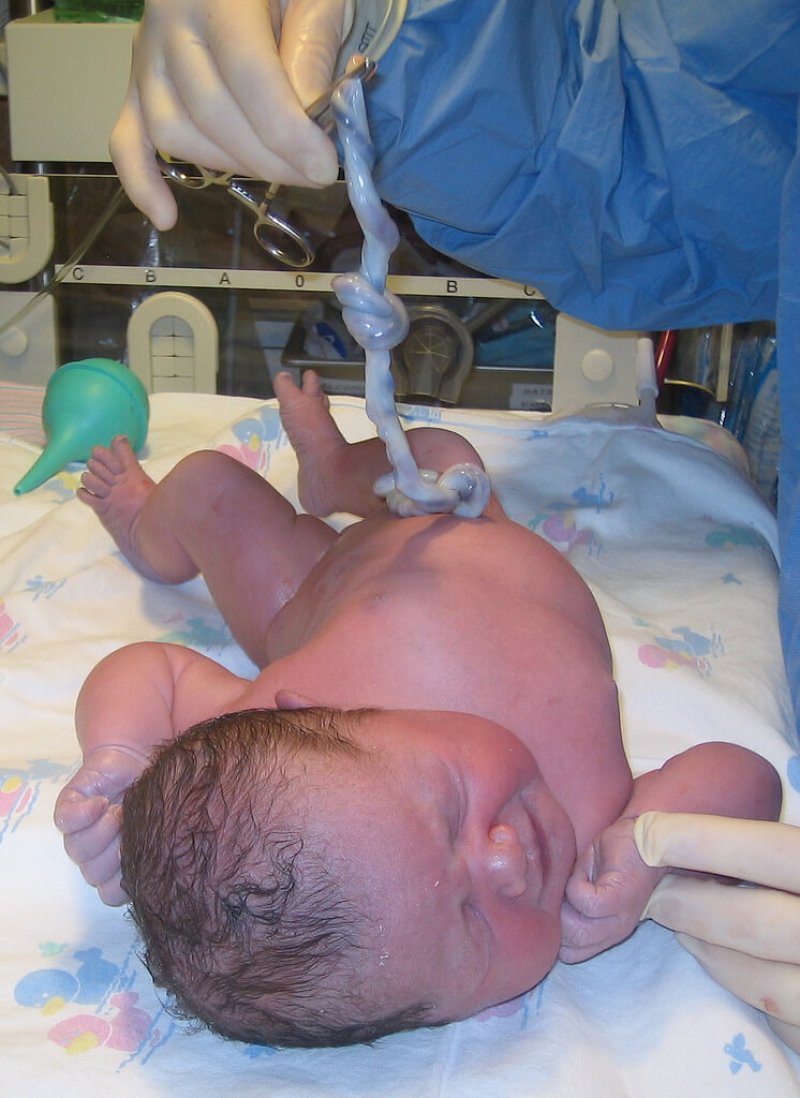
You only have to Google search “cord blood” or similar phrases, or even just read an article about pregnancy and newborns and you’ll be inundated with links and ads from companies promoting the virtues of private umbilical cord cell banking. Currently, the number of cord samples held privately in the United States is upward of 1.7 million distributed among approximately three-dozen private cord cell banks.
To freeze and get samples started at the private banks, families usually pay around $2,000 initially, then $125 per year to maintain them. It’s promoted as a kind of insurance. Cord blood might be utilized for treatment in the unlikely event that the child, the child’s siblings, or a parent becomes seriously ill in the future. It works out well for the companies, but is it a wise course for their clients? If you’re a parent-to-be, should you preserve a cord sample in a private bank?
Pluripotent rationales
Companies offer umbilical cord blood preservation, because this blood is abundant in stem cells. Stem cells are pluripotent, meaning they can develop into many different cell types. Unlike embryonic stem cells, blood samples are there for you already. You don’t need to fertilize and egg and wait for it to develop, plus there is no objection from anti-abortion activists. At the same time, blood from a newborn, whether in the umbilical cord or in the newborn’s blood vessels, contains higher concentrations of the desired pluripotent cells compared with adult blood. Thus, ads for private cord cell banking will tell you things like:
“To date, 30,000 transplants have been performed using these amazing healing cells,” as it says on the website of Viacord, one of the most popular private cord banking companies.
Immediately following this impressive statistic, the website presents several stories of the successful use of cord stem cells to cure acute lymphoblastic leukemia (ALL), and other terrible diseases, in siblings of newborn who provided the cells. It also presents a small number of cases in which cord cells could be used to treat rare conditions affecting the donor child. But there’s a context problem. While the 30,000 transplant statistic is referenced with a good source article, what Viacord fails to make clear is that most of the 30,000 cord cell transplants have involved cord cells from public banking, not private. Probably, they figure that few people will notice because reading the source article requires an account to the journal Nature Biotechnology, which most new people let alone new parents probably don’t have.
For any parent-to-be, a much more useful number is that the probability of a cord blood sample actually being useful to save the donor or a family member is one in 2,700, at best. As with any type of transplant, whether organ, tissue or cells, success depends on having the right genetic match. To get such a match, your own body is a good place to look, but that’s not helpful if the condition that needs treatment is the result of a genetic defect. In ALL, for example, the most common childhood cancer, the problem lies in stem cells in the bone marrow that develop into a type of immature white blood cells called lymphoblasts.
This potential Catch 22 is highlighted in a Parents Magazine story, which opens with the case of Tracey and Victor Dones, a Long Island couple whose infant was diagnosed with a rare condition called osteopetrosis, at 4 months of age. “[The private cell banking company] never mentioned that the cells could be diseased.” Tracey told the magazine. “We felt duped,” she added, since the defect causing the osteopetrosis was present in the very stem cells that she and Victor had gone to such lengths to preserve.

Whether for osteopetrosis, ALL, or a host of other conditions resulting from genetic defects present since before birth, one’s own stem cells are not useful. Instead, what you want are stem cells of an appropriate match to avoid rejection, but from a different individual, somebody without the disease that the cells are meant to cure. Such stem cells might come from a sibling, but looking in the family is no guarantee of donor match. Sure, the chances are much higher looking within your own family compared with any one random family, but, as with organs, the best way to find a donor is to cross match with samples of the entire population. In other words, we need to pool millions of donated samples and make them available to any potential recipients. That’s the approach of public cord blood banking and it’s what accounts for most of the 30,000 cord stem cell transplant procedures, which have been used to treat more than 70 different conditions.
Another factor not often emphasized by private cord cell banking companies is that numbers of stem cells in cords is usually too low to be useful for treating any condition in an adult. For all of these reasons, the American Congress of Obstetricians and Gynecologists recommends informing parents of the pros and cons of public vs. private cord cell banking, and the American Medical Association recommends public banking for cord stem cells.
Going beyond the private vs. public banking question
While all of this suggests that you should send private cord cell banking ads to your virtual trash bucket with the email scams asking you to hold onto $50 million for a Nigerian diplomat, a more reasonable debate has opened up around the question of whether depriving a newborn of blood from the cord is even a good idea. In the old days, obstetricians used to squeeze the cord before clamping, allowing the newborn to begin life with a good deal more blood than he or she would have with immediate cord clamping. But this practice was discovered to be a major cause of neonatal polycythemia–the presence of too many blood cells–a fairly common, but potentially serious, newborn disorder.
This understanding has led to a pendulum swing, such that now doctors and midwives clamp the cord early to prevent the blood cell count from getting too high. Whether preserved in private or public banks, utilization of the cord cells depends on the current practice, but a tactic intermediate of cord squeezing and immediate clamping has since been proposed and is gaining traction. Known as delayed cord clamping, this method keeps the cord for several minutes, allowing more blood to get into the newborn compared with immediate clamping. It’s a balancing act, given the possibility of polycythemia, but the debate could lead to some tweaking that ultimately might take cord blood preservation off the table, at least for certain fraction of newborns.
Still, for the time being, the message is clear. Rather than discarding cord blood, it may as well go into banks where it can be used for treatments, along with research, but putting it into private banks is almost like discarding it. So if you’re about to have a baby, public banking is the way to go.
David Warmflash is an astrobiologist, physician, and science writer. Follow @CosmicEvolution to read what he is saying on Twitter.