Will benefits of nanopesticides outweigh costs?

Stacey Harper is doggedly researching tiny, human-made substances called nanoparticles. The scientist at Oregon State University in Corvallis hopes to be able to identify which particle will be a boon and which a bane for farmers, consumers and the environment.

Nanoparticles, which are the size of molecules, are already used in numerous items from sunscreen to biomedical devices. Their minuscule size makes them efficient, but also unpredictable. Harper said the first nano-formulations of pesticides are quietly making their way onto agricultural fields, and she wants to know what happens next.

Harper said she thinks the vast majority of nanopesticides will not be toxicm, or at least no more toxic to non-target organisms than current pesticides.

By shrinking the size of individual nanopesticide droplets, there is broad consensus from industry to academia to the Environmental Protection Agency that the total amount of toxins sprayed on agricultural fields could be significantly reduced. Smaller droplets have a higher total-surface area, which offers overall greater contact with crop pests.
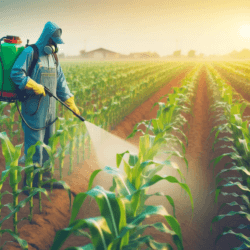
But, once they are sprayed on fields, will they clump on crops or slide through the soil into water bodies? Most worrisome, Harper said, is whether they will be readily taken up by organisms that aren’t pests, such as bees or fish, and how long they will persist in the environment.

Read full, original article: Nanopesticides illicit worry and hope

Related Articles

Infographic: Global regulatory and health research agencies on whether glyphosate causes cancer

Infographic: Global regulatory and health research agencies on whether glyphosate causes cancer

Does glyphosate—the world's most heavily-used herbicide—pose serious harm to humans? Is it carcinogenic? Those issues are of both legal and ...

Most Popular

ChatGPT-Image-Mar-10-2026-01_39_01-PM
Viewpoint—“Miracle molecule” debunked: Why acemannan supplements don’t work
Prescription Capsules Scattered on Twenty-Dollar Bills
Facts & Fallacies podcast: America's health care system is broken. A doctor explains how to fix it, Part 2
MAHA-MOMS-Supporters-at-the-Rally
Viewpoint: How 'MAHA men' hijacked the female-built food and wellness movement
Dissolving-Tablets-in-Waves
Viewpoint: How the anti-abortion movement twists medical facts and promotes science misinformation
Executive-Greeting-in-a-Futuristic-Boardroom
Viewpoint: RFK Jr. touts AI to guide health care…but searches using the technology he champions expose him as scientifically illiterate
Screenshot-2026-10-12-at-10.44.38-AM
Widely condemned as unethical, hepatitis B vaccine study funded by RFK Jr’s CDC gets a final greenlight
Deepfake Democracy Media Mosaic
31 states have passed a patchwork of laws to limit election deepfake commercials. They’re not working very well.
Personalized-Cancer-mRNA-Vaccine-Vial
Personalized mRNA vaccines are poised to revolutionize cancer treatments. Here are the barriers.
Golden Wheat Under a Starry Sky
Viewpoint: ‘Bureaucratic and economic obstacles’ to agricultural biotechnology: Europe creeps into the 21st century, but blocks remain
Caution-Taped-Fresh-Produce-Aisle
Should we be afraid of our food?
Cross and Syringe Standoff
Viewpoint: Hijacking Jesus: How anti-vaccine fanatics are exploiting religious exemptions and killing children
Screenshot-2026-09-22-at-10.54.12-AM
‘They misunderstand science’: Research attempting to tie autism to changes in the gut microbiome comes under fire
Screenshot-2026-09-22-at-12.26.15-PM
‘Forever chemical’ concerns: Separating hysteria from reasonable concern in the debate over PFAS danger
glp menu logo outlined

Get news on human & agricultural genetics and biotechnology delivered to your inbox.