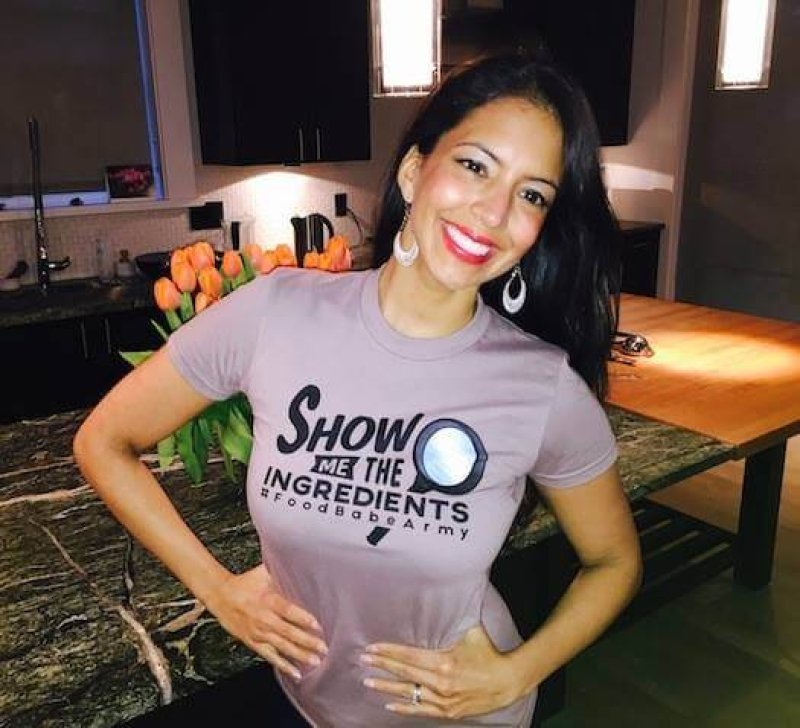
“I couldn’t believe there was beaver’s ass in my vanilla ice cream, coal tar in my mac and cheese, yoga mat and shoe rubber in my bread,” says Vani Hari, also known as the Food Babe. That’s why she started blogging about food additives, she explains in the introduction to her new book, The Food Babe Way. I can’t believe it either. But that would be because none of it is true.
I have some shocking news, too. Did you know that oxidane, a major component of human urine, is added to coffee beans to enhance the aroma? Disgusting! Sorry if I made you pour your espresso down the drain. What I really should have said is that most people use water, whose formal chemical name is oxidane—and which indeed is the main component of urine—to brew coffee.
In her book and on her blog, Hari plays this game of malicious metonymy again and again, leveraging common motifs of disgust, such as excrement and body parts, all the while deliberately confusing the source and uses of material with the molecules themselves.
Don’t let the Food Babe distract you from asking the right questions with middle school–style rumors about the cafeteria ladies—or large food corporations—putting feathers or yoga mats in the food. She is being as deceptive as I was with the oxidane in your coffee.

Here’s the real rub. I don’t disagree with the Food Babe about many things, from the overproliferation of processed foods to the need for fuller disclosure of ingredient lists. It is just that I prefer to focus on the real chemistry behind it all, not the beaver butts the Food Babe is waving in my face.
Read full, original article: Are Corporations Putting Feathers in Your Food?