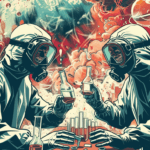
Doomed mammoth-cloning attempt foiled by cosmic rays

Hwang Woo-Suk is the bad boy of genetics. He’s most famous for falsely claiming to have cloned human stem cells. This is, you can imagine, very bad in science. Yet the South Korean researcher has been scavenging in Siberia, drilling cells from the bones of a 28,000 year-old frozen wooly mammoth. The bones are the only place Hwang is going to find the DNA he needs to bring a mammoth back to life.

Hwang’s plan is probably doomed. Not because it’s impossible—plenty of the world’s best biologists are convinced that cloning a mammoth is just a matter of putting the right minds to work with the right technologies. Even most critics are more concerned with “should we” than “could we” at this point. The problem with Hwang’s particular approach is it requires an intact strand of mammoth DNA. And every single strand of DNA in every single frozen mammoth carcass was almost certainly wrecked thousands of years ago by waves of cosmic radiation.

Harvard geneticist George Church says the right way to do it is by using a relatively new technology called CRISPR/Cas9, a sort of cut-and-paste tool that lets molecular biologists move around bits of genetic material. “Even if the sample is fragmented, we can assemble it in a computer then compare to Asian elephant its closest relative,” says Church.

Read full, original article: This bad-boy geneticist wants to clone a mammoth


{{ reviewsTotal }}{{ options.labels.singularReviewCountLabel }}
{{ reviewsTotal }}{{ options.labels.pluralReviewCountLabel }}
{{ options.labels.newReviewButton }}
{{ userData.canReview.message }}

Related Articles

Infographic: Global regulatory and health research agencies on whether glyphosate causes cancer

Infographic: Global regulatory and health research agencies on whether glyphosate causes cancer

Does glyphosate—the world's most heavily-used herbicide—pose serious harm to humans? Is it carcinogenic? Those issues are of both legal and ...

Most Popular

ChatGPT-Image-Jul-8-2026-12_32_48-PM
Viewpoint: SCOTUS strikes a blow against junk science in Bayer glyphosate case. Will it deter mass tort litigators?
ChatGPT-Image-Mar-10-2026-01_39_01-PM
Viewpoint—“Miracle molecule” debunked: Why acemannan supplements don’t work
Screenshot-2026-07-08-at-9.36.03-AM
Viewpoint: Long-contained diseases are on the rise in the U.S. Are Trump cuts to blame?
afb-a-b
As the EU loosens restrictions on agricultural gene editing, it remains years behind the rest of the world on equally-safe GMO foods
Viewpoint: Consensus as truth? How ‘misinformation police’ control policy narratives
Which among war, weather and cyber attacks is the biggest world threat? None of the above. It’s misinformation, and here’s why.
c9f0a584-46e9-4dd8-9a77-f5f5a7a51a84
Across Eastern Europe, science disinformation has spread far beyond COVID and vaccine denialism. Here’s the grim list.
Screenshot 2026-07-11 100209
Viewpoint: Supplements to clean your liver? Not a good idea.
ChatGPT-Image-Jul-7-2026-01_57_55-PM
Viewpoint: Europe’s rejection of air conditioning is the poster child for misunderstanding how to mitigate the impact of climate change
Gemini_Generated_Image_gabo48gabo48gabo
Viewpoint: A plastic surgeon on why banning gender-transition surgery without further research is wrong and harmful
ChatGPT-Image-Jun-25-2026-12_23_17-PM
No, Bill Gates did not secretly engineer ticks to promote veganism
ChatGPT-Image-Jul-1-2026-03_33_49-PM
‘Alternative’ cancer treatments that could kill you
Screenshot-2026-07-10-at-3.10.50-PM
Snake-oil cures throughout history
ChatGPT-Image-Jul-1-2026-12_37_08-PM
Viewpoint: Trump poised to politicize all U.S.-supported science research
glp menu logo outlined

Get news on human & agricultural genetics and biotechnology delivered to your inbox.