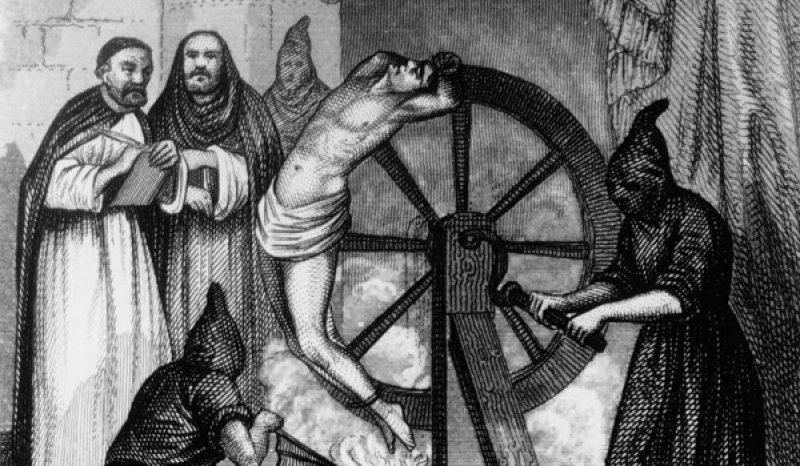

It is fascinating to read about torture because one realizes how much ordinary people were involved in it and enjoy watching it. Public punishment (that invariably involved terrible bodily torture until well into the 19th century in Western Europe and to this day in many other parts of the world) was probably originally conceived to deter people from committing crimes: “this is what will happen to you if you commit the same crime”. But its continuing popularity over the centuries seems to have been due more to its value as entertainment than to its value as deterrent. It must have already been obvious many centuries ago torture’s contribution to law and order (or to winning wars) was dubious at best.
However, very few people spoke against it until the Enlightenment. My guess is that it was such a popular form of entertainment that it would have been unpopular to outlaw it. People loved to watch public torture even knowing that they could be next on the gallows. Torture invented to deter crime survived for so many centuries because it became public entertainment.
My guess is that in prehistory it was absolutely normal that you would torture someone. Therefore there must have been an implicit theory (both ethical and utilitarian) that it’s ok, and in fact it is good, to torture people, but it sounds like nobody has done this study. All the books start with the fact that torture was widespread but nobody seems to have wondered “why was it widespread?”
This could be another case of male bias. Because most historians are men, they take torture from granted and move on. A female historian would asks the question “why was there torture in the first place?”





As many neuroscientists have shown (see for example Shane O’Mara’s “Torturing the brain – On the folk psychology and folk neurobiology motivating enhancedand coercive interrogation techniques”, 2009), torture is mostly counterproductive. Why then did humans engage in and enjoy torturing others? If its material benefits are dubious at best, what is the point of torturing?
Read full, original article: The Genetics and Neuroscience of Torture