Airborne antibiotic-resistant bacteria found in Texas may pose major threat to health

A new study says the DNA from antibiotic-resistant bacteria found in American cattle yards has become airborne, creating a new pathway by which such bacteria can potentially spread to humans and hinder treatment of life-threatening infections.

Researchers gathered airborne particulate matter (PM) from around 10 commercial cattle yards within a 200 mile radius of Lubbock, Texas over a period of six-months. They found the air downwind of the yards contained antibiotics, bacteria and a “significantly greater” number of microbial communities containing antibiotic-resistant genes. That’s according to the study in April’s issue of Environmental Health Perspectives.

“To our knowledge, this study is among the first to detect and quantify antibiotics and antibiotic resistance genes…associated with airborne PM emitted from beef cattle feed yards,” said the authors, who are researchers in environmental toxicology at Texas Tech University and at a testing lab in Lubbock.

Co-author Phil Smith told the Texas Tribune that the bacteria could be active for a long time and “could be traveling for long distances.”

His colleague, molecular biologist Greg Mayer, told the paper that some of the study’s findings “made me not want to breathe.”
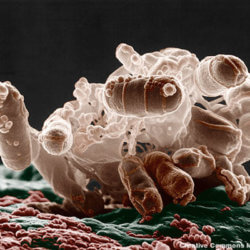
Because antibodies are poorly absorbed by cows they are released into the environment through excretion. Once in the environment, bacteria will undergo natural selection and genes that have acquired natural immunities will survive.

The genes that have gone airborne are contained in dried fecal matter that has become dust and gets picked up by winds as they whip through the stockyards.

Read full, original article: Antibiotic-Resistant Bacteria From Texan Cattle Yards Are Now Airborne, Study Finds

Related Articles

Infographic: Global regulatory and health research agencies on whether glyphosate causes cancer

Infographic: Global regulatory and health research agencies on whether glyphosate causes cancer

Does glyphosate—the world's most heavily-used herbicide—pose serious harm to humans? Is it carcinogenic? Those issues are of both legal and ...

Most Popular

ChatGPT-Image-Mar-10-2026-01_39_01-PM
Viewpoint—“Miracle molecule” debunked: Why acemannan supplements don’t work
Strawberry Clamshell with Warning Sticker
Viewpoint: Activists hype ‘dangerous level’ of pesticide residues in Driscoll berries: Separating health concerns from fear-mongering
Diet Soda with Measuring Tape 2
Science challenges anti-soda activists: No, sodas won’t make you fat
Silhouettes Beneath the Mosquito Nets
Guinea-Bissau halts widely condemned RFK Jr.-backed vaccine trial that would have withheld life-saving vaccines from thousands of newborns
Author-Presenting-Good-Energy
'Disillusioned': Controversial RFK Jr. ally and MAHA leader Calley Means quits Trump advisory role
Rustic Skillet of Raw Brains
‘Weird food’? Testicle- and brain-eating, supplement-gulping MAHA health food enthusiasts defend their ‘natural’ diets
Generations United for Immunization
Police raid Guinea-Bissau offices of RFK Jr.-backed vaccine researchers, seize hepatitis B doses
Vibrant Social Media Confetti Explosion
Health misinformation minefield: Countering online deluge by copying its style
Justice Under Prideful Skies
Supreme Court blocks Trump’s order halting transgender surgeries and hormone treatments for inmates
Screenshot-2026-10-21-at-10.38.39-AM
Viewpoint: The libertarian case for getting the government out of the business of regulating food choices
Screenshot-2026-10-19-at-12.04.51-PM
Victims of their own success: As memories of killer diseases fade, vaccine rejectionism soars
Screenshot 2026-10-16 at 5.38
PFAS in Agriculture: Science, Uncertainty, and Risk Communication
Magnifying Glass Highlights NIH Logo
Latest Trump administration proposal to change NIH research grant system draws scientists’ ire
glp menu logo outlined

Get news on human & agricultural genetics and biotechnology delivered to your inbox.