Why we should stop talking about gene editing in terms of dystopian sci fi

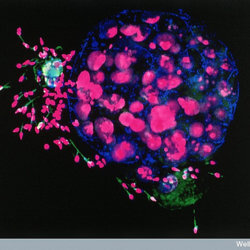
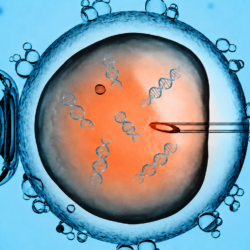
Recently, I went on the NPR show “On Point” to talk about using CRISPR to edit embryos. Towards the end of the show, I went on a bit of an anti-GATTACA rant. GATTACA, in case you haven’t seen it, is a movie that puts a biotech twist on Brave New World. Marcy Danovsky of the Center for Genetics and Society and other critics frequently warn that embryo editing could lead to a world like the movie–in other words, rich people would create a genetically altered population of super-smart, super-healthy people, leaving the have-nots in the dust.

If we’re going to talk about international bans, I’d like an international ban on invoking GATTACA in these discussions. It’s like saying, “We shouldn’t genetically engineer people because we will end up with an army of flying monkeys who will enslave the rest of us.” I mean, we can imagine an army of flying monkey overlords, and we can all agree that an army of flying monkey overlords would be a bad thing. But is that the most useful way to talk about the real social and medical impacts of a new technology?

You don’t need CRISPR to create health inequity. We already live in a world with big inequities in well-being. We didn’t have to wait for genetic engineering to make that happen. And the fact that CRISPR could create inherited changes is also not so special. Socially based inequities get passed down through the generations too.
The GLP aggregated and excerpted this blog/article to reflect the diversity of news, opinion and analysis. Read full, original post: Talking About Editing Human Embryos on the Radio

{{ reviewsTotal }}{{ options.labels.singularReviewCountLabel }}
{{ reviewsTotal }}{{ options.labels.pluralReviewCountLabel }}
{{ options.labels.newReviewButton }}
{{ userData.canReview.message }}

Related Articles

Infographic: Global regulatory and health research agencies on whether glyphosate causes cancer

Infographic: Global regulatory and health research agencies on whether glyphosate causes cancer

Does glyphosate—the world's most heavily-used herbicide—pose serious harm to humans? Is it carcinogenic? Those issues are of both legal and ...

Most Popular

Screenshot-PM-24
Viewpoint: The herbicide glyphosate isn’t perfect. Banning it would be far worse.
79d03212-2508-45d0-b427-8e9743ff6432
Viewpoint: The Casey Means hustle—Wellness woo opportunism dressed up as medical wisdom
d-b
Blocked arteries, kidney stones, nausea, constipation, fatigue: Long list of health problems caused by too much vitamin D 
ChatGPT-Image-Mar-10-2026-01_39_01-PM
Viewpoint—“Miracle molecule” debunked: Why acemannan supplements don’t work
ChatGPT-Image-Apr-30-2026-05_00_48-PM
Wellness grifter physician turned wellness influencer out as surgeon general nominee
Screenshot-2026-04-30-at-11.33.46-AM
Anti-seed-oil to anti-vax pipeline: MAHA movement spreads to teen influencers
lab grown meat research kelly schultz lehighuniversity main
Profiles of the 10 top global cultured meat companies
ChatGPT-Image-Mar-27-2026-11_27_05-AM
The myths of “process”: What science says about the “dangers’ of synthetic products and ultra-processed foods
glp menu logo outlined

Get news on human & agricultural genetics and biotechnology delivered to your inbox.