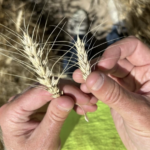
Hundreds of seed exchanges—in which hobbyists and professional green thumbs share the most resilient plants from their crops—have sprung up across North America over the past decade.
Cary Fowler extolls seed exchanges as “the first line of defense” against the loss of biodiversity. Fowler is the founding visionary of the Svalbard Global Seed Vault, a frozen repository in the Norwegian permafrost where millions of seeds from around the world are preserved.
Industrial agriculture prefers, instead, uniformity: F1 hybrid seeds for many common fruits and vegetables, and genetically modified seeds for commodity crops such as corn, soybeans and sugar beets.
GMOs have since come to dominate the commodity market. These genetically identical crops are bringing worldwide agricultural diversity and resilience to an all-time low.

And yet, in a constantly changing world, the diversity and adaptability of our crops is the foundation of our future food security. Those traits lie in the open-pollinated seeds that our ancestors saved and sowed for 12,000 years. Fertilized naturally (rather than in controlled, human-made environments to ensure uniformity), open-pollinated seeds produce plants whose next generation is similar, but not identical, to the previous generation. Much as a diverse stock portfolio offers resilience in turbulent economic times, this biodiversity offers resilience in a changing climate.
The GLP aggregated and excerpted this blog/article to reflect the diversity of news, opinion and analysis. Read full, original post: How Some Small Farmers Are Resisting Monsanto—And Climate Change