Will regulators show flexibility toward ‘double-muscled’ pigs made by editing single gene?

IMG pix

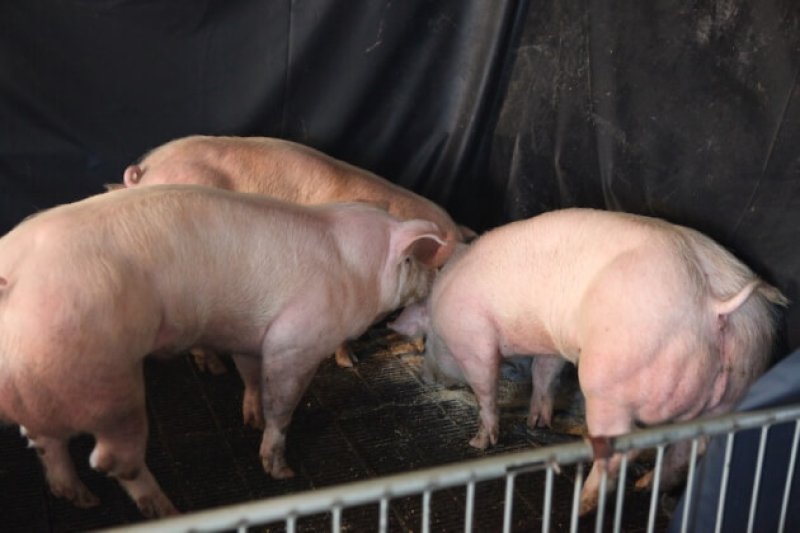
Belgian Blue cattle are hulking animals that provide unusually large amounts of prized, lean cuts of beef, the result of decades of selective breeding. Now, a team of scientists from South Korea and China says that it has created the porcine equivalent using a much faster method.

These โ€˜double-muscledโ€™ pigs are made by disrupting, or editing, a single geneย โ€”ย a change that is much less dramatic than those made in conventional genetic modification, in which genes from one species are transplanted into another. As a result, their creators hope that regulators will take a lenient stance towards the pigs.

Jin-Soo Kim, a molecular biologist at Seoul National University who is leading the work, argues that his gene edits merely speed up a process that could, at least in principle, occur through a more natural route. โ€œWe could do this through breeding,โ€ he says, โ€œbut then it would take decades.โ€

Because gene editing is a relatively new phenomenon, countries have only just started to consider how to regulate it in agricultural plants and animals. There are some signs that government agencies will view it more leniently than they do conventional forms of genetic modification: regulators in the United States and Germany have already declared that a few gene-edited crops fall outside of their purview because no new DNA has been incorporated into the genome. But Tetsuya Ishii, who studies international biotechnology regulation at the Hokkaido University in Sapporo, Japan, and who has done an international comparison on GM regulations, says that gene editing will raise increasing alarm as it progresses in animals.

The GLP aggregated and excerpted this blog/article to reflect the diversity of news, opinion and analysis. Read full, original post:ย Super-muscly pigs created by small genetic tweak

{{ reviewsTotal }}{{ options.labels.singularReviewCountLabel }}
{{ reviewsTotal }}{{ options.labels.pluralReviewCountLabel }}
{{ options.labels.newReviewButton }}
{{ userData.canReview.message }}

Related Articles

Infographic: Global regulatory and health research agencies on whether glyphosate causes cancer

Infographic: Global regulatory and health research agencies on whether glyphosate causes cancer

Does glyphosateโ€”the world's most heavily-used herbicideโ€”pose serious harm to humans? Is it carcinogenic? Those issues are of both legal and ...

Most Popular

Screenshot 2026-05-06 at 2.56
Singularity crisis ahead? Can super babies save us from rogue AI geniuses?
Screenshot-2026-03-13-at-12.14.04-PM
The FDA wants to make many popular prescription drugs OTCโ€”a great idea. Hereโ€™s why itโ€™s unlikely to happen
Screenshot-2026-04-20-at-2.26.27-PM
Viewpoint โ€” Food-fear world: The latest activist scientists campaign: Cancer-causing additives
Screenshot-2026-05-01-at-11.56.24-AM
โ€˜Science moves forward when people are willing to think differentlyโ€™: Memories of DNA maverick Craig Venter
images
The never-ending GMO debate: Pros and cons
Screenshot-PM-24
Viewpoint: The herbicide glyphosate isnโ€™t perfect. Banning it would be far worse.
Screenshot-2026-04-30-at-2.19.37-PM
5 myths about summer dehydration that could damage your health โ€” or even kill you
Screenshot-2026-04-03-at-11.15.51-AM
Paraben panic: How a flawed study, media hype, and chemophobia convinced the public of the danger of one of the safest classes of preservatives
Screenshot-2026-05-01-at-1.29.41-PM
Viewpoint: What happens when whole grains meet modern food manufacturing? Labels donโ€™t tell the whole story.
Screenshot-2026-05-06-at-2.07.43-PM
Manufacturing a conspiracy: The timeline of howย  the White House embraced the fringe claim that scientists are being mysteriously murdered
79d03212-2508-45d0-b427-8e9743ff6432
Viewpoint: The Casey Means hustleโ€”Wellness woo opportunism dressed up as medical wisdom
glp menu logo outlined

Get news on human & agricultural genetics and biotechnology delivered to your inbox.