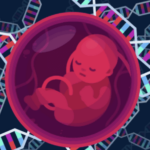
Should newborns have their genes sequenced to screen for congenital disorders?

For 51 years, newborn babies have gotten a heel-prick test in which their blood is screened for dozens of congenital disorders. Routine newborn screening has basically eliminated the risk of death or irreversible brain damage that some of these disorders can pose if they are not identified right away.

Now some researchers in Boston are trying to find out if genomic sequencing at birth would be as successful.

The BabySeq project is the first randomized, controlled trial to measure the harms and benefits of newborn genomic sequencing. One of four NIH-funded projects granted a total of $25 million to examine genomic sequencing in newborns, BabySeq recently enrolled its first four subjects, three healthy babies and one baby from the neonatal ICU.

The central question for this project is what will come of giving genomic information to parents and their baby’s doctor. Will doctors order more tests and interventions? Will those tests and interventions make babies healthier? Or will they just waste money, or even end up doing more harm than good?

“There is no scientific consensus that it is appropriate or useful to sequence healthy individuals,” says Robert Green, co-leader of the trial. “Therefore, the only way this would be considered a public health mandate would be if we had a tremendous amount of evidence that sequencing a large number of people would be beneficial.” 

Whatever they find, positive or negative, will be important for the future of population-wide genomic sequencing. “I think it starts asking the right questions,” says Muin Khoury, director of the CDC’s Office of Public Health Genomics. “The whole ethical ramification of this is that newborns have no choice to make, so parents have to make that decision for them.”

The GLP aggregated and excerpted this blog/article to reflect the diversity of news, opinion and analysis. Read full, original post: Should Babies Have Their Genomes Sequenced?

{{ reviewsTotal }}{{ options.labels.singularReviewCountLabel }}
{{ reviewsTotal }}{{ options.labels.pluralReviewCountLabel }}
{{ options.labels.newReviewButton }}
{{ userData.canReview.message }}

Related Articles

Infographic: Global regulatory and health research agencies on whether glyphosate causes cancer

Infographic: Global regulatory and health research agencies on whether glyphosate causes cancer

Does glyphosate—the world's most heavily-used herbicide—pose serious harm to humans? Is it carcinogenic? Those issues are of both legal and ...

Most Popular

Screenshot-2026-05-01-at-1.29.41-PM
Viewpoint: What happens when whole grains meet modern food manufacturing? Labels don’t tell the whole story.
S
As vaccine rejectionism spreads, measles may be taking a more dangerous turn
Screenshot 2026-05-06 at 2.56
Singularity crisis ahead? Can super babies save us from rogue AI geniuses?
Screenshot-2026-03-13-at-12.14.04-PM
The FDA wants to make many popular prescription drugs OTC—a great idea. Here’s why it’s unlikely to happen
Screenshot-2026-05-06-at-2.07.43-PM
Manufacturing a conspiracy: The timeline of how  the White House embraced the fringe claim that scientists are being mysteriously murdered
Screenshot-2026-05-01-at-11.56.24-AM
‘Science moves forward when people are willing to think differently’: Memories of DNA maverick Craig Venter
Screenshot-2026-04-30-at-2.19.37-PM
5 myths about summer dehydration that could damage your health — or even kill you
Screenshot-2026-04-20-at-2.26.27-PM
Viewpoint — Food-fear world: The latest activist scientists campaign: Cancer-causing additives
Screenshot-2026-04-03-at-11.15.51-AM
Paraben panic: How a flawed study, media hype, and chemophobia convinced the public of the danger of one of the safest classes of preservatives
images
The never-ending GMO debate: Pros and cons
glp menu logo outlined

Get news on human & agricultural genetics and biotechnology delivered to your inbox.