Largest genome sequencing database released globally

The GLP aggregated and excerpted this blog/article to reflect the diversity of news, opinion and analysis. 

Initial results from the largest completed population genome sequencing effort to date have been made available to the global scientific community to boost the search for rare genetic variants that increase the risk of disease.

“We are making all of these data available to the scientific community, which in terms of a resource is a quantum leap,” said Nicole Soranzo, a geneticist at the Wellcome Trust’s Sanger Institute in Cambridge.

Launched in 2010, the UK10K project was set up to study the genetic code of 10,000 people in much finer detail than ever before in order to uncover rare genetic variants, changes in DNA that are carried only by relatively a few people in a population, and how they contribute to human disease and its risk factors.

The project carried out whole genome sequencing at low coverage of 4000 healthy people and has published this information in Nature alongside detailed phenotypic information, a person’s observable clinical features e.g. height, blood pressure.
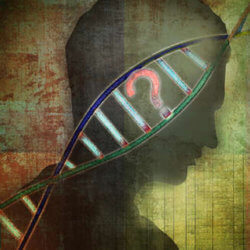
Previous studies have analysed either very rare genetic variants with big effects or common variants, which usually have small effects. The UK10K project has enabled researchers to explore more of the spectrum of variation between the very rare and the common ones, according to Richard Durbin, senior UK10K researcher at the Sanger Institute.

A key finding of the project was 24 million new genetic variants from healthy Europeans, which reflects the genetic diversity of the population.

Read full, original post: UK 10K genomes project shares its data

{{ reviewsTotal }}{{ options.labels.singularReviewCountLabel }}
{{ reviewsTotal }}{{ options.labels.pluralReviewCountLabel }}
{{ options.labels.newReviewButton }}
{{ userData.canReview.message }}

Related Articles

Infographic: Global regulatory and health research agencies on whether glyphosate causes cancer

Infographic: Global regulatory and health research agencies on whether glyphosate causes cancer

Does glyphosate—the world's most heavily-used herbicide—pose serious harm to humans? Is it carcinogenic? Those issues are of both legal and ...

Most Popular

ChatGPT-Image-May-26-2026-07_51_21-AM-2
Viewpoint: There are more than 1,000 chemicals in a cup of coffee—including many substances that can cause cancer. Why isn’t it banned?
Picture1
Sounds we can’t hear — the hidden planetary signals behind science, fear, and misinformation
Screenshot 2025-07-30 at 10.48
Can gene editing eliminate Down syndrome? Scientists have done it in lab-grown cells
the magic of mRNA
Viewpoint: Anti-vax fake ‘turbo cancer’ claims threaten cancer treatment breakthroughs
ChatGPT Image May 28, 2026, 08_16_38 PM
Viewpoint: Why the EPA mismeasures cancer risk of chemicals and what should be done to fix it
ChatGPT-Image-May-28-2026-02_12_17-PM
Can ‘Social Stress Indicators’ help contain social media misfluencers?
Screenshot-2026-06-01-at-11.07.22-AM
Viewpoint: Many vaccine-suspicious conservatives and MAHA reject shots for their children by invoking ‘patient autonomy’. That’s ridiculous.
ChatGPT Image Jun 1, 2026, 11_39_17 AM
Viewpoint: When food myths go viral, farmers pay the price
Screenshot 2025-07-16 at 12.03
Broken smiles: Why have some humans evolved to have crooked teeth
downsyndrome_compilation_MID_1
CRISPR breakthrough that can remove the chromosome responsible for Down syndrome raises ethical questions
Screenshot-2026-06-01-at-1.35.32-PM
Viewpoint: Swine farmers are under attack for allegedly mistreating their animals. Here are the facts.
glp menu logo outlined

Get news on human & agricultural genetics and biotechnology delivered to your inbox.