DIY gene editing at home? ‘Farma’ kits can produce home-brewed pharmaceuticals

Farma home bioreactor Will Patrick dezeen

The GLP aggregated and excerpted this blog/article to reflect the diversity of news, opinion and analysis.

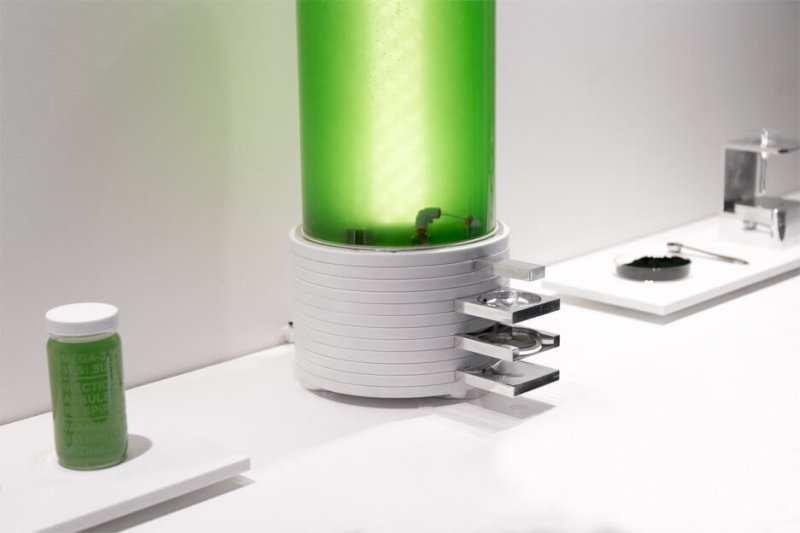
MIT Media Lab graduate Will Patrick has designed a prototype desktop bioreactor that could enable the production of pharmaceutical drugs at home.

The cylinder-shaped Farma kitchen appliance could be used to grow, measure, filter and dry synthetically designed microbes.

Patrick‘s first Farma prototype has been created for growing Spirulina that’s been genetically modified to produce pharmaceutical drugs, but the designer has said it could be adapted for other uses.Farma_home-bioreactor_Will-Patrick_dezeen_936_5

“The prototype can control temperature and light levels, and aerate and mix the culture thoroughly,” said Patrick, who previously served as a researcher in Neri Oxman’s Mediated Matter group.

Patrick researched techniques such as CRISPR technology, which can change the sequence of specific genes, and recent explorations into the ways technology could mass-produce opium-like drugs using yeast rather than poppies.

According to Patrick, the Farma would be most useful for the kinds of drugs that are used for long periods of time, such as anti-depressants, chemotherapy or insulin – rather than occasional drugs such as antibiotics.

****

Canadian designer Julie Legault has developed a desktop biolab to make synthetic biology more accessible, allowing users to hack DNA at home and monitor the progress of their creations. Larger version + story »Screen Shot 2015-12-10 at 12.44.02 PMRead full, original post: Will Patrick’s Farma bioreactor could let owners brew their own drugs


{{ reviewsTotal }}{{ options.labels.singularReviewCountLabel }}
{{ reviewsTotal }}{{ options.labels.pluralReviewCountLabel }}
{{ options.labels.newReviewButton }}
{{ userData.canReview.message }}

Related Articles

Infographic: Global regulatory and health research agencies on whether glyphosate causes cancer

Infographic: Global regulatory and health research agencies on whether glyphosate causes cancer

Does glyphosate—the world's most heavily-used herbicide—pose serious harm to humans? Is it carcinogenic? Those issues are of both legal and ...

Most Popular

ChatGPT-Image-Jun-25-2026-12_23_17-PM
No, Bill Gates did not secretly engineer ticks to promote veganism
ChatGPT-Image-Jun-23-2026-03_12_23-PM
Is cellular reprogramming junk science? Nearly 20 patients are getting eye injections in the first FDA-cleared cellular trial
ChatGPT-Image-Jun-24-2026-11_36_47-AM
Why the human genome is less a script than a puzzle
Screenshot-2026-06-15-at-1.55.27-PM
America's trust in Trump-Kennedy's CDC health recommendations is plunging
ChatGPT-Image-Jun-17-2026-10_52_43-AM
Anguished parents, doctors in tears: Utah’s long measles outbreak takes a toll
ChatGPT-Image-Mar-10-2026-01_39_01-PM
Viewpoint—“Miracle molecule” debunked: Why acemannan supplements don’t work
Screenshot 2026-06-25 at 10.55
Leading OB-GYN group challenges RFK, Jr. gutting of maternal vaccine schedule
Screenshot-2026-06-22-at-9.04.46-PM
Kennedy's nutrition prescription for medical schools: Real problem, bad cure
Screenshot-2026-06-24-at-2.57.41-PM
Viewpoint: Trump’s Reflecting Pool algae fiasco points to a bigger culprit: Climate change
Screenshot-2026-06-24-at-2.40.46-PM
Hegseth reversal: As Air Force flu outbreak continues to surge, military reinstitutes mandatory vaccines for recruits
Screenshot-2026-06-25-at-1.48.40-PM
Glyphosate affirmed as safe: Supreme Court rejects lawsuit claiming Roundup herbicide causes cancer, upholding EPA determination

Sorry. No data so far.

glp menu logo outlined

Get news on human & agricultural genetics and biotechnology delivered to your inbox.