
FDA approves transgenic chicken that produces lifesaving drug in its eggs

Hen with eggs

The GLP aggregated and excerpted this blog/article to reflect the diversity of news, opinion and analysis.

The U.S. Food and Drug Administration (FDA) has approved a chicken that has been genetically engineered to produce a drug in its eggs.

The drug, Kanuma (sebelipase alfa), is a recombinant human enzyme marketed by Alexion Pharmaceuticals. It replaces a faulty enzyme in people with a rare, inherited condition that prevents the body from breaking down fatty molecules in cells.

Following its approval by the FDA on December 8, Kanuma joins a small group of ‘farmaceuticals’ on the U.S. market. In 2009, the agency approved genetically modified goats that produce an anticoagulant called ATryn (antithrombin) in their milk. And last year, the FDA authorized a drug for treating hereditary angioedema that is produced by transgenic rabbits. . .

The agency moved quickly to consider Kanuma, giving it a priority review, orphan-drug status and a breakthrough-therapy designation. The disease that it is designed to treat, lysosomal acid lipase deficiency, causes fat to accumulate in the liver, spleen and vasculature. A form of the disease that strikes infants is quickly fatal. A second form that affects older patients causes liver enlargement, fibrosis and cirrhosis, as well as cardiovascular disease. . .
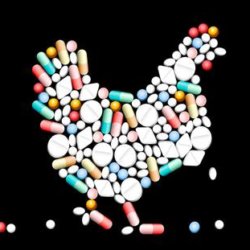

Unlike the genetically engineered AquAdvantage salmon that was approved by the FDA last month, the transgenic chickens that produce Kanuma are not intended to enter the food supply. . .

The FDA says that the chickens are not likely to accidentally enter the food supply or adversely affect the environment because they are raised in indoor facilities.

Read full, original post: US government approves transgenic chicken

Related Articles

Infographic: Global regulatory and health research agencies on whether glyphosate causes cancer

Infographic: Global regulatory and health research agencies on whether glyphosate causes cancer

Does glyphosate—the world's most heavily-used herbicide—pose serious harm to humans? Is it carcinogenic? Those issues are of both legal and ...

Most Popular

ChatGPT-Image-Mar-10-2026-01_39_01-PM
Viewpoint—“Miracle molecule” debunked: Why acemannan supplements don’t work
Screenshot-2026-09-22-at-12.26.15-PM
‘Forever chemical’ concerns: Separating hysteria from reasonable concern in the debate over PFAS danger
Screenshot-2026-10-06-at-2.36.47-PM
Is organic farming really more sustainable? 100 recent studies say ‘no’
Screenshot-2026-10-06-at-11.13.59-AM
RFK Jr.’s plan to curb America’s appetite for ultra-processed foods and artificial dyes blocked by the White House
Screenshot 2026-10-08 at 1.34
Hooked on kratom: The unregulated, natural, alcohol-free “social tonic” that is destroying lives 
Radioactive-Americana-Collage-2
The kooky logic behind the raft of spurious cancer claims from Harvard’s T.H. Chan School of Public Health
Screenshot-2026-09-28-at-11.26.17-AM
Viewpoint: Wellness movement activists reposition nicotine from a killer addictive drug into a cure-all for brain ills
Resolute-Portrait-with-Injured-Teddy-Bear
Anti-vax Texas Senate candidate Ken Paxton alleges conspiracy by doctors, drugmakers, and insurers to push childhood vaccination for profit
Supreme-Court-Amid-Climate-Crisis
Should fossil fuel companies be shielded from lawsuits over climate change damage? The Supreme Court takes up the question
Screenshot-2026-09-22-at-10.54.12-AM
‘They misunderstand science’: Research attempting to tie autism to changes in the gut microbiome comes under fire
strand of dna genetics
No, GMO foods do not “damage genes, natural disposition and hormones, or decrease physical health and intelligence”
No-Data-Center-Farm-Protest-Sign-2
Rural revival or corporate windfall? Trump’s One Big Beautiful Bill tax law opens the door to big breaks for data centers—but tech giants aren’t cashing in
glp menu logo outlined

Get news on human & agricultural genetics and biotechnology delivered to your inbox.