The GLP aggregated and excerpted this blog/article to reflect the diversity of news, opinion and analysis.
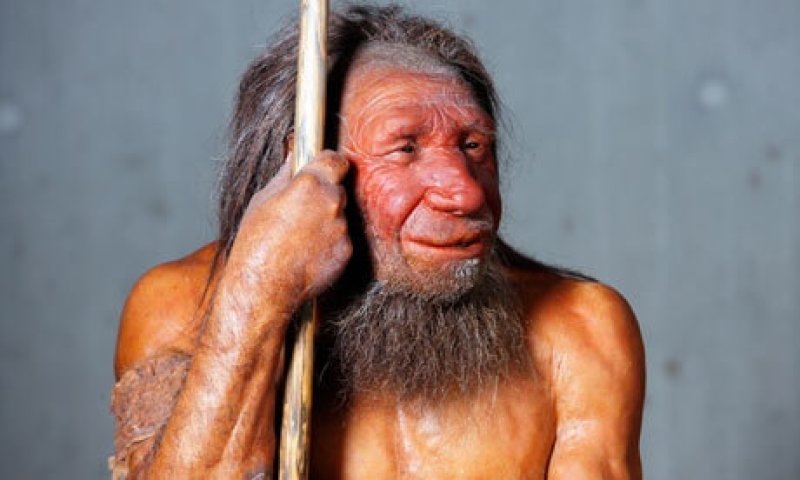
Modern European and Asian people may owe more than skin or hair colour to Neanderthal ancestry. Interbreeding 50,000 years ago between two species of human may also have bequeathed a sunburn hazard called keratosis, addiction to nicotine, and a greater risk of depression.
That the forebears of modern Homo sapiens and the long-extinct Neanderthals lived side by side is well known: that they interbred, and that up to 4% of modern human DNA is inherited from the first Europeans, was confirmed only in 2010.
US researchers examined a database of 28,000 patients whose biological samples had been linked to versions of their medical records. Identities remained anonymous but the researchers could see how inheritance linked to medical history.

Then, they report in the journal Science, they matched the modern human database against a map of those groups of genes known to have been inherited from the big-boned, heavy-browed, red-haired humans whose ancestors had moved out of Africa long before Homo sapiens, and colonised Ice Age Europe.
“Our main finding is that Neanderthal DNA does influence clinical traits in modern humans,” said John Capra, an evolutionary geneticist at Vanderbilt University in Nashville, Tennessee. “We discovered associations between Neanderthal DNA and a wide range of traits, including immunological, dermatological, neurological, psychiatric and reproductive diseases.”
Read full, original post: Neanderthal DNA may account for nicotine addiction and depression