Genes contribute to political views, but they don’t tell whole story

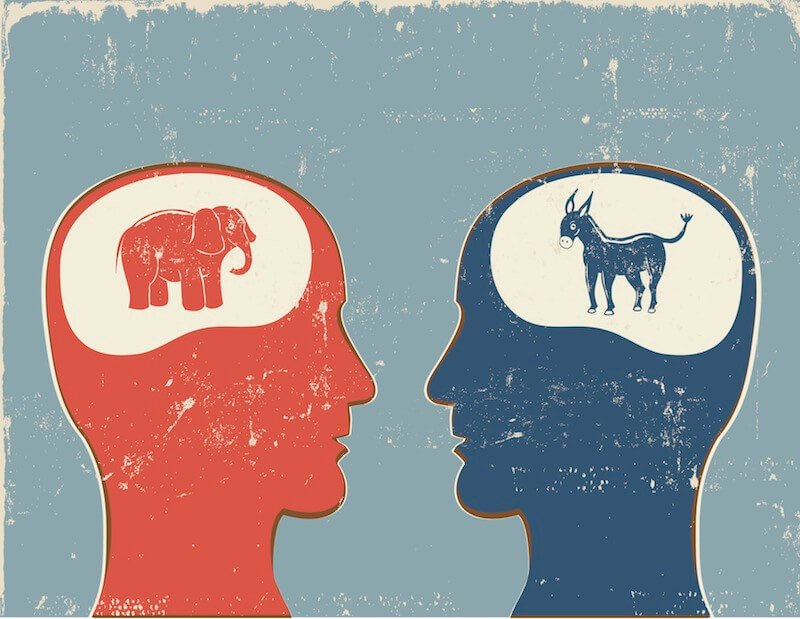
Republicanvs Democrat
Democrat vs. Republican

The GLP aggregated and excerpted this blog/article to reflect the diversity of news, opinion and analysis.

Scientists and laypeople alike have historically attributed political beliefs to upbringing and surroundings, yet recent research shows that our political inclinations have a large genetic component.

The largest recent study of political beliefs, published in 2014 in Behavior Genetics, looked at a sample of more than 12,000 twin pairs from five countries, including the U.S. Some were identical and some fraternal; all were raised together. The study reveals that the development of political attitudes depends, on average, about 60 percent on the environment in which we grow up and live and 40 percent on our genes.

“We inherit some part of how we process information, how we see the world and how we perceive threats—and these are expressed in a modern society as political attitudes,” explains Peter Hatemi, who is a genetic epidemiologist at the University of Sydney and lead author of the study.

The genes involved in such complex traits are difficult to pinpoint because they tend to be involved in a huge number of bodily and cognitive processes that each play a minuscule role in shaping our political attitudes. Yet a study published in 2015 in the Proceedings of the Royal Society B managed to do just that, showing that genes encoding certain receptors for the neurotransmitter dopamine are associated with where we fall on the liberal-conservative axis. Among women who were highly liberal, 62 percent were carriers of certain receptor genotypes that have previously been associated with such traits as extroversion and novelty seeking. Meanwhile, among highly conservative women, the proportion was only 37.5 percent.

Read full, original post: The Genes of Left and Right

{{ reviewsTotal }}{{ options.labels.singularReviewCountLabel }}
{{ reviewsTotal }}{{ options.labels.pluralReviewCountLabel }}
{{ options.labels.newReviewButton }}
{{ userData.canReview.message }}

Related Articles

Infographic: Global regulatory and health research agencies on whether glyphosate causes cancer

Infographic: Global regulatory and health research agencies on whether glyphosate causes cancer

Does glyphosate—the world's most heavily-used herbicide—pose serious harm to humans? Is it carcinogenic? Those issues are of both legal and ...

Most Popular

Screenshot-PM-24
Viewpoint: The herbicide glyphosate isn’t perfect. Banning it would be far worse.
d-b
Blocked arteries, kidney stones, nausea, constipation, fatigue: Long list of health problems caused by too much vitamin D 
Screenshot-2026-04-27-at-12.22.38-PM
Running ‘wild’: Last year, RFK, Jr. was given a green light to ‘reform’ chemical policies. Glyphosate illustrates how Trump now has him on a tight leash, and MAHA is furious
ChatGPT-Image-Apr-22-2026-11_06_18-AM
Wellness influencer nonsense: No, nicotine does not boost cognition and productivity, but it can damage your health 
bayer-supremecourt-lt
EPA concludes glyphosate is not carcinogenic. Missouri courts say Monsanto failed to warn it might be. SCOTUS weighs in.
ChatGPT-Image-Feb-16-2026-01_57_31-PM
Viewpoint: ‘Science-as-Satan’ unites the MAHA—MAGA movements. Is a breakup in the works?
Screenshot-2026-04-27-at-1.40.55-PM
With federal funding for scientific research already reeling, Trump fires the entire apolitical National Science Board
Screenshot-2026-04-13-at-3.54.04-PM
AI disinformation stress test: Challenges and response strategies
ChatGPT-Image-Feb-16-2026-01_04_32-PM
Raw milk myth wake-up call
Screenshot-2026-04-12-135256
Bixonimania: The fake disease scam that AI swallowed whole
Screenshot-2026-04-27-at-12.41.50-PM
How pediatricians are navigating America’s surge of health misinformation
glp menu logo outlined

Get news on human & agricultural genetics and biotechnology delivered to your inbox.