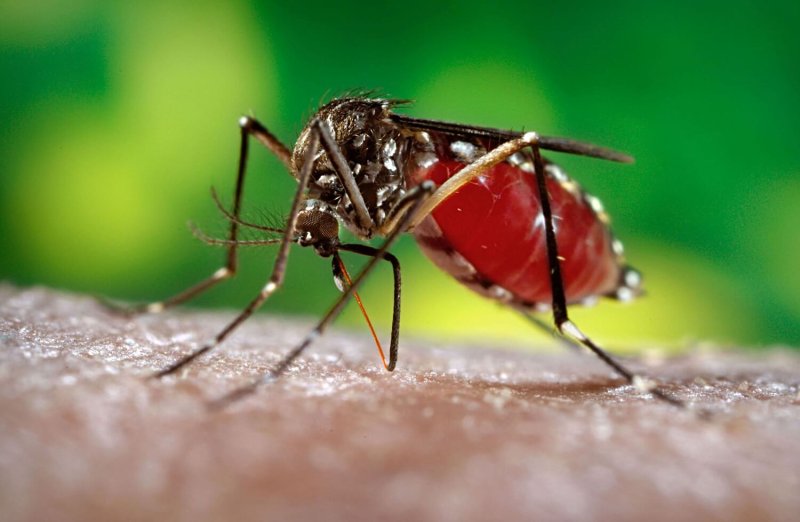
Cayman Islands to employ genetically modified mosquitoes against Zika

original
Prof. Frank Hadley Collins/ Univ. of Notre Dame 2006

The GLP aggregated and excerpted this blog/article to reflect the diversity of news, opinion and analysis.

In the year since Zika was first identified in the Americas, it’s grown into a global health emergency, with public health officials, governments, and researchers alike scrambling for solutions.

One solution? Getting rid of Zika’s main method of spreading from person to person, the Aedes aegypti mosquito. To do this, one company is genetically engineering the bugs so they pass a lethal gene to their offspring.

A small region just south of Cuba just announced plans to deploy the critters to fend off Zika, making it the second location to do so. The US is still considering using the mosquitoes in certain areas, but hasn’t done so yet.

The region is the Cayman Islands, a British territory of about 58,000 people composed of three islands (of which only one has locally transmitted Zika).

Oxitec, the biotech company that makes these mosquitoes, launched another GM-mosquito disease-prevention program in Brazil in 2015which targeted dengue and yellow fever, two diseases that are also transmitted by the A. aegypti mosquito. Oxitec has since expanded that program in response to the Zika outbreak.

The Cayman Island project is focused on the Grand Cayman island. For the first two months, Oxitec and the Cayman Islands’ Mosquito Research and Control Unit (MRCU) will educate people about the mosquitoes and make sure they’re aware these bugs are not the ones spreading disease. Then, Oxitec will deploy enough mosquitoes to try and protect an area of 1,800 residents on the Grand Cayman island from Zika.

Read full, original post: Another region is joining in the fight to use genetically modified mosquitoes to fight Zika

{{ reviewsTotal }}{{ options.labels.singularReviewCountLabel }}
{{ reviewsTotal }}{{ options.labels.pluralReviewCountLabel }}
{{ options.labels.newReviewButton }}
{{ userData.canReview.message }}

Related Articles

Infographic: Global regulatory and health research agencies on whether glyphosate causes cancer

Infographic: Global regulatory and health research agencies on whether glyphosate causes cancer

Does glyphosate—the world's most heavily-used herbicide—pose serious harm to humans? Is it carcinogenic? Those issues are of both legal and ...

Most Popular

ChatGPT-Image-Mar-10-2026-01_39_01-PM
Viewpoint—“Miracle molecule” debunked: Why acemannan supplements don’t work
afb-a-b
As the EU loosens restrictions on agricultural gene editing, it remains years behind the rest of the world on equally-safe GMO foods
ChatGPT-Image-Jul-8-2026-12_32_48-PM
Viewpoint: SCOTUS strikes a blow against junk science in Bayer glyphosate case. Will it deter mass tort litigators?
Screenshot-2026-07-10-at-2.02.54-PM
Viewpoint: In abortion-restricting Florida, misinformation abounds when Republican congresswoman faces an ectopic pregnancy
ChatGPT-Image-Jul-7-2026-01_57_55-PM
Viewpoint: Europe’s rejection of air conditioning is the poster child for misunderstanding how to mitigate the impact of climate change
Screenshot-2026-07-10-at-3.10.50-PM
Snake-oil cures throughout history
ChatGPT-Image-Jun-25-2026-12_23_17-PM
No, Bill Gates did not secretly engineer ticks to promote veganism
Screen-Shot-at-PM-pe-vra-kipgaprbdo-vd-ms-jpule-n-jqqaxf-l-e
Viewpoint: Will new breeding techniques help make European agriculture more competitive?
Screenshot-2026-07-10-at-12.55.21-PM
Cancer health facts are particularly susceptible to online misinformation
Screenshot-2026-07-10-at-3.25.10-PM
Using AI for health questions? Here are 4 tips for the most accurate answers.
Viewpoint: Consensus as truth? How ‘misinformation police’ control policy narratives
Which among war, weather and cyber attacks is the biggest world threat? None of the above. It’s misinformation, and here’s why.
Screenshot-2026-07-08-at-9.36.03-AM
Viewpoint: Long-contained diseases are on the rise in the U.S. Are Trump cuts to blame?
ChatGPT-Image-Jul-1-2026-03_33_49-PM
‘Alternative’ cancer treatments that could kill you
Gemini_Generated_Image_gabo48gabo48gabo
Viewpoint: A plastic surgeon on why banning gender-transition surgery without further research is wrong and harmful
glp menu logo outlined

Get news on human & agricultural genetics and biotechnology delivered to your inbox.