Gut microbes can be maintained in vivo, new study shows

microbiome hero

The GLP aggregated and excerpted this blog/article to reflect the diversity of news, opinion and analysis.

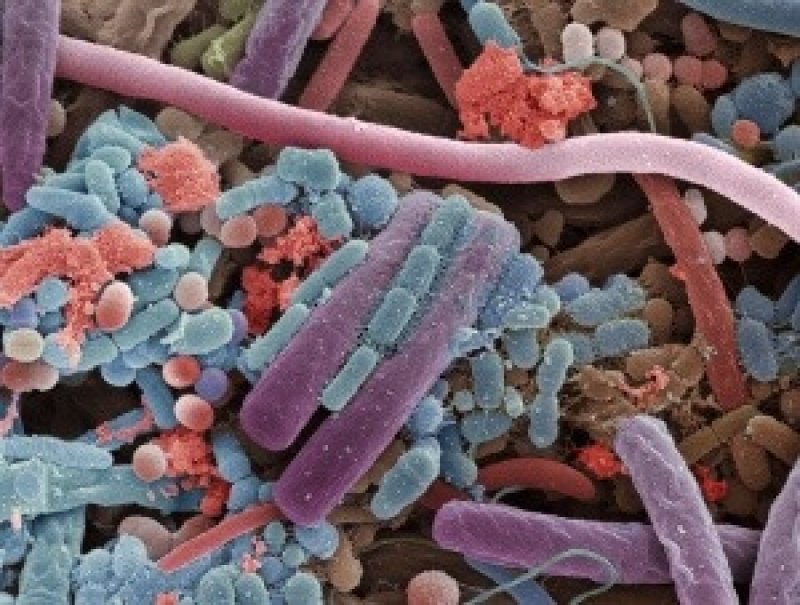
By combining microbial culture experiments with genomic approaches, researchers from Wellcome Trust Sanger Institute and their colleagues have now shown that, contrary to the widely held assumption that most bacteria are “unculturable,” most known gut microbial species can be grown and preserved in vitro. The results, published in Nature, reveal that many “unculturable” gut bacteria belong to novel groups, and nearly 60 percent  of them form spores in order to survive outside the human body.

To assess how much of the human gut microbiota could be cultured, the Sanger Institute’s Trevor Lawley and colleagues began with fresh fecal samples from six healthy individuals. The researchers sequenced the samples to identify bacterial diversity, grew bacteria from the samples on plates containing a broad-range growth medium called YCFA, and then compared the genomic data from the original samples to that from species that grew in the petri dishes.

The two shared 72 percent of their genomic sequences, and sequences from the cultured bacterial colonies represented 39 percent of the genes present in a larger database of gut microbiomes of 318 individuals, the team reported. But the researchers found that to match the species detection levels possible by sequencing a fecal sample directly, more than 8 million bacterial colonies would have to be picked off plates.

Read full, original post: Most Gut Microbes Can Be Cultured

{{ reviewsTotal }}{{ options.labels.singularReviewCountLabel }}
{{ reviewsTotal }}{{ options.labels.pluralReviewCountLabel }}
{{ options.labels.newReviewButton }}
{{ userData.canReview.message }}

Related Articles

Infographic: Global regulatory and health research agencies on whether glyphosate causes cancer

Infographic: Global regulatory and health research agencies on whether glyphosate causes cancer

Does glyphosate—the world's most heavily-used herbicide—pose serious harm to humans? Is it carcinogenic? Those issues are of both legal and ...

Most Popular

ChatGPT-Image-Mar-27-2026-11_47_30-AM-2
FDA’s expedited drug reviews are hailed in some quarters but other approval practices are problematic
Farmers can talk to plants
Farmers are a major source of misinformation—about farming
Screenshot-2026-05-01-at-1.29.41-PM
Viewpoint: What happens when whole grains meet modern food manufacturing? Labels don’t tell the whole story.
ChatGPT-Image-Apr-13-2026-02_20_22-PM
Viewpoint: Misinformation infodemic? Why assessing evidence is so challenging 
S
As vaccine rejectionism spreads, measles may be taking a more dangerous turn
Screenshot 2026-05-06 at 2.19
Vaccine shootout at the CDC 
What explains Homo sapiens’ huge brains? Ancient climate change played a role
Viewpoint: Internal White House documents detail administration’s strategy to undermine climate science
Screenshot-2026-04-20-at-2.26.27-PM
Viewpoint — Food-fear world: The latest activist scientists campaign: Cancer-causing additives
ChatGPT-Image-May-7-2026-11_28_04-AM-2
‘Conflict entrepreneurs’ are driving disinformation and shaping public opinion
ChatGPT-Image-May-6-2026-03_41_05-PM
‘Protecting the integrity of science’: Kennedy’s FDA blocks release of taxpayer-funded studies finding COVID and shingles vaccines safe
Screenshot-2026-05-06-at-2.07.43-PM
Manufacturing a conspiracy: The timeline of how  the White House embraced the fringe claim that scientists are being mysteriously murdered
bigstock opioids on chalkboard with rol
GLP podcast: 'Safe injection sites': enabling drug addiction or saving lives?
Screenshot 2026-05-06 at 2.56
Singularity crisis ahead? Can super babies save us from rogue AI geniuses?
Screenshot-2026-04-03-at-11.15.51-AM
Paraben panic: How a flawed study, media hype, and chemophobia convinced the public of the danger of one of the safest classes of preservatives

glp menu logo outlined

Get news on human & agricultural genetics and biotechnology delivered to your inbox.