Lab-grown embryos reveal earliest stages of life

embryo
CREDIT: Flickr/wellcome images

The GLP aggregated and excerpted this blog/article to reflect the diversity of news, opinion and analysis.

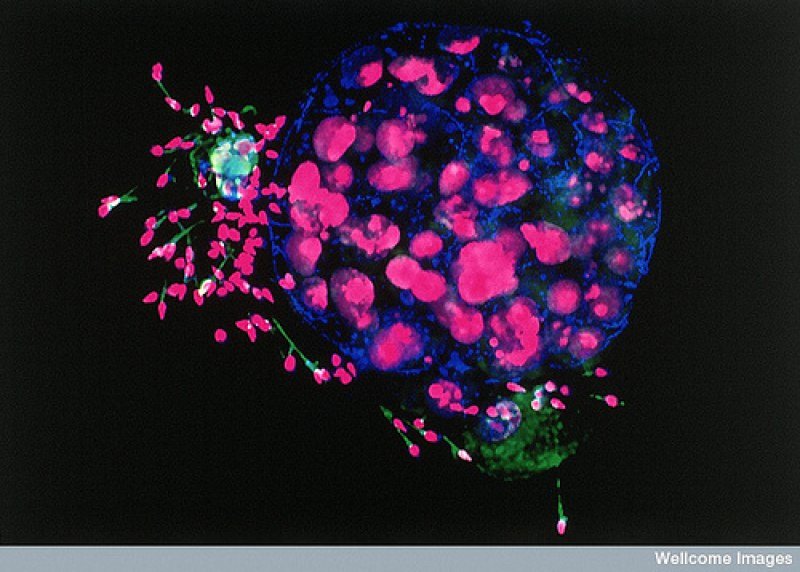
Scientists say a breakthrough in growing embryos will improve fertility treatments and revolutionise knowledge of the earliest steps to human life.

For the first time, embryos have been grown past the point they would normally implant in the womb.

The research, in the UK and US, was halted just before the embryos reached the legal limit of 14-days old.

But in an ethically-charged move, some scientists have already called for the 14-day limit to be changed.

The earliest steps towards human life are largely a mystery, but the research in Nature and Nature Cell Biology, has been able to study embryos for longer than ever before.

About a week used to be the limit – with scientists able to grow a fertilised egg up to the stage it would normally implant into the womb.

The experiments were deliberately ended at the 13-day stage – just before the legal limit, but far beyond anything that has been achieved before.

The research is already providing insight into how an embryo starts the process of organising itself into a human being.

There is international agreement that experiments should not allow embryos to develop past 14 days.

This research is pushing right up against the legal limits and some scientists are already making the case for the 14-day limit to be reviewed.

Read full, original post: Embryo study shows ‘life’s first steps’

{{ reviewsTotal }}{{ options.labels.singularReviewCountLabel }}
{{ reviewsTotal }}{{ options.labels.pluralReviewCountLabel }}
{{ options.labels.newReviewButton }}
{{ userData.canReview.message }}

Related Articles

Infographic: Global regulatory and health research agencies on whether glyphosate causes cancer

Infographic: Global regulatory and health research agencies on whether glyphosate causes cancer

Does glyphosate—the world's most heavily-used herbicide—pose serious harm to humans? Is it carcinogenic? Those issues are of both legal and ...

Most Popular

Screenshot-2026-05-01-at-11.56.24-AM
‘Science moves forward when people are willing to think differently’: Memories of DNA maverick Craig Venter
Screenshot-2026-04-03-at-11.15.51-AM
Paraben panic: How a flawed study, media hype, and chemophobia convinced the public of the danger of one of the safest classes of preservatives
79d03212-2508-45d0-b427-8e9743ff6432
Viewpoint: The Casey Means hustle—Wellness woo opportunism dressed up as medical wisdom
Screenshot-PM-24
Viewpoint: The herbicide glyphosate isn’t perfect. Banning it would be far worse.
ChatGPT-Image-Apr-30-2026-12_21_05-PM-2
The tech billionaires behind the immortality movement
ChatGPT-Image-Mar-27-2026-11_27_05-AM
The myths of “process”: What science says about the “dangers’ of synthetic products and ultra-processed foods
ChatGPT-Image-Mar-10-2026-01_39_01-PM
Viewpoint—“Miracle molecule” debunked: Why acemannan supplements don’t work
Drinking lots of water can help reduce the effects of aging
Nanoplastics in drinking water: MAHA activists forge science-based bipartisan coalition 
ChatGPT-Image-Mar-3-2026-01_17_14-PM
MAHA wellness influencers deride proven anxiety medications, tout lifestyle fixes
ChatGPT Image Apr 30, 2026, 01_11_41 PM
Trump’s America First health aid cuts: Retrenchment has already hit global malaria, HIV, TB, and polio programs
ChatGPT-Image-May-1-2026-03_16_32-PM
Viewpoint: How ‘health care guru’ Joe Rogan circumvented the FDA’s skepticism on psychedelics
images
The never-ending GMO debate: Pros and cons
glp menu logo outlined

Get news on human & agricultural genetics and biotechnology delivered to your inbox.