Curing diseases with embryonic stem cells proving much harder than expected

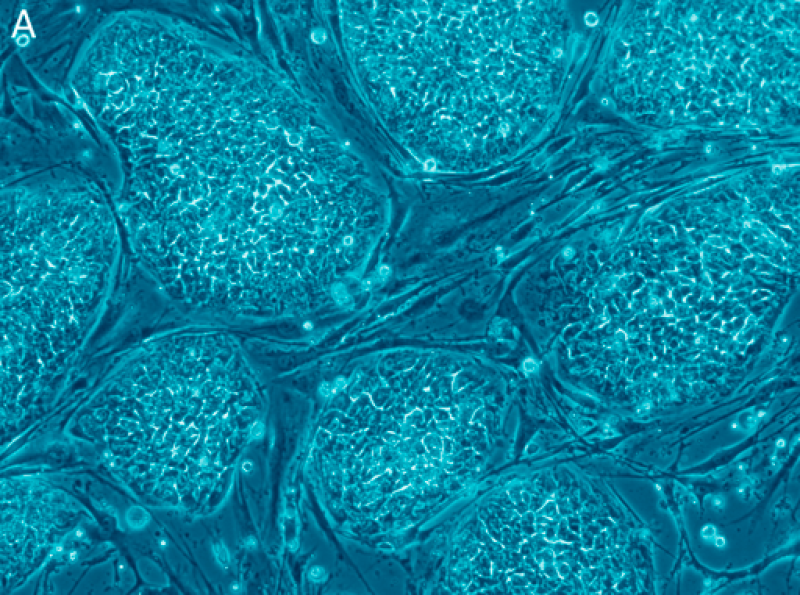
px Human embryonic stem cells only A
Human embryonic stem cells (CREDIT: Nissim Benvenisty, Vojtech.dostal, Wikimedia Commons).
[N]o field of biotechnology has promised more and delivered less in the way of treatments than embryonic stem cells. Only a handful of human studies has ever been carried out, without significant results. The cells, culled from IVF embryos, are capable of developing into any other tissue type in the body, and therefore promise an unlimited supply of replacement tissue.

Sounds simple, but it hasn’t been. It took [researcher Doug] Melton and his team 15 years to unveil each molecular step required to coax a stem cell into a pancreatic beta cell able to sense glucose and secrete insulin…

…

[Harvard professor] William Sahlman…says “people are prepared to put very large amounts of money on the experiments.” One reason: the global market for insulin exceeds $30 billion a year. Tests strips and monitors might double that.


…

[Melton] still has no timeline for when [his] implantable biotech pancreas could be ready. That means Melton’s children will have to wait a while longer. “I’m sorry it takes so long,” says Melton, “but it is going to work.”

The GLP aggregated and excerpted this blog/article to reflect the diversity of news, opinion and analysis. Read full, original post: Will Embryonic Stem Cells Ever Cure Anything?

Related Articles

Infographic: Global regulatory and health research agencies on whether glyphosate causes cancer

Infographic: Global regulatory and health research agencies on whether glyphosate causes cancer

Does glyphosate—the world's most heavily-used herbicide—pose serious harm to humans? Is it carcinogenic? Those issues are of both legal and ...

Most Popular

Strawberry Clamshell with Warning Sticker
Viewpoint: Activists hype ‘dangerous level’ of pesticide residues in Driscoll berries: Separating health concerns from fear-mongering
ChatGPT-Image-Mar-10-2026-01_39_01-PM
Viewpoint—“Miracle molecule” debunked: Why acemannan supplements don’t work
Generations United for Immunization
Police raid Guinea-Bissau offices of RFK Jr.-backed vaccine researchers, seize hepatitis B doses
Rustic Skillet of Raw Brains
‘Weird food’? Testicle- and brain-eating, supplement-gulping MAHA health food enthusiasts defend their ‘natural’ diets
Screenshot-2026-10-20-at-2.25.49-PM
RFK Jr.’s anti-vaccine obsession and fear of MAHA derailed bird flu containment plan
Nutrition and Supplements Infinity Collage
Drugs and supplements can extend life and five other longevity myths
Magnifying Glass Highlights NIH Logo
Latest Trump administration proposal to change NIH research grant system draws scientists’ ire
Screenshot 2026-10-16 at 5.38
PFAS in Agriculture: Science, Uncertainty, and Risk Communication
Golden-GM-Emblem-with-EU-Stars
As Europe inches forward in its embrace of gene-edited crops, hopes abound that opposition to GMOs might fade
png_cheese_Raw_milk
100% raw milk, 100% misguided: As MAHA-fueled demand for unpasteurized milk soars, American Academy of Pediatrics renews call for a ban on its sale and distribution
Screenshot-2026-10-19-at-12.04.51-PM
Victims of their own success: As memories of killer diseases fade, vaccine rejectionism soars
Government Briefing on Autism Trends
Viewpoint: ‘Statistical murder’: Kennedy’s expanding record of “duplicity and mendacity”
Serene Mature Woman in Abstract Waves
Testosterone’s growing appeal to women: It anecdotally mildly improves sex life, but are there any other potential benefits—or red flags?
Screenshot-2026-10-20-at-10.53.36-AM
World Health Organization calls Kennedy- and CDC-backed Guinea-Bissau hepatitis B vaccine study designed to ‘prove’ the danger of vaccines “unethical”
glp menu logo outlined

Get news on human & agricultural genetics and biotechnology delivered to your inbox.