Cancer is a death sentence for many women in low-income countries

Screen Shot at AM

A woman diagnosed with breast cancer in most high-income countries is very likely to survive. The opposite is true for the hundreds of thousands of women facing the same diagnosis in poor countries. Survival should not be a fluke of geography.

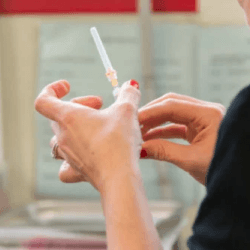
Cervical cancer is almost entirely preventable via HPV vaccination for girls and cervical screening…None of this requires an oncologist or high-level cancer centre.

These cost-effective interventions can save millions of lives, if made affordable. Many low-income countries are eligible for lower-cost HPV vaccines…but many women with a high risk of death from cervical cancer live in countries deemed too wealthy for this special access…In other words, developing countries can effectively be disadvantaged by virtue of their economic success.

The case must also be made for leverage existing resources, for example by providing breast health education and cervical screening at reproductive health clinics.

Investments must be made now, including direct international assistance for health, as well as increased expenditures from national governments. Countries moving towards universal health coverage must expand beyond traditional packages that focus exclusively on infectious diseases and mother-and-child health to incorporate services for breast and cervical cancer.

The GLP aggregated and excerpted this blog/article to reflect the diversity of news, opinion, and analysis. Read full, original post:ย Womenโ€™s cancers: curable for the rich, often a death sentence for the poor

{{ reviewsTotal }}{{ options.labels.singularReviewCountLabel }}
{{ reviewsTotal }}{{ options.labels.pluralReviewCountLabel }}
{{ options.labels.newReviewButton }}
{{ userData.canReview.message }}

Related Articles

Infographic: Global regulatory and health research agencies on whether glyphosate causes cancer

Infographic: Global regulatory and health research agencies on whether glyphosate causes cancer

Does glyphosateโ€”the world's most heavily-used herbicideโ€”pose serious harm to humans? Is it carcinogenic? Those issues are of both legal and ...

Most Popular

Picture1-5
Science Disinformation Gap: The transatlantic battle over social media and censorship
Screenshot-2026-04-23-at-11.00.36-AM
Regulators' dilemma: Thalidomide, Metformin, and the cost of getting drug approvals wrong
ChatGPT-Image-May-12-2026-08_39_41-PM
GLP podcast: Big Pharma, Big Ag, Big Foodโ€”health harming industries or life-saving innovators?
Screenshot-2026-05-12-at-9.58.31-PM
'He seems fine': Marty Makary out as FDA commissioner
ChatGPT Image May 10, 2026, 08_16_59 PM 2
Overmedicalization? RFK Jr.โ€™s antidepressant crackdown raises conflict questions over his fee stake in Wisner Baum, the tort firm built on suing drug makers
Screenshot-2026-05-12-at-10.05.11-AM
Pro-vaccine โ€œheroโ€ vs. an anti-vax โ€œvillainโ€: โ€˜Bad Vaxxโ€™ video stirs MAHA backlash
Picture1-1
Cooling the planet with balloons: Could a geoengineering gamble slow global warming?
Screenshot-2026-05-01-at-1.29.41-PM
Viewpoint: What happens when whole grains meet modern food manufacturing? Labels donโ€™t tell the whole story.
ChatGPT-Image-Apr-13-2026-02_20_22-PM
Viewpoint: Misinformation infodemic? Why assessing evidence is so challengingย 
Screenshot-2026-05-11-104424
Hantavirus outbreak research: Trump administration shut down study last year on rodent-to-human transmission
images
The never-ending GMO debate: Pros and cons
S
As vaccine rejectionism spreads, measles may be taking a more dangerous turn
glp menu logo outlined

Get news on human & agricultural genetics and biotechnology delivered to your inbox.