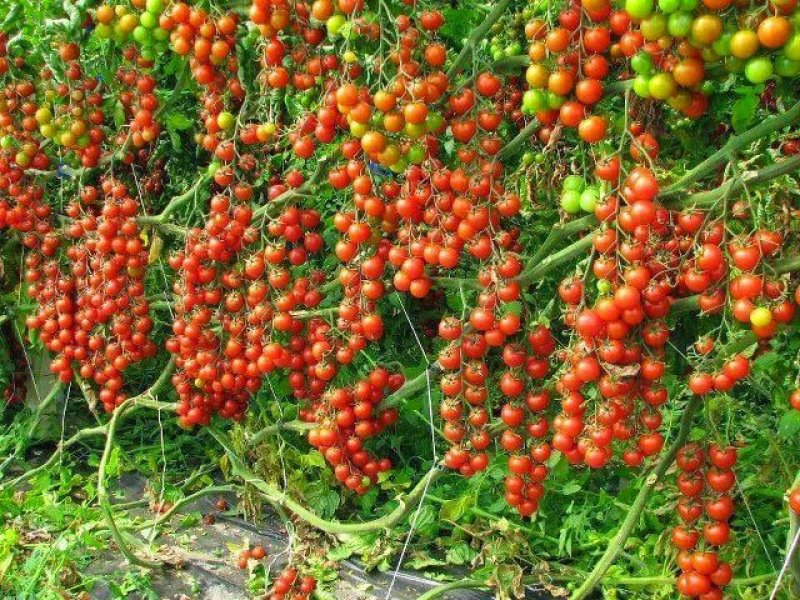
Gene editing could boost tomato yields by speeding fruit ripening

High Yield Tomato

Using a simple and powerful genetic method to tweak genes native to two popular varieties of tomato plants, a team at Cold Spring Harbor Laboratory (CSHL) has devised a rapid method to make them flower and produce ripe fruit more than 2 weeks faster than commercial breeders are currently able to do.

This means more plantings per growing season and thus higher yield. In this case, it also means that the plant can be grown in latitudes more northerly than currently possible – an important attribute as the earth’s climate warms.

“Our work is a compelling demonstration of the power of gene editing – CRISPR technology – to rapidly improve yield traits in crop breeding,” says CSHL Associate Professor Zachary Lippman, who led the research. Applications can go far beyond the tomato family, he says, to include many major food crops like maize, soybean, and wheat that so much of the world depends upon.

. . . .

More information: Variation in the flowering gene SELF PRUNING 5G promotes day-neutrality and early yield in tomato, Nature Geneticsnature.com/articles/doi:10.1038/ng.3733

The GLP aggregated and excerpted this blog/article to reflect the diversity of news, opinion and analysis. Read full, original post: Gene editing yields tomatoes that flower and ripen weeks earlier

{{ reviewsTotal }}{{ options.labels.singularReviewCountLabel }}
{{ reviewsTotal }}{{ options.labels.pluralReviewCountLabel }}
{{ options.labels.noReviewsLabel }}
{{ options.labels.newReviewButton }}
{{ userData.canReview.message }}

Related Articles

Infographic: Global regulatory and health research agencies on whether glyphosate causes cancer

Infographic: Global regulatory and health research agencies on whether glyphosate causes cancer

Does glyphosate—the world's most heavily-used herbicide—pose serious harm to humans? Is it carcinogenic? Those issues are of both legal and ...

Most Popular

ChatGPT-Image-Mar-10-2026-01_39_01-PM
Viewpoint—“Miracle molecule” debunked: Why acemannan supplements don’t work
reverse-aging
Rapamycin: Here’s the skinny on the anti-aging pill that increases the lifespan—of mice by 10%
Screenshot-2026-07-01-at-2.49.48-PM
Dr. TikTok and male fertility: Viral claims tout GLP-1 drugs as fertility boosters. What does the science say?
ChatGPT-Image-Jul-17-2026-12_42_10-PM
Viewpoint: RFK, Jr. is setting up a panel to compensate people who claim they were injured by a COVID vaccine–no proof needed 
a-mature-farmer-working-in-the-field-at-sunrise-harvesting-crops-generated-by-ai-photo
What’s the prospect of developing gene-altered crops that are more nutritious and resist climate disruption
ChatGPT-Image-Jun-25-2026-02_53_56-PM
Embryo gene editing is on the horizon, stirring mixed emotions
png-upside-food-syn-bio-cultured-meat
Regulating cultured meat around the world
UK scientists support loosening restrictions limiting embryo research
Are we edging closer to precisely, and safely, editing human embryos?
Screenshot-2026-07-21-at-6.22.06-PM
The Indian physician’s one-woman battle against health disinformation on Wikipedia
YearReview Grift
Viewpoint: A practical guide to evaluating social media wellness hype
ChatGPT-Image-Jul-6-2026-02_25_26-PM
40 million Americans take glucosamine. If you have memory loss, it could accelerate cognitive decline.
ChatGPT-Image-Jun-17-2026-03_29_08-PM
Viewpoint: What’s the impact of the U.S. abandoning support for global health?
ChatGPT-Image-Jun-25-2026-12_23_17-PM
No, Bill Gates did not secretly engineer ticks to promote veganism
glp menu logo outlined

Get news on human & agricultural genetics and biotechnology delivered to your inbox.