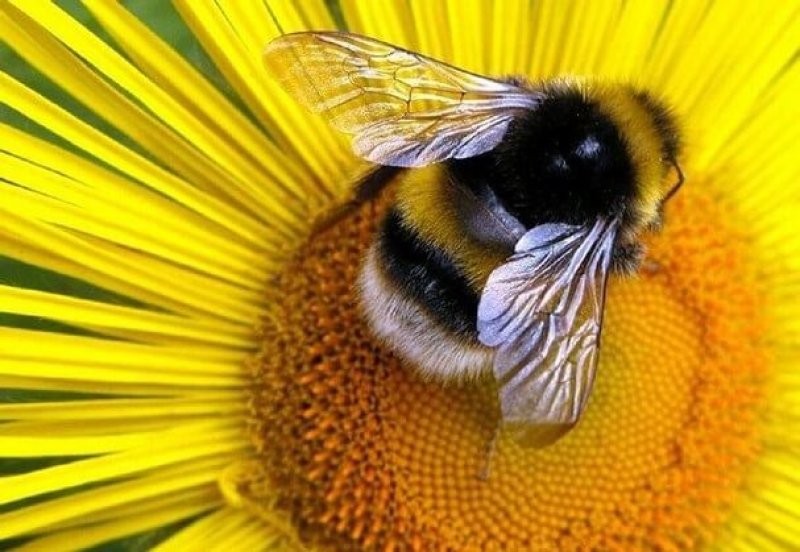
Bumblebees fed high doses of neonicotinoids in laboratory setting did not buzz as much or release pollen

Bumblebee Populations Are Shrinking

The world’s most widely used insecticides harm the ability of bees to vibrate flowers and shake out the pollen to fertilise crops, according to preliminary results from a new [lab-based] study.

Some flowers, such as those of crops like tomatoes and potatoes, must be shaken to release pollen and bumblebees are particularly good at creating the buzz needed to do this. But the research shows that bumblebees exposed to realistic levels of a neonicotinoid pesticide fail to learn how to create the greatest buzz and collect less pollen as a result. [The impacted bees were fed doses of 10ppb.]

The research is consistent with previous work that has shown neonicotinoid pesticides reduce learning and memory in bees.

A spokesman for Syngenta, which manufactures thiamethoxam, said: “Crop-measured pollen and nectar residues from thiamethoxam seed-treated oilseed rape is typically less than 3ppb. In all our thiamethoxam seed-treated oilseed rape field studies we have never recorded a pollen or nectar residue as high as 10ppb.”

There is strong evidence that neonicotinoids harm individual bees but only a little evidence to date that this harms colonies. Bees and other pollinators fertilise about three-quarters of the world’s food crops and have seen widespread declines due to habitat loss, disease and pesticide use.

. . . .
[Editor’s note: There are claims in this study that contradict mainstream research on the nemonic issue. For a comprehensive review of the latest in the controversy, we suggest reading the transcript of a Reddit Ask Me Anything on Bee Health and Pesticides with the Genetic Literacy Project’s Jon Entine held December 14:

https://www.reddit.com/r/science/comments/5i3dfr/science_ama_series_im_jon_entine_executive/?
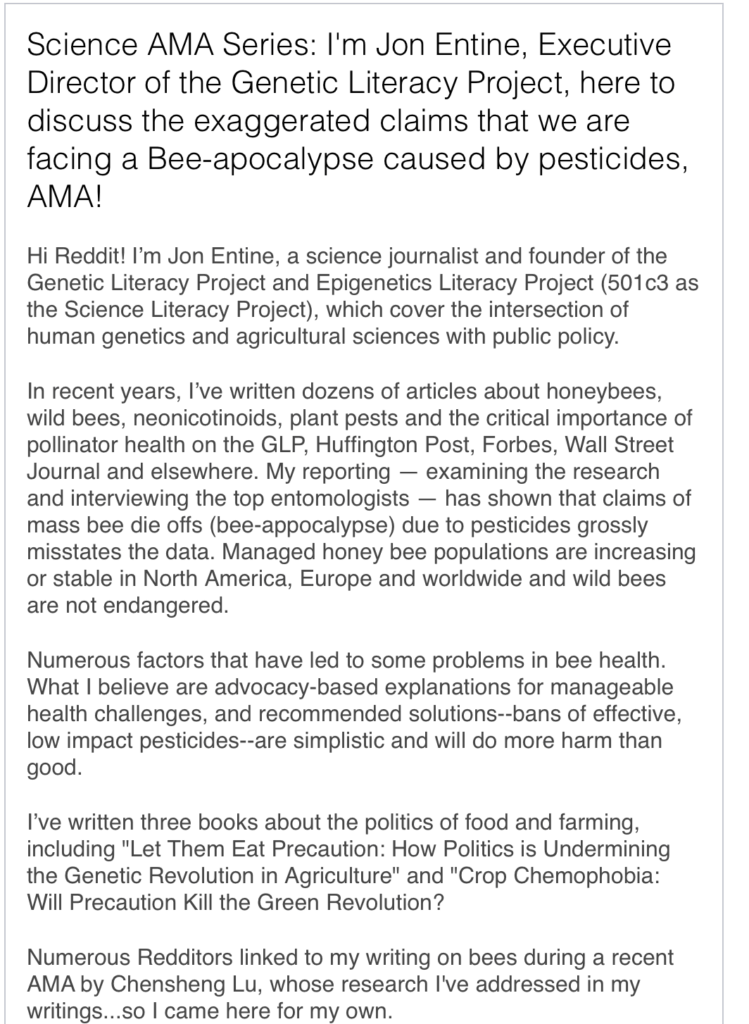
Screen Shot at AM

For background on the bee health controversy, read GLP’s Beepocalypse Myth Handbook: Dissecting claims of pollinator collapse here.

For more information on the bee controversy, we have compiled a list of archived GLP articles and resources here.

The GLP aggregated and excerpted this blog/article to reflect the diversity of news, opinion and analysis. Read full, original post: Pesticides stop bees buzzing and releasing pollen, says study

{{ reviewsTotal }}{{ options.labels.singularReviewCountLabel }}
{{ reviewsTotal }}{{ options.labels.pluralReviewCountLabel }}
{{ options.labels.newReviewButton }}
{{ userData.canReview.message }}

Related Articles

Infographic: Global regulatory and health research agencies on whether glyphosate causes cancer

Infographic: Global regulatory and health research agencies on whether glyphosate causes cancer

Does glyphosate—the world's most heavily-used herbicide—pose serious harm to humans? Is it carcinogenic? Those issues are of both legal and ...

Most Popular

Screenshot-PM-24
Viewpoint: The herbicide glyphosate isn’t perfect. Banning it would be far worse.
ChatGPT-Image-Mar-27-2026-11_27_05-AM
The myths of “process”: What science says about the “dangers’ of synthetic products and ultra-processed foods
ChatGPT-Image-Mar-3-2026-01_17_14-PM
MAHA wellness influencers deride proven anxiety medications, tout lifestyle fixes
d-b
Blocked arteries, kidney stones, nausea, constipation, fatigue: Long list of health problems caused by too much vitamin D 
ChatGPT-Image-Apr-30-2026-05_00_48-PM
Wellness grifter physician turned wellness influencer out as surgeon general nominee
Screenshot-2026-04-29-at-11.31.42-AM
Dad brains: Only women undergo bodily changes during and after childbirth? Think again.
ChatGPT-Image-Apr-28-2026-12_46_14-PM-2
Kennedy has quietly stopped touting problematic raw milk. Health concerns aren’t why
ChatGPT-Image-Feb-16-2026-01_04_32-PM
Raw milk myth wake-up call
ChatGPT-Image-Apr-29-2026-11_04_44-AM-2
Anti-vaccine activists are now the majority in RFK, Jr.’s CDC Vaccine Panel
glp menu logo outlined

Get news on human & agricultural genetics and biotechnology delivered to your inbox.