Ambiguities remain as USDA and FDA set to draw up new GMO labeling law

Screen Shot at PM

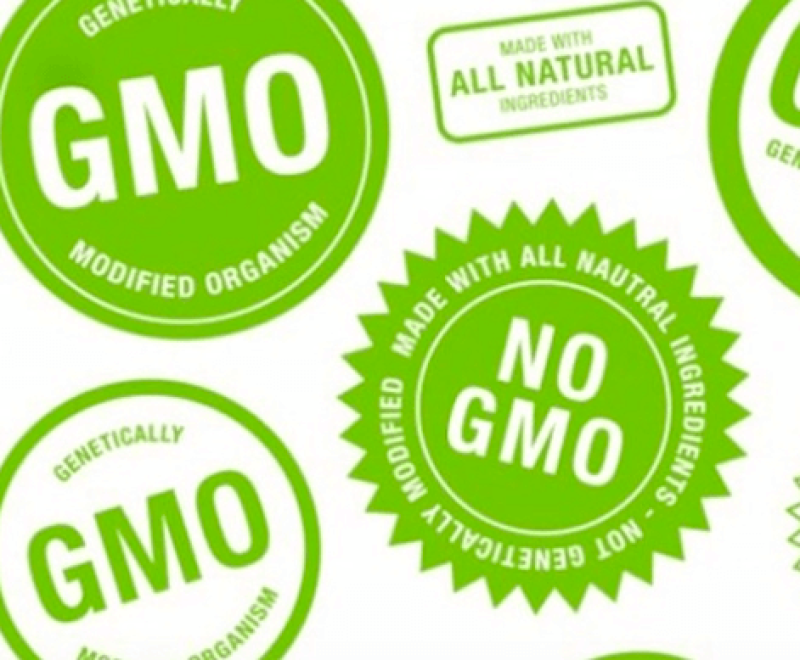
Congress has effectively preempted the states from imposing different labeling requirements for GE foods than what the USDA eventually requires, but it has left the states wide discretion to impose additional state remedies for violations of these new federal labeling requirements. Thus, there remains a distinct possibility that non-conforming GE food manufacturers will face different levels and kinds of liability across the 50 states if they fail to properly label their GE foods, even though those labeling requirements will be nationally uniform.

In addition, states retain considerable latitude regarding whether and how stringently they wish to police GE food manufacturers who choose label their products “organic.” However, what will happen with “natural” labeling is unclear as this article goes to press, including the basic issue of whether states will have any role whatsoever in policing the use of “natural” in connection with GE foods.

Given the long history of relative legal peace between the FDA’s and USDA’s food labeling authorities and GE product authorities, … the two agencies optimally should work out an agreement before the USDA’s new regulations go into effect regarding how they will blend their labeling authorities regarding GE foods.
By working together immediately, the USDA and FDA can foreclose much of the confusion and controversy that might otherwise arise under the new Act, perhaps finally bringing the GE food labeling controversy in the United States to a legal conclusion.

The GLP aggregated and excerpted this blog/article to reflect the diversity of news, opinion, and analysis. Read full, original post: Labeling Genetically-Engineered Foods: An Update from One of the Front Lines of Federalism


{{ reviewsTotal }}{{ options.labels.singularReviewCountLabel }}
{{ reviewsTotal }}{{ options.labels.pluralReviewCountLabel }}
{{ options.labels.newReviewButton }}
{{ userData.canReview.message }}

Related Articles

Infographic: Global regulatory and health research agencies on whether glyphosate causes cancer

Infographic: Global regulatory and health research agencies on whether glyphosate causes cancer

Does glyphosate—the world's most heavily-used herbicide—pose serious harm to humans? Is it carcinogenic? Those issues are of both legal and ...

Most Popular

Screenshot-PM-24
Viewpoint: The herbicide glyphosate isn’t perfect. Banning it would be far worse.
d-b
Blocked arteries, kidney stones, nausea, constipation, fatigue: Long list of health problems caused by too much vitamin D 
Screenshot-2026-04-27-at-12.22.38-PM
Running ‘wild’: Last year, RFK, Jr. was given a green light to ‘reform’ chemical policies. Glyphosate illustrates how Trump now has him on a tight leash, and MAHA is furious
ChatGPT-Image-Apr-22-2026-11_06_18-AM
Wellness influencer nonsense: No, nicotine does not boost cognition and productivity, but it can damage your health 
bayer-supremecourt-lt
EPA concludes glyphosate is not carcinogenic. Missouri courts say Monsanto failed to warn it might be. SCOTUS weighs in.
ChatGPT-Image-Feb-16-2026-01_57_31-PM
Viewpoint: ‘Science-as-Satan’ unites the MAHA—MAGA movements. Is a breakup in the works?
Screenshot-2026-04-27-at-1.40.55-PM
With federal funding for scientific research already reeling, Trump fires the entire apolitical National Science Board
Screenshot-2026-04-13-at-3.54.04-PM
AI disinformation stress test: Challenges and response strategies
ChatGPT-Image-Feb-16-2026-01_04_32-PM
Raw milk myth wake-up call
glp menu logo outlined

Get news on human & agricultural genetics and biotechnology delivered to your inbox.