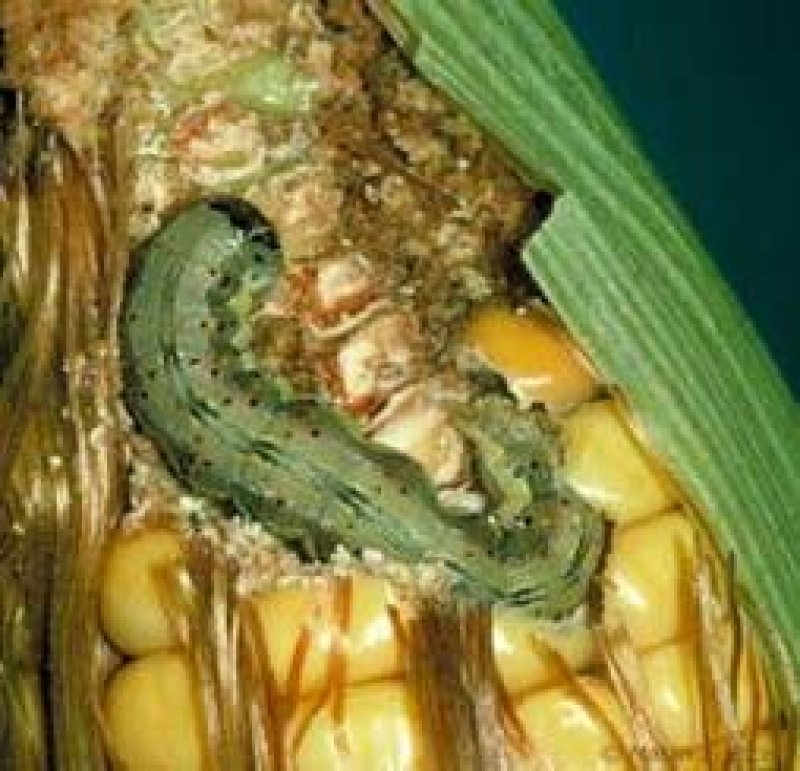
Editor’s Note: This article discusses a research paper called “Field-Evolved Resistance in Corn Earworm to Cry Proteins Expressed by Transgenic Sweet Corn” published on Dec. 30, 2016 in open access journal PlosOne.
A UMD-led study provides new evidence of a decline in the effectiveness of genetically engineered traits widely used to protect corn crops from insects. This loss of effectiveness could damage U.S. corn production and spur increased use of potentially harmful insecticides.
…
[T]he study documents the growing resistance of the earworm to protective “Bt” genetic modifications widely used in corn and cotton crops.
…
Corn crops engineered with genes from the bacterium Bacillus thuringiensis (Bt) express specific proteins called Cry proteins (endotoxins) that, when ingested, kill crop pests like the earworm. Because the Bt protein is very selective…[and] less harmful than broad spectrum insecticides. Bt modified crops are widely used and long have been effective in combating damage from agricultural insect pests. In 2015, 81 percent of all corn planted was genetically engineered with Bt. Recently however, certain states, most notably North Carolina and Georgia, have experienced increased corn ear damage, setting the stage for risk of damage to corn production across a large portion of the country.

…
This new paper is the first report of corn earworm resistance to multiple, or pyramided Cry proteins in genetically modified corn. The report also illuminates a need for more widespread resistance monitoring for all registered Cry proteins, including the Midwestern corn belt.
…
The GLP aggregated and excerpted this blog/article to reflect the diversity of news, opinion, and analysis. Read full, original post: Research uncovers reason for growing pest damage in genetically protected corn crops