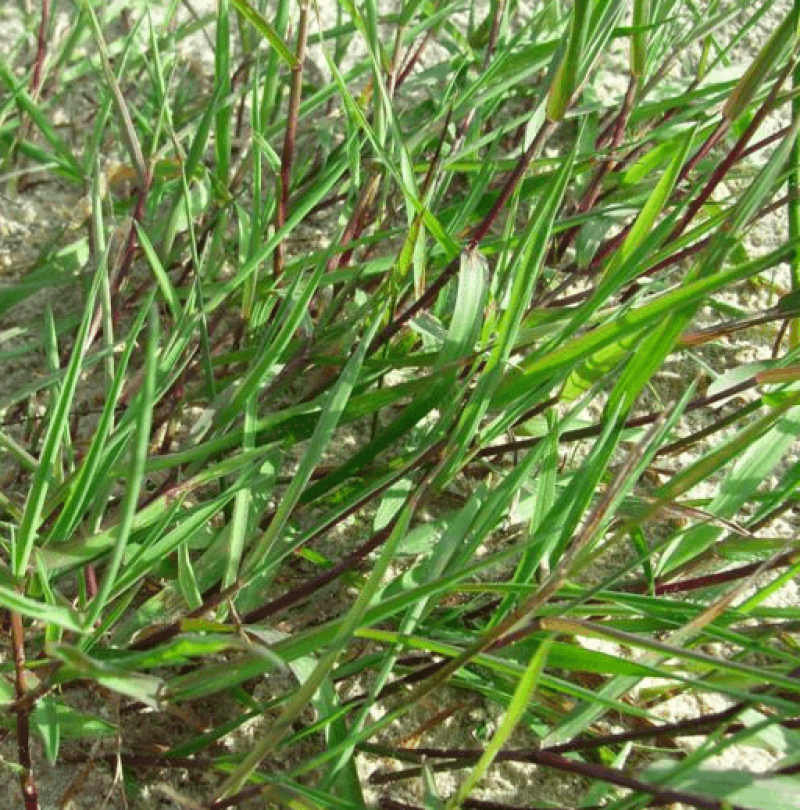
USDA will not regulate Scotts’ and Monsanto’s glyphosate-resistant GMO grass

Screen Shot at AM
Creeping bentgrass

APHIS [Animal and Plant Health Inspection Service] received a petition from the Scotts Company of Marysville, OH, and Monsanto Company of St. Louis, MO (Scotts/Monsanto), seeking a determination of nonregulated status of creeping bentgrass (Agrostis stolonifera L.) designated as event ASR368, which has been genetically engineered for resistance to the herbicide glyphosate. The Scotts/Monsanto petition states that information collected during field trials and laboratory analyses indicates that ASR368 bentgrass is not likely to be a plant pest and therefore should not be a regulated article under APHIS’ regulations in 7 CFR part 340.

. . . .

Based on APHIS’ analysis of field and laboratory data submitted by Scotts/Monsanto, references provided in the petitions, peer-reviewed publications, information analyzed in the EIS, the PPRA, comments provided by the public, and APHIS’ evaluation of and response to those comments, APHIS has determined that is unlikely to pose a plant pest risk. Accordingly, the petition requesting a determination of nonregulated status is approved and ASR368 bentgrass is no longer subject to our regulations governing the introduction of certain genetically engineered organisms and to the plant pest provisions of the Plant Protection Act.

The GLP aggregated and excerpted this blog/article to reflect the diversity of news, opinion and analysis. Read full, original post: The Scotts Co. and Monsanto Co.; Determination of Nonregulated Status of Creeping Bentgrass Genetically Engineered for Resistance to Glyphosate


{{ reviewsTotal }}{{ options.labels.singularReviewCountLabel }}
{{ reviewsTotal }}{{ options.labels.pluralReviewCountLabel }}
{{ options.labels.newReviewButton }}
{{ userData.canReview.message }}

Related Articles

Infographic: Global regulatory and health research agencies on whether glyphosate causes cancer

Infographic: Global regulatory and health research agencies on whether glyphosate causes cancer

Does glyphosate—the world's most heavily-used herbicide—pose serious harm to humans? Is it carcinogenic? Those issues are of both legal and ...

Most Popular

Screenshot 2026-05-06 at 2.56
Singularity crisis ahead? Can super babies save us from rogue AI geniuses?
Screenshot-2026-05-01-at-1.29.41-PM
Viewpoint: What happens when whole grains meet modern food manufacturing? Labels don’t tell the whole story.
Screenshot-2026-03-13-at-12.14.04-PM
The FDA wants to make many popular prescription drugs OTC—a great idea. Here’s why it’s unlikely to happen
S
As vaccine rejectionism spreads, measles may be taking a more dangerous turn
Screenshot-2026-05-01-at-11.56.24-AM
‘Science moves forward when people are willing to think differently’: Memories of DNA maverick Craig Venter
Screenshot-2026-04-20-at-2.26.27-PM
Viewpoint — Food-fear world: The latest activist scientists campaign: Cancer-causing additives
Screenshot-2026-04-03-at-11.15.51-AM
Paraben panic: How a flawed study, media hype, and chemophobia convinced the public of the danger of one of the safest classes of preservatives
images
The never-ending GMO debate: Pros and cons
Screenshot-2026-04-30-at-2.19.37-PM
5 myths about summer dehydration that could damage your health — or even kill you
Screenshot-2026-05-06-at-2.07.43-PM
Manufacturing a conspiracy: The timeline of how  the White House embraced the fringe claim that scientists are being mysteriously murdered
Screenshot-2026-04-12-135256
Bixonimania: The fake disease scam that AI swallowed whole
glp menu logo outlined

Get news on human & agricultural genetics and biotechnology delivered to your inbox.