

People who had more infections as babies harbor a key marker of cellular aging as young adults, report researchers. The protective stretches of DNA that “cap” the ends of their chromosomes are shorter than those of adults who were healthier as infants.
…
“These are important and surprising findings because—generally speaking—shorter chromosome ‘caps’ are associated with a higher burden of disease later in life,” says lead author Dan Eisenberg, an assistant professor of anthropology at the University of Washington.
…
[T]hose with an average level of diarrheal infection as babies, compared to those who with no reported infections, showed the equivalent of three additional years of telomere “aging”—based on the rate of telomere shortening among middle-aged adults.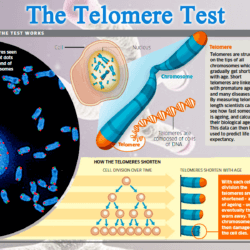




…
“It could also be that they had shorter telomeres at birth,” says Eisenberg. “And perhaps as a result, they were more susceptible to infections at 6 to 12 months and maintained these short telomeres into adulthood.” If this were the case, then telomeres may be an important determinant of whether or not children around the world succumb to diarrheal infections.
[The study can be found here.]The GLP aggregated and excerpted this blog/article to reflect the diversity of news, opinion, and analysis. Read full, original post: Shorter DNA ‘caps’ in people who got sick as babies