


Over the last several years, with a big assist from the genomics and computer revolutions, David Baker, head of the Institute for Protein Design and professor of biochemistry at the University of Washington [and his team have] all but solved one of the biggest challenges in modern science: figuring out how long strings of amino acids fold up into the 3D proteins that form the working machinery of life. Now, he and colleagues have taken this ability and turned it around to design and then synthesize unnatural proteins intended to act as everything from medicines to materials.
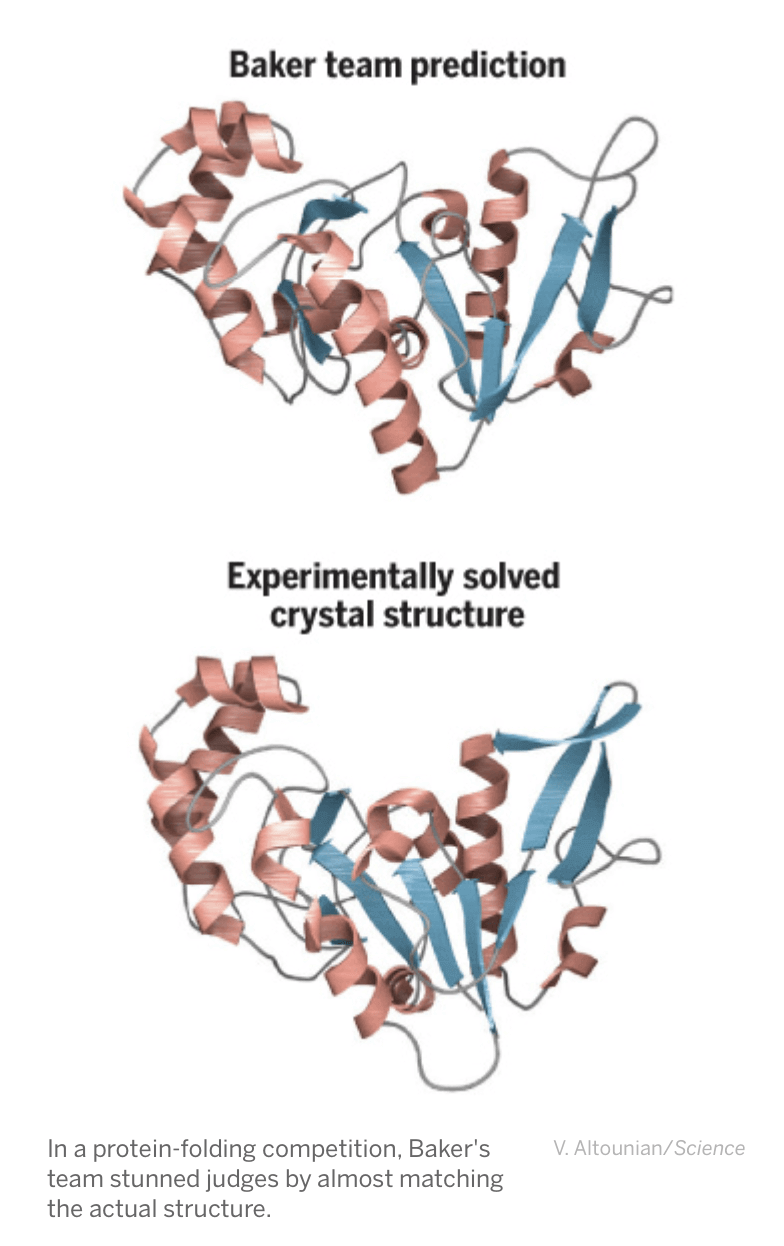 Already, this virtuoso protein-making has yielded an experimental HIV vaccine, novel proteins that aim to combat all strains of the influenza viruses simultaneously, carrier molecules that can ferry reprogrammed DNA into cells, and new enzymes that help microbes suck carbon dioxide out of the atmosphere and convert it into useful chemicals.
…
For Baker, it’s only the beginning. With Rosetta’s steadily improving algorithms and ever-greater computing power, his team has in essence mastered the rules for folding—and they’ve begun to use that understanding to try to one-up nature’s creations. “Almost everything in biomedicine could be impacted by an ability to build better proteins,” says Harvard synthetic biologist George Church.



The ability to predict how an amino acid sequence will fold—and hence how the protein will function—opens the way to designing novel proteins that can catalyze specific chemical reactions or act as medicines or materials. Genes for these proteins can be synthesized and inserted into microbes, which build the proteins.
The GLP aggregated and excerpted this blog/article to reflect the diversity of news, opinion, and analysis. Read full, original post: This protein designer aims to revolutionize medicines and materials























