
Evolution of the mind: How termite colonies are models of the human brain

Screen Shot at PM

[Editor’s note: Excerpts from an interview with Daniel Dennettcognitive scientist and philosopher at Tufts University, who recently wrote From Bacteria to Bach and Back: The Evolution of Minds.]

[E]volution by natural selection is a process that’s breathtakingly competent, but has no understanding at all. Yet it has given humans the ability to reason, to understand…[W]e are using [these tools] to achieve kinds of comprehension that no other species has.

Contrast a termite castle with Antoni Gaudí’s wonderful church in Barcelona, La Sagrada Familia. They look similar, but Gaudí’s church is a product of intelligent design; it’s top-down, with a charismatic boss who thought it out in advance. [The question is: How did humans go from termite-style building to Gaudí-style building?]
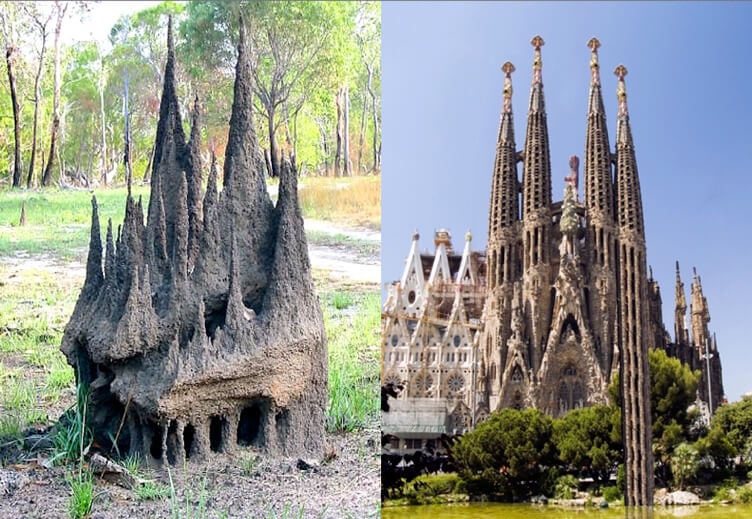
TermitesVsGaudi
On the left is a termite mound, and on the right is La Sagrada Familia. Unlike the termite mound, the church was built with a plan in mind. The evolution of how we think is like moving from the mound to the church.
[I]t’s particularly thorny when you recognize that what we have between our ears is more like a termite colony…The latest count is 86 billion neurons, each more clueless than a termite, with no boss. How on earth do you organize 86 billion neurons into Gaudí’s mind? That’s the puzzle.

The GLP aggregated and excerpted this blog/article to reflect the diversity of news, opinion, and analysis. Read full, original post: Why your brain is like a conscious termite colony

{{ reviewsTotal }}{{ options.labels.singularReviewCountLabel }}
{{ reviewsTotal }}{{ options.labels.pluralReviewCountLabel }}
{{ options.labels.newReviewButton }}
{{ userData.canReview.message }}

Related Articles

Infographic: Global regulatory and health research agencies on whether glyphosate causes cancer

Infographic: Global regulatory and health research agencies on whether glyphosate causes cancer

Does glyphosate—the world's most heavily-used herbicide—pose serious harm to humans? Is it carcinogenic? Those issues are of both legal and ...

Most Popular

Screenshot-2026-04-13-at-1.39.26-PM
Viewpoint: ‘Safer for children?’ Stonyfield yogurt under fire for deceptive organic marketing
ChatGPT-Image-May-7-2026-12_16_37-PM-2
Viewpoint: Are cancer rates ‘skyrocketing’ as RFK, Jr. and MAHA claim? The evidence says mostly the opposite
Screenshot-2026-04-22-at-10.46.29-AM
Viewpoint: How to counter science disinformation? Science journalist offers 12 practical tips
Picture1-14
When superbugs threaten vulnerable children: Can AI help solve antibiotic resistance?
Screenshot-2026-04-23-at-11.00.36-AM
Regulators' dilemma: Thalidomide, Metformin, and the cost of getting drug approvals wrong
Picture1-1
Cooling the planet with balloons: Could a geoengineering gamble slow global warming?
ChatGPT-Image-May-12-2026-08_39_41-PM
GLP podcast: Big Pharma, Big Ag, Big Food—health harming industries or life-saving innovators?
png-pill-omega-Supp-fish-oil
Millions take omega-3 fish oil for brain health. New research suggests it may do the opposite.

Sorry. No data so far.

glp menu logo outlined

Get news on human & agricultural genetics and biotechnology delivered to your inbox.