Mike Adams, Alex Jones and Joe Mercola: How the web turns quacks into science gurus

cover photo
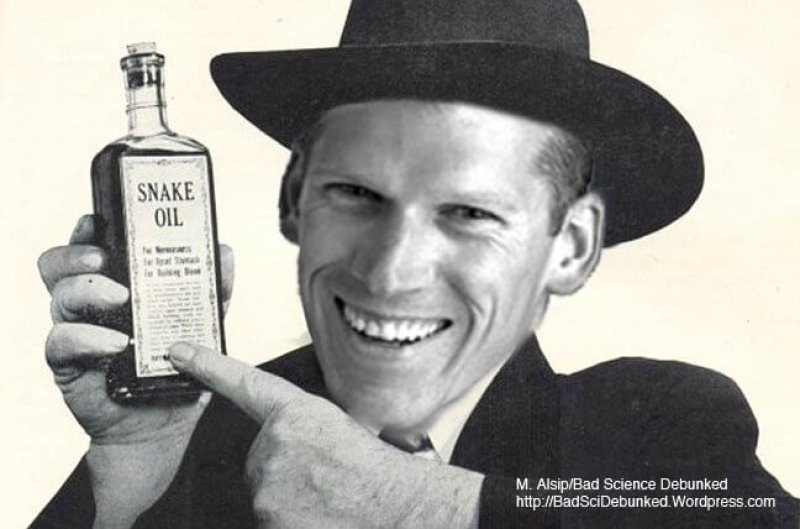
Cover photo courtesy Mark Alsip/Bad Science Debunked

Welcome to the vast universe of self-built social media empires devoted to spreading false, misleading, and polarizing science and health news — sometimes further and wider than the real information. Here, climate change is a government-sponsored hoax, fluoridated water is poisonous, cannabis can cure cancer, and airplanes are constantly spraying pesticides and biological waste into the air. Genetically modified food is destroying humanity and the planet. Vaccines are experimental, autism-causing injections forced on innocent babies. We can’t trust anything that we eat, drink, breathe, or medicate with, nor rely on physicians and public health agencies to act in our best interests.

Perhaps the loudest voice in the anti-science news ecosystem is Mike Adams, a Texas software engineer turned media mogul….

Adams insisted that the biotech industry was orchestrating “bioterrorism attacks” on the fast-food chain in retaliation for using non-genetically modified ingredients. His theory was liked, commented on, and shared 127,000 times, including by comedian D.L. Hughley.

Follow the latest news and policy debates on sustainable agriculture, biomedicine, and other ‘disruptive’ innovations. Subscribe to our newsletter.

“Maximally divisive, maximally paranoid, violent” — that’s how Steven Novella, an assistant professor of neurology at Yale School of Medicine, describes Adams. “He tells readers, ‘Don’t trust anybody, trust me and my pseudoscience, it’s all a big giant conspiracy.’”

But social networks can reinforce and amplify the non-nuanced, non-reported, scariest-sounding fears that people already or want to believe. People googling health information “might be distrustful of a website they just found on the internet,” said Brendan Nyhan, a political science professor at Dartmouth College who has studied why people reject vaccines. “But if a friend shares a story with you and says, ‘This is really important,’ you might be more likely to believe it.”

The GLP aggregated and excerpted this blog/article to reflect the diversity of news, opinion, and analysis. Read full, original post: Inside the anti-science forces of the internet


{{ reviewsTotal }}{{ options.labels.singularReviewCountLabel }}
{{ reviewsTotal }}{{ options.labels.pluralReviewCountLabel }}
{{ options.labels.newReviewButton }}
{{ userData.canReview.message }}

Related Articles

Infographic: Global regulatory and health research agencies on whether glyphosate causes cancer

Infographic: Global regulatory and health research agencies on whether glyphosate causes cancer

Does glyphosate—the world's most heavily-used herbicide—pose serious harm to humans? Is it carcinogenic? Those issues are of both legal and ...

Most Popular

Screenshot-PM-24
Viewpoint: The herbicide glyphosate isn’t perfect. Banning it would be far worse.
d-b
Blocked arteries, kidney stones, nausea, constipation, fatigue: Long list of health problems caused by too much vitamin D 
ChatGPT-Image-Mar-27-2026-11_27_05-AM
The myths of “process”: What science says about the “dangers’ of synthetic products and ultra-processed foods
Screenshot-2026-04-29-at-11.31.42-AM
Dad brains: Only women undergo bodily changes during and after childbirth? Think again.
ChatGPT-Image-Mar-3-2026-01_17_14-PM
MAHA wellness influencers deride proven anxiety medications, tout lifestyle fixes
png-pill-omega-Supp-fish-oil
Fish oil supplements for brain injuries probably don’t work 
circular-bioeconomy-should-focus-on-sustainable-wellbeing
GLP podcast: What's wrong with 'doomsday' environmentalism? It's false.
ChatGPT-Image-Apr-28-2026-12_46_14-PM-2
Kennedy has quietly stopped touting problematic raw milk. Health concerns aren’t why
ChatGPT-Image-Feb-16-2026-01_04_32-PM
Raw milk myth wake-up call
ChatGPT-Image-Apr-29-2026-11_04_44-AM-2
Anti-vaccine activists are now the majority in RFK, Jr.’s CDC Vaccine Panel
ChatGPT-Image-Apr-22-2026-11_06_18-AM
Wellness influencer nonsense: No, nicotine does not boost cognition and productivity, but it can damage your health 
glp menu logo outlined

Get news on human & agricultural genetics and biotechnology delivered to your inbox.