Quest for higher yields is enemy of biodiversity on farms — both conventional and organic

image ps b q

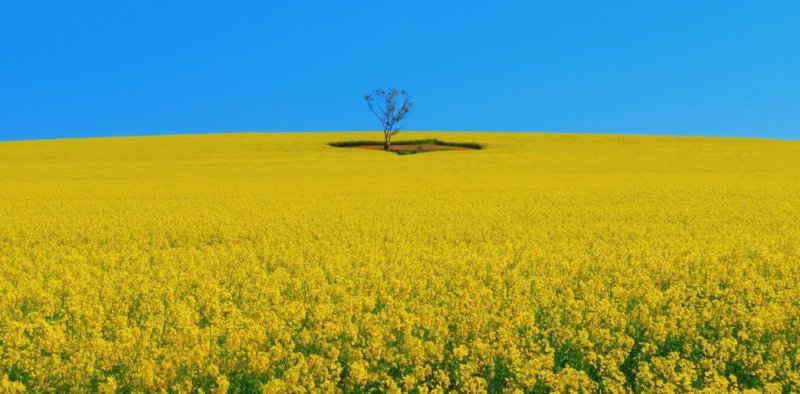
What kind of agriculture most benefits biodiversity? In recent years, few questions have animated conservationists and land-use scientists more than this one.

But this notion of a strong trade-off between biodiversity and agricultural productivity has been challenged, with some arguing that it is exaggerated, or does not exist at all.

This is not, strictly speaking, a question of whether there can be farmland with pretty good yields and fairly high levels of biodiversity. It is also not a question of picking either land sparing or land sharing. Rather, what is at stake is whether different forms of agricultural technology and management can provide for more wildlife at any given yield level.

The challenges in raising yields are not that different among farming systems, be they “conventional,” organic, or something else. Fertilizers and water have to be supplied in adequate amounts. Pests and weeds have to be eliminated.

We can make the best of the situation by locating agriculture in the places where the biodiversity losses are smallest and the yield gains are the greatest, and steer any expansion that does happen into the least sensitive areas. But by and large, when it comes to biodiversity and farming, we cannot have the cake and eat it.

The GLP aggregated and excerpted this blog/article to reflect the diversity of news, opinion, and analysis. Read full, original post: Food Production and Wildlife on Farmland: Can We Have It All?

{{ reviewsTotal }}{{ options.labels.singularReviewCountLabel }}
{{ reviewsTotal }}{{ options.labels.pluralReviewCountLabel }}
{{ options.labels.newReviewButton }}
{{ userData.canReview.message }}

Related Articles

Infographic: Global regulatory and health research agencies on whether glyphosate causes cancer

Infographic: Global regulatory and health research agencies on whether glyphosate causes cancer

Does glyphosate—the world's most heavily-used herbicide—pose serious harm to humans? Is it carcinogenic? Those issues are of both legal and ...

Most Popular

ChatGPT Image May 10, 2026, 08_16_59 PM 2
Overmedicalization? RFK Jr.’s antidepressant crackdown raises conflict questions over his fee stake in Wisner Baum, the tort firm built on suing drug makers
Picture1-5
Science Disinformation Gap: The transatlantic battle over social media and censorship
Screenshot-2026-05-08-at-3.40.33-PM
Seeds of power: China turns to genetic engineering to become global superpower
Screenshot-2026-05-01-at-1.29.41-PM
Viewpoint: What happens when whole grains meet modern food manufacturing? Labels don’t tell the whole story.
ChatGPT-Image-Apr-13-2026-02_20_22-PM
Viewpoint: Misinformation infodemic? Why assessing evidence is so challenging 
S
As vaccine rejectionism spreads, measles may be taking a more dangerous turn
Picture1-14
When superbugs threaten vulnerable children: Can AI help solve antibiotic resistance?
Screenshot 2026-05-08 at 3.01
Transforming farming and nutrition with AI and robotics? Larry Ellison’s half-billion-dollar Hawaii greenhouse dream goes bust
Farmers can talk to plants
Farmers are a major source of misinformation—about farming
Screenshot-2026-04-20-at-2.26.27-PM
Viewpoint — Food-fear world: The latest activist scientists campaign: Cancer-causing additives
ChatGPT-Image-May-8-2026-01_41_33-PM-3
Viewpoint: Surge of climate misinformation traced to right wing and anti-wind activists 
ChatGPT-Image-Mar-27-2026-11_47_30-AM-2
FDA’s expedited drug reviews are hailed in some quarters but other approval practices are problematic
Screenshot-2026-03-13-at-12.14.04-PM
The FDA wants to make many popular prescription drugs OTC—a great idea. Here’s why it’s unlikely to happen
glp menu logo outlined

Get news on human & agricultural genetics and biotechnology delivered to your inbox.