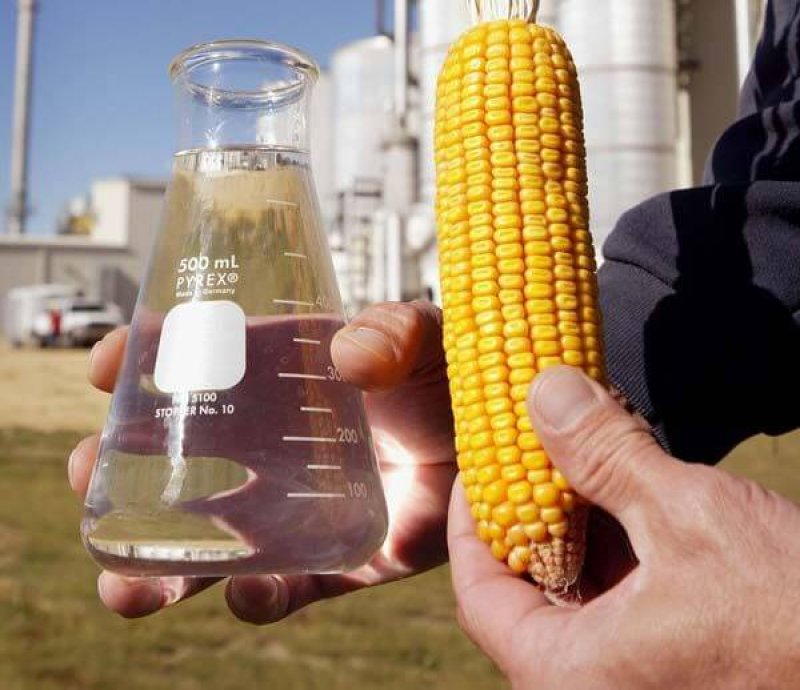
‘Industrial’ corn: GM variety makes ethanol more energy efficient

corn ethanol

Farmers in [North Dakota] will grow an industrial-quality corn specifically designed for the ethanol industry this summer. Corn with the Enogen technology is genetically modified to produce the alpha amylase enzyme that improves efficiency in corn-based ethanol plants, said Marcos Castro, Enogen market manager for Syngenta. “The grower becomes the enzyme provider for the ethanol plant,” he said. “Enogen corn contains more alpha amylase than any other corn. The (ethanol) plant does not have to add any enzymes. It makes the corn mash more liquid, and it saves energy.”

Converting corn into ethanol is a two-stage process. Enzymes are used to convert the starch in the corn into sugar. Yeast then converts the sugar into alcohol.

Previously, enzymes were added to the mix at the ethanol plant, said Phil Coffin, vice president, commodities and marketing, for Midwest AgEnergy….

Those enzymes can now be bought from local farmers who grow the Enogen corn, he said.

“We’ll pay a 40-cent-a-bushel premium to grow this,” he said. “That brings some of the benefits back to the farmers.”

Castro agreed Enogen would increase local farm revenues.

“It shifts the value of the enzyme from a chemical company to the grower,” he said.

The GLP aggregated and excerpted this blog/article to reflect the diversity of news, opinion, and analysis. Read full, original post: BETTER CORN: Enogen technology increases ethanol production efficiency

{{ reviewsTotal }}{{ options.labels.singularReviewCountLabel }}
{{ reviewsTotal }}{{ options.labels.pluralReviewCountLabel }}
{{ options.labels.noReviewsLabel }}
{{ options.labels.newReviewButton }}
{{ userData.canReview.message }}

Related Articles

Infographic: Global regulatory and health research agencies on whether glyphosate causes cancer

Infographic: Global regulatory and health research agencies on whether glyphosate causes cancer

Does glyphosate—the world's most heavily-used herbicide—pose serious harm to humans? Is it carcinogenic? Those issues are of both legal and ...

Most Popular

ChatGPT-Image-Jul-22-2026-09_13_07-AM
Viewpoint—The Strategic Litigation boom: Understanding the tightening coalition among NGOs, foundations, journalists, and tort lawyers
ChatGPT-Image-Mar-10-2026-01_39_01-PM
Viewpoint—“Miracle molecule” debunked: Why acemannan supplements don’t work
diversity
We are entering a new era of personalized medicine—if you’re white
How to Include More Strawberries in Your Diet
Strawberries are berries—and 35 other surprising food and drink myths
close up arabica coffee farmer s hands picking beans plant his farm colombia
Viewpoint: Why do so many ‘mainstream’ and ‘respected’ media outlets exaggerate climate change threats?
Screenshot-2026-07-07-at-12.55.44-PM
Viewpoint: Yes, we can adapt to a changing climate without devastating the environment and the economy
ChatGPT-Image-May-22-2026-10_26_09-AM
Trump-RFK, Jr. National Science Board firings: Accountability vs. partisan meddling
organic scaled
Facts & Fallacies podcast: Organic food cuts pesticide exposure? A response to Dr. Rhonda Patrick
ChatGPT-Image-Jun-25-2026-12_23_17-PM
No, Bill Gates did not secretly engineer ticks to promote veganism
ChatGPT-Image-Jul-6-2026-02_25_26-PM
40 million Americans take glucosamine. If you have memory loss, it could accelerate cognitive decline.
ChatGPT-Image-Jun-25-2026-02_53_56-PM
Embryo gene editing is on the horizon, stirring mixed emotions

Sorry. No data so far.

glp menu logo outlined

Get news on human & agricultural genetics and biotechnology delivered to your inbox.