Should US spend more on agricultural R&D to make food cheaper, more sustainable?

iStock Full x
SONY DSC

[Editor’s note: Margaret Zeigler is executive director of the Global Harvest Initiative, a private-sector voice for productivity growth throughout the agricultural value chain.]

Maintaining high productivity growth requires robust investment in agricultural R&D from both the public and private sectors.

Every public dollar invested in agricultural research in the U.S. provides at least $10 and up to $20 in economic benefits to society, a powerful return on investment that provides strong bang for the public agricultural research buck.

Yet U.S. public agriculture R&D investment has been flat since the 1980s and has declined 6 percent since 2000.

Solutions lie in ensuring that funding for a wide range of U.S. agriculture research programs remains robust, as well as in improving the structure and collaboration of agriculture research.
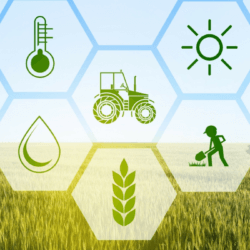
[For example] the National Program for Genetic Improvement of Feed Efficiency in Beef Cattle, which aims to reduce the amount of feed required to produce beef, … helps reduce environmental impact and costs for ranchers.

Gradually increasing [these] investments … over the next several years could unleash a powerful research pipeline to ensure the U.S. remains competitive with other nations, such as China, that have already boosted their research investments.

The GLP aggregated and excerpted this blog/article to reflect the diversity of news, opinion, and analysis. Read full, original post: Want more affordable and sustainable food? Invest in R&D.

For more background on the Genetic Literacy Project, read GLP on Wikipedia

{{ reviewsTotal }}{{ options.labels.singularReviewCountLabel }}
{{ reviewsTotal }}{{ options.labels.pluralReviewCountLabel }}
{{ options.labels.newReviewButton }}
{{ userData.canReview.message }}

Related Articles

Infographic: Global regulatory and health research agencies on whether glyphosate causes cancer

Infographic: Global regulatory and health research agencies on whether glyphosate causes cancer

Does glyphosate—the world's most heavily-used herbicide—pose serious harm to humans? Is it carcinogenic? Those issues are of both legal and ...

Most Popular

Screenshot-2026-04-22-at-12.21.32-PM
Viewpoint: Why the retracted Monsanto glyphosate study doesn’t change the science—the world’s most popular herbicide is safe 
ChatGPT-Image-Apr-16-2026-02_56_53-PM
Financial incentives, over diagnosis, and weak oversight: Autism claims are driving up Medicare costs
Picture1
The FDA couldn’t find a vaccine safety crisis, so it buried its own research
global warming
‘Implausible’: Top climate scientists reject worst-case scenario—soaring temperatures and fast-rising sea levels

Sorry. No data so far.

glp menu logo outlined

Get news on human & agricultural genetics and biotechnology delivered to your inbox.