
[Editor’s note: On March 22, 2017, journalist Alex Orlov accused dietitian Mary Lee Chin of not publicly disclosing her ties to biotechnology company Monsanto. The following is part of Chin’s response.]
I think dietitians should be engaged in every aspect, every level and all types of food production, and yes, that also means working with “industry.” I know dietitians make a contribution in helping companies shape healthier food offerings. And I was drawn to Ag seed companies and Monsanto not only due to the very robust science, and the capacity of genetically engineered crops to contribute to a more secure food supply, but also growing higher quality of foods through biofortified crops.
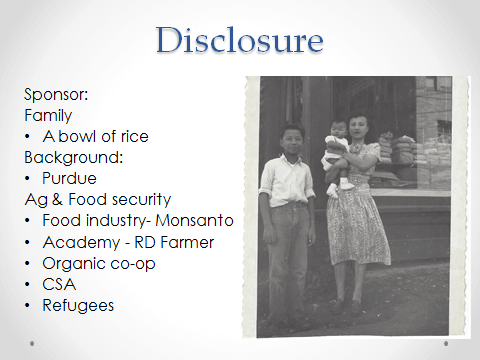
Well, it’s been pointed out — I could be more transparent about my consultation position with Monsanto. I thought I was. The photo [above] is the Disclosure slide I use before every presentation and add various companies and non-profits names as the occasion warrants. As for my bio’s on Twitter and LinkedIn — I will change to be beyond transparent.
…


Here is my food production philosophy. Given the agricultural, environmental, food and nutrition challenges the world faces, we need to harness the best practices of ALL food production systems.
The GLP aggregated and excerpted this blog/article to reflect the diversity of news, opinion, and analysis. Read full, original post: Why I Consult with Food Industry, and omg Monsanto
For more background on the Genetic Literacy Project, read GLP on Wikipedia