Herbicide use has increased more for non-GMO crops than genetically engineered varieties

Screen Shot at PM

[Editor’s note: Andrew Kniss is a professor in theย Department of Plant Sciences at the University of Wyoming.]

Herbicide use is among the most criticized aspects of modern farming, especially as it relates to genetically engineered (GE) crops. Many previous analyses have used flawed metrics to evaluate herbicide intensity and toxicity trends. Here, I show that herbicide use intensity increased over the last 25 years in maize, cotton, rice and wheat. Although GE crops have been previously implicated in increasing herbicide use, herbicide increases were more rapid in non-GE crops.

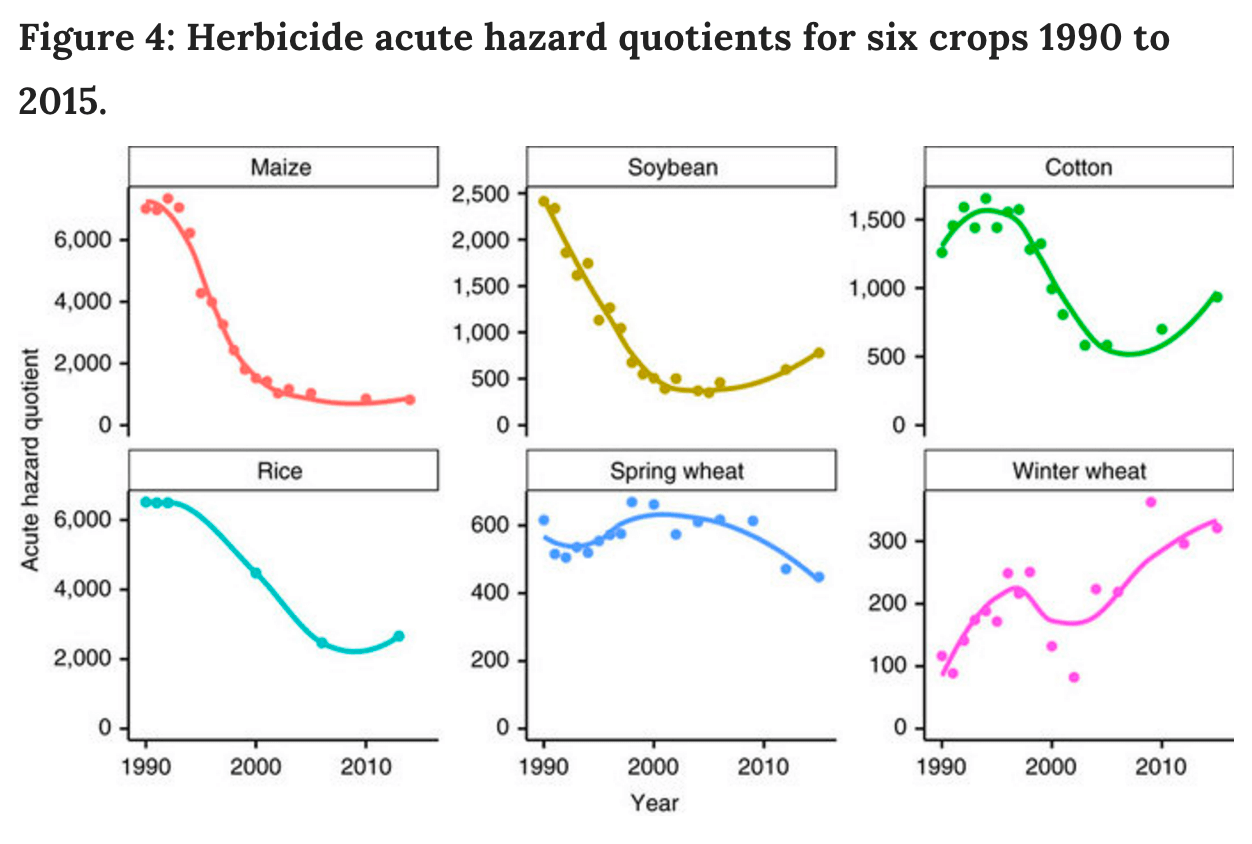
Even as herbicide use increased, chronic toxicity associated with herbicide use decreased in two out of six crops, while acute toxicity decreased in four out of six crops. In the final year for which data were available (2014 or 2015), glyphosate accounted for 26% of maize, 43% of soybean and 45% of cotton herbicide applications. However, due to relatively low chronic toxicity, glyphosate contributed only 0.1, 0.3 and 3.5% of the chronic toxicity hazard in those crops, respectively.
Screen Shot at PM

If left uncontrolled, weeds could reduce world food production by as much as 20โ€“40%

[T]he increased use of herbicides may not be inherently bad, as sometimes these changes corresponded with lower toxicity.

The GLP aggregated and excerpted this blog/article to reflect the diversity of news, opinion, and analysis. Read full, original post:ย Long-term trends in the intensity and relative toxicity of herbicide use

For more background on the Genetic Literacy Project, read GLP on Wikipedia

{{ reviewsTotal }}{{ options.labels.singularReviewCountLabel }}
{{ reviewsTotal }}{{ options.labels.pluralReviewCountLabel }}
{{ options.labels.newReviewButton }}
{{ userData.canReview.message }}

Related Articles

Infographic: Global regulatory and health research agencies on whether glyphosate causes cancer

Infographic: Global regulatory and health research agencies on whether glyphosate causes cancer

Does glyphosateโ€”the world's most heavily-used herbicideโ€”pose serious harm to humans? Is it carcinogenic? Those issues are of both legal and ...

Most Popular

ChatGPT-Image-Mar-10-2026-01_39_01-PM
Viewpointโ€”โ€œMiracle moleculeโ€ debunked: Why acemannan supplements donโ€™t work
Screenshot 2025-07-30 at 10.48
Can gene editing eliminate Down syndrome? Scientists have done it in lab-grown cells
Screenshot 2026-05-26 at 10.15
Viewpoint: Double standardโ€”Why does the wellness industry get a free pass while Big Healthcare is treated as morally suspect?
ChatGPT-Image-Jun-4-2026-01_27_58-PM
Viewpointโ€”N.A.D.+: Why Gwenyth Paltrowโ€™s heralded anti-aging supplement doesnโ€™t work
downsyndrome_compilation_MID_1
CRISPR breakthrough that can remove the chromosome responsible for Down syndrome raises ethical questions
ChatGPT-Image-May-26-2026-07_51_21-AM-2
Viewpoint: There are more than 1,000 chemicals in a cup of coffeeโ€”including many substances that can cause cancer. Why isnโ€™t it banned?
tick-DNA
GLP podcast: Spread meat allergy with gene-edited ticks? Bioethicists pose vile โ€˜thought experimentโ€™

Sorry. No data so far.

glp menu logo outlined

Get news on human & agricultural genetics and biotechnology delivered to your inbox.