Robust roots: Hardier, more sustainable, nutrient-rich GMO crops in development

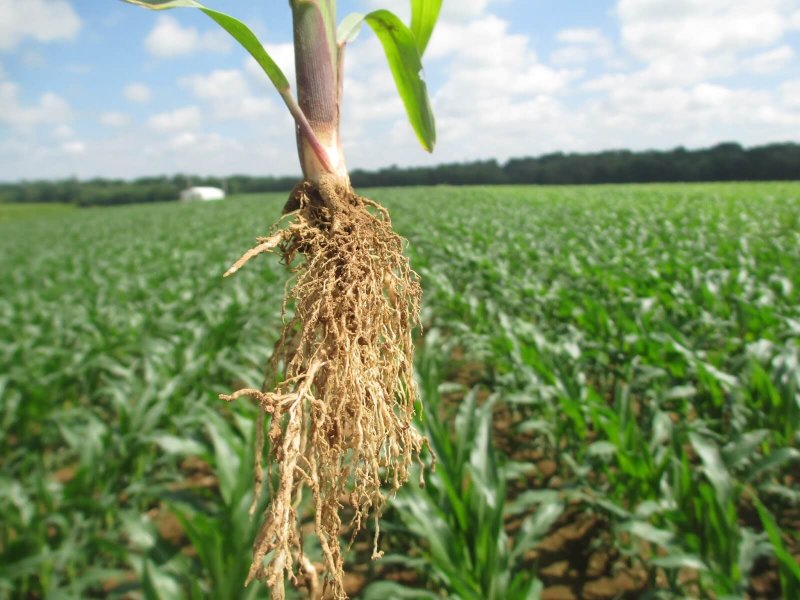
Corn SidewallCompaction

The function of a plant’s roots go well beyond simply serving as an anchor in the ground. The roots act as the plant’s mouth, absorbing, storing and channeling water and nutrients essential for survival.

Researchers have devoted tremendous effort to engineering plants that are more effective at these tasks in order to develop hardier forms that can withstand drought or low-nutrient conditions.

In a new investigation, researchers from the University of Pennsylvania have taken another step toward achieving this goal. They identified two proteins that regulate whether a cell in plant roots forms a hair cell, which increases surface area for absorption, or a non-hair cell. Plants that overexpressed one of these regulators thrived despite being deprived of a key nutrient, phosphorous.

Such plants, which produce more hair cells and thus can more readily absorb water from the soil, could also do well under conditions predicted to be more prevalent under climate change, notably in widespread droughts.

[Read the full study here.]

The GLP aggregated and excerpted this blog/article to reflect the diversity of news, opinion, and analysis. Read full, original post: Penn Team Identifies Genetic Target for Growing Hardier Plants Under Stress

For more background on the Genetic Literacy Project, read GLP on Wikipedia

{{ reviewsTotal }}{{ options.labels.singularReviewCountLabel }}
{{ reviewsTotal }}{{ options.labels.pluralReviewCountLabel }}
{{ options.labels.newReviewButton }}
{{ userData.canReview.message }}

Related Articles

Infographic: Global regulatory and health research agencies on whether glyphosate causes cancer

Infographic: Global regulatory and health research agencies on whether glyphosate causes cancer

Does glyphosate—the world's most heavily-used herbicide—pose serious harm to humans? Is it carcinogenic? Those issues are of both legal and ...

Most Popular

Screenshot-PM-24
Viewpoint: The herbicide glyphosate isn’t perfect. Banning it would be far worse.
d-b
Blocked arteries, kidney stones, nausea, constipation, fatigue: Long list of health problems caused by too much vitamin D 
79d03212-2508-45d0-b427-8e9743ff6432
Viewpoint: The Casey Means hustle—Wellness woo opportunism dressed up as medical wisdom
ChatGPT-Image-Mar-10-2026-01_39_01-PM
Viewpoint—“Miracle molecule” debunked: Why acemannan supplements don’t work
ChatGPT-Image-Apr-30-2026-12_21_05-PM-2
The tech billionaires behind the immortality movement
ChatGPT-Image-Mar-27-2026-11_27_05-AM
The myths of “process”: What science says about the “dangers’ of synthetic products and ultra-processed foods
ChatGPT-Image-Apr-30-2026-05_00_48-PM
Wellness grifter physician turned wellness influencer out as surgeon general nominee

Sorry. No data so far.

glp menu logo outlined

Get news on human & agricultural genetics and biotechnology delivered to your inbox.