Fake food news: Non-GMO Project sets standard for misleading consumers

Screen Shot at PM

[Editor’s note: Kavin Senapathy is a freelance writer and co-author of The Fear Babe: Shattering Vani Hari’s Glass House.]

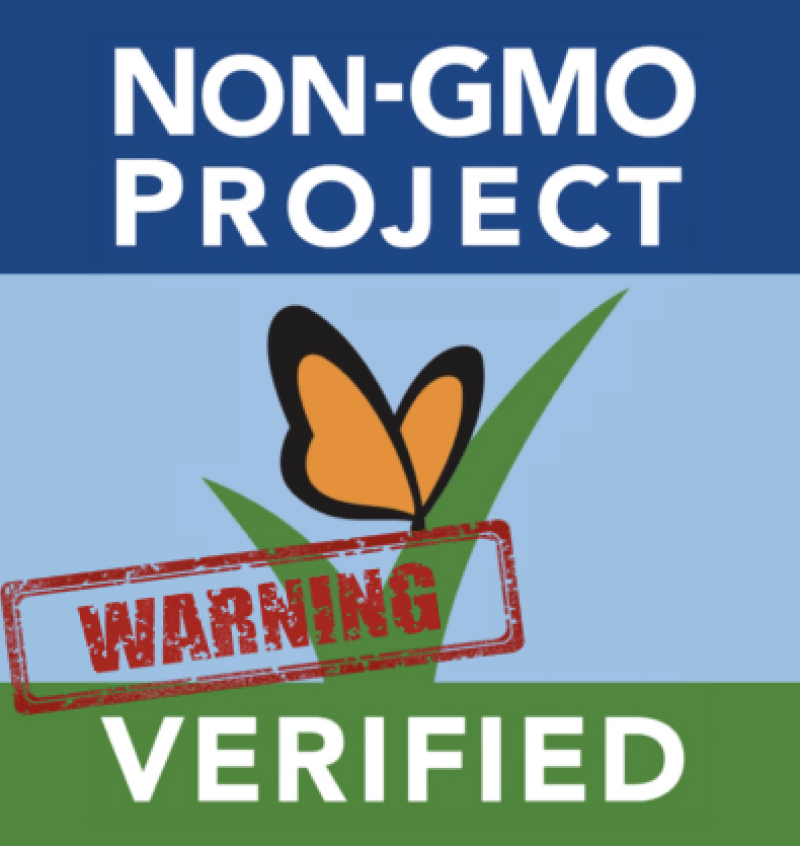
As a critical thinker and champion of social and environmental justice, seeing the butterfly seal everywhere I shop—from the pretzel crackers my kids love to whole grain bread—irks me to no end. For one, I like to make purchasing and parenting decisions based on facts, not fear and hype, but Non-GMO Project promotes common evidence-scarce myths about genetic engineering. “There is no scientific consensus on the safety of GMOs,” the Non-GMO Project website states. It’s an easily debunked statement. Indeed, the consensus of non cherry-picked data and major scientific bodies around the world is vast and unambiguous, all pointing to genetic engineering being no riskier, and sometimes less risky than so-called non-GMO breeding techniques. The organizations that claim danger from GMOs have a tendency to promote anti-vaccine sentiment and even conspiracy theories, as I recently discussed. That such wrongheadedness is emblazoned all over the American food supply is a testament to the alternative facts era.

Fear and opposition to genetic engineering have a tangible impact, with anti-GMO rhetoric and marketing contributing to consumer fear and rejection, which influences policy, and leads to overly burdensome and ideological rather than science-based regulations keeping real solutions from farmers’ fields.

The GLP aggregated and excerpted this blog/article to reflect the diversity of news, opinion, and analysis. Read full, original post: The Non-GMO Project Is Ruining My Shopping Experience

{{ reviewsTotal }}{{ options.labels.singularReviewCountLabel }}
{{ reviewsTotal }}{{ options.labels.pluralReviewCountLabel }}
{{ options.labels.newReviewButton }}
{{ userData.canReview.message }}

Related Articles

Infographic: Global regulatory and health research agencies on whether glyphosate causes cancer

Infographic: Global regulatory and health research agencies on whether glyphosate causes cancer

Does glyphosate—the world's most heavily-used herbicide—pose serious harm to humans? Is it carcinogenic? Those issues are of both legal and ...

Most Popular

Screenshot 2025-07-30 at 10.48
Can gene editing eliminate Down syndrome? Scientists have done it in lab-grown cells
ChatGPT Image May 26, 2026, 08_42_17 AM (1)
Viewpoint: Greenpeace and poison: How environmental advocacy groups rely on compliant (and often ignorant) journalists to spread disinformation and spark litigation
Screenshot-2026-05-28-at-1.36.28-PM
Viewpoint: Can mRNA research survive the Trump administration?
ChatGPT Image May 26, 2026, 08_21_36 AM
Limiting gender affirming interventions: Trump administration targets Texas even though it already bans youth access
Screenshot-2026-06-03-at-1.24.46-PM
Challenging anti-GMO disinformation: Why genetically-tweaked crops offer bushels of benefits
ChatGPT-Image-Jun-2-2026-03_04_17-PM
Viewpoint: Why the hyper-promoted doping ‘enhanced games’ pseudo Olympics flopped
ChatGPT-Image-May-26-2026-07_51_21-AM-2
Viewpoint: There are more than 1,000 chemicals in a cup of coffee—including many substances that can cause cancer. Why isn’t it banned?
ChatGPT-Image-Jun-3-2026-12_33_40-PM-2-1
Viewpoint—The end of ‘ivory tower science’: What does that even mean, and what comes next
ChatGPT-Image-Jun-2-2026-11_39_58-AM
Viewpoint: Who is RFK, Jr.’s newly-appointed CDC senior counselor, Sara Brenner — Vaccine skeptic and self-proclaimed “MAHA mom”
Picture1
Sounds we can’t hear — the hidden planetary signals behind science, fear, and misinformation
tick-DNA
GLP podcast: Spread meat allergy with gene-edited ticks? Bioethicists pose vile ‘thought experiment’
ChatGPT-Image-Mar-10-2026-01_39_01-PM
Viewpoint—“Miracle molecule” debunked: Why acemannan supplements don’t work
glp menu logo outlined

Get news on human & agricultural genetics and biotechnology delivered to your inbox.