Our brains have 11 dimensions

brain shutterstock

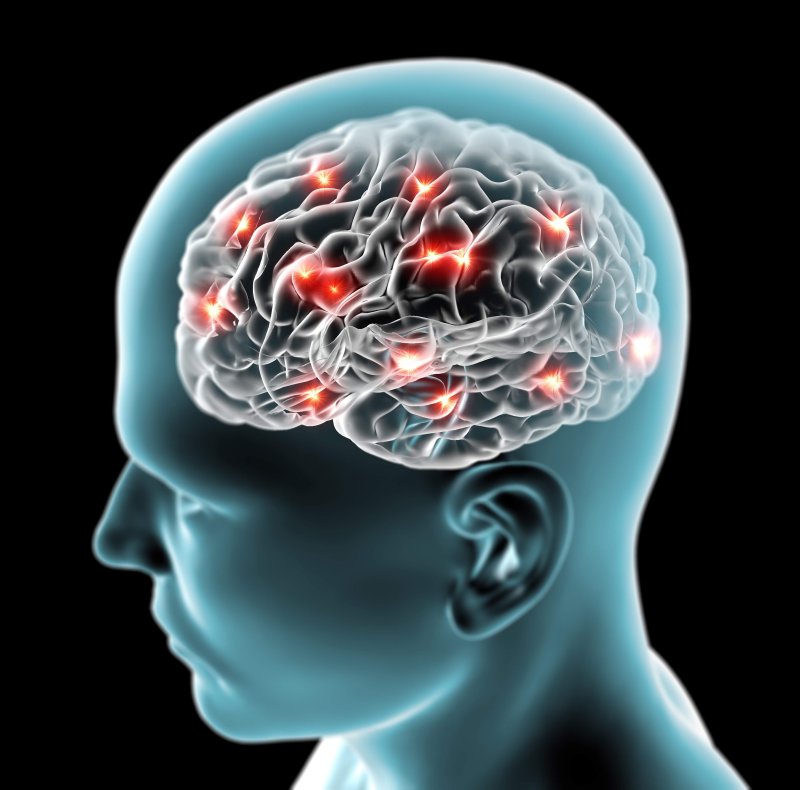
Scientists studying the brain have discovered that the organ operates on up to 11 different dimensions, creating multiverse-like structures that are “a world we had never imagined.”

By using an advanced mathematical system, researchers were able to uncover architectural structures that appears when the brain has to process information, before they disintegrate into nothing.

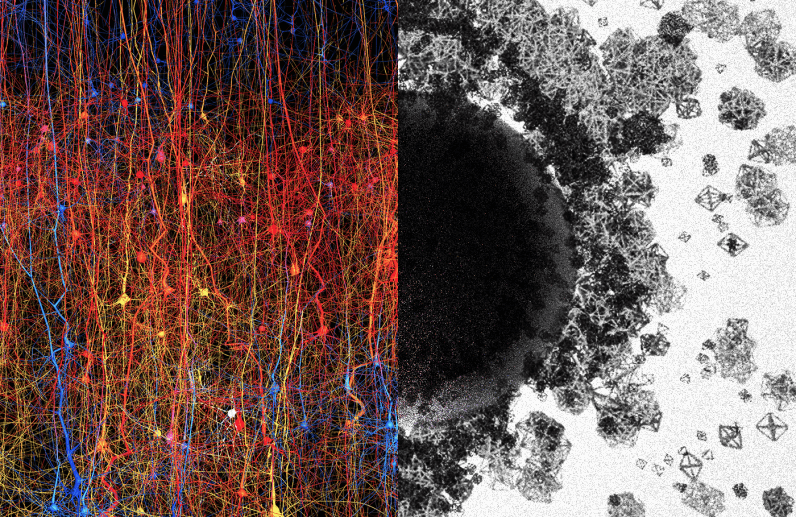
[The researchers] discovered that when they presented the virtual tissue with stimulus, groups of neurons form a clique. Each neuron connects to every other neuron in a very specific way to produce a precise geometric object. The more neurons in a clique, the higher the dimensions.

The structures assembled formed enclosures for high-dimensional holes that the team have dubbed cavities. Once the brain has processed the information, the clique and cavity disappears.


brain multiverse
The left shows a digital copy of a part of the neocortex, the most evolved part of the brain. On the right is a representation of the structures with different dimensions. The black hole in the middle symbolizes a complex of multi-dimensional spaces, or cavities.

Henry Markram, director of Blue Brain Project, said the findings could help explain why the brain is so hard to understand. “The mathematics usually applied to study networks cannot detect the high-dimensional structures and spaces that we now see clearly,” he said.

[Read the full study here]

The GLP aggregated and excerpted this blog/article to reflect the diversity of news, opinion, and analysis. Read full, original post: Architecture: Scientists Discover 11 Dimensional Structures That Could Help Us Understand How the Brain Works


{{ reviewsTotal }}{{ options.labels.singularReviewCountLabel }}
{{ reviewsTotal }}{{ options.labels.pluralReviewCountLabel }}
{{ options.labels.newReviewButton }}
{{ userData.canReview.message }}

Related Articles

Infographic: Global regulatory and health research agencies on whether glyphosate causes cancer

Infographic: Global regulatory and health research agencies on whether glyphosate causes cancer

Does glyphosate—the world's most heavily-used herbicide—pose serious harm to humans? Is it carcinogenic? Those issues are of both legal and ...

Most Popular

ChatGPT-Image-Mar-10-2026-01_39_01-PM
Viewpoint—“Miracle molecule” debunked: Why acemannan supplements don’t work
ChatGPT-Image-Jul-7-2026-12_01_35-PM
Viewpoint: 21 worthless wellness trends inspired by RFK, Jr.’s ill-informed MAHA followers that can harm or even kill you.
ChatGPT-Image-Jun-25-2026-12_23_17-PM
No, Bill Gates did not secretly engineer ticks to promote veganism
Screenshot-2026-07-06-at-12.30.23-PM
2,300 endangered species: Controversial de-extinction company Colossal Biosciences joins U.S. effort to preserve their DNA
ChatGPT-Image-Jul-9-2026-10_36_24-AM
Deeply-flawed ivermectin study revives scientifically unsupported miracle cancer drug myth
ChatGPT-Image-Jul-1-2026-03_33_49-PM
‘Alternative’ cancer treatments that could kill you
Screenshot 2026-07-08 at 10.13
What happens when a pro-life congresswoman needs an abortion?
Screenshot-2026-07-09-at-9.48.49-AM
Do cold plunges and contrast therapy work?
ChatGPT-Image-Jul-8-2026-04_10_51-PM-1
Kennedy-founded Children's Health Defense doubles down on support for Idaho mother charged by a grand jury with murdering her twins last year after claiming vaccines killed them
ChatGPT-Image-Jun-30-2026-10_27_31-AM
Viewpoint: Europe clears the way for gene-edited crops — but fear-driven restrictions still slow their full potential

Sorry. No data so far.

glp menu logo outlined

Get news on human & agricultural genetics and biotechnology delivered to your inbox.