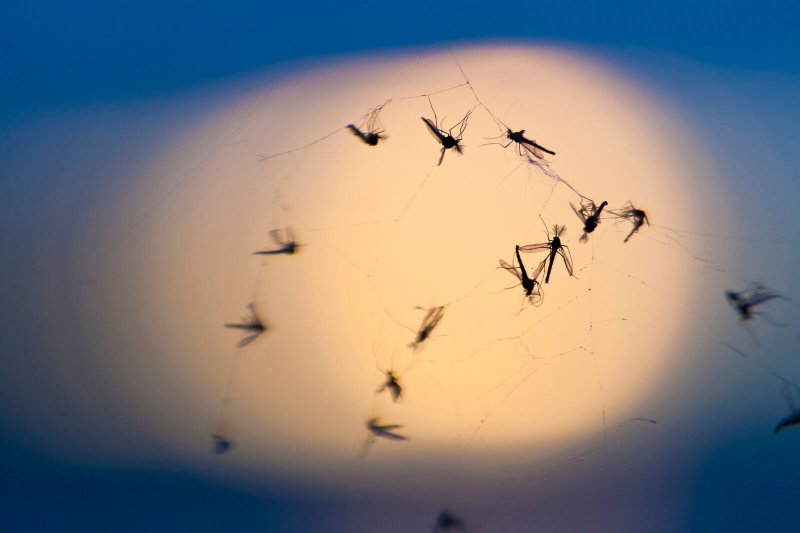
‘Mosquito factory’ churns out sterile males produced without genetic modification to fight Zika

dims
Johner Bildbyra AB

100,000 live mosquitoes, all male, all incapable of producing offspring [are released daily in Fresno, California].

Though counterintuitive, the goal of this daily mosquito dump is actually to get fewer mosquitoes. Specifically, fewer female Aedes aegypti, the ones that bite and lay eggs and transmit diseases, including the United States’ newest scourge: Zika.

Every mosquito [released] was bred to carry a bizarre bacterium called Wolbachia. When a Wolbachia-carrying male mates with a wild, local female, none of their offspring will be able to hatch. If the sterile males can outcompete the wild ones long enough, eventually, no more mosquitoes.

This year’s trial will put 25 times more mosquitoes on the streets of Fresno than last year. That level of coverage could actually kill mosquitoes in a wide enough range to protect people as they move around between their homes and work and school.

While Fresno doesn’t currently have any of the diseases that Aedes aegypticarries around with it — Zika, dengue, yellow fever, chikunguya — all it takes is one infected visitor for the disease to establish itself in the local mosquito population.

The ultimate goal is to be able to make more mosquito factories, ready to ship all over the world whenever a new mosquito-borne disease strikes. They would provide a steady supply of sterile males to local public health officials fighting the next big outbreak.

The GLP aggregated and excerpted this blog/article to reflect the diversity of news, opinion, and analysis. Read full, original post: Verily’s Mosquito Factory Accelerates the Fight Against Zika


{{ reviewsTotal }}{{ options.labels.singularReviewCountLabel }}
{{ reviewsTotal }}{{ options.labels.pluralReviewCountLabel }}
{{ options.labels.newReviewButton }}
{{ userData.canReview.message }}

Related Articles

Infographic: Global regulatory and health research agencies on whether glyphosate causes cancer

Infographic: Global regulatory and health research agencies on whether glyphosate causes cancer

Does glyphosate—the world's most heavily-used herbicide—pose serious harm to humans? Is it carcinogenic? Those issues are of both legal and ...

Most Popular

ChatGPT-Image-Mar-10-2026-01_39_01-PM
Viewpoint—“Miracle molecule” debunked: Why acemannan supplements don’t work
ChatGPT-Image-Jun-25-2026-12_23_17-PM
No, Bill Gates did not secretly engineer ticks to promote veganism
ChatGPT-Image-Jun-19-2026-04_11_20-PM
Daubert for Dummies—Scientific Reliability in U.S. Courts: Daubert, Rule 702, and Made-for-Litigation Evidence
ChatGPT-Image-Jun-17-2026-10_52_43-AM
Anguished parents, doctors in tears: Utah’s long measles outbreak takes a toll
Screenshot-2026-06-22-at-9.04.46-PM
Kennedy's nutrition prescription for medical schools: Real problem, bad cure
Screenshot-2026-06-15-at-1.55.27-PM
America's trust in Trump-Kennedy's CDC health recommendations is plunging
ChatGPT-Image-Jun-15-2026-11_51_00-AM-4
Viewpoint: As the International Association for Research on Cancer loses influence, activists and trial lawyers scramble to protect a lucrative playbook
Screenshot-2026-06-05-at-2.12.30-PM
Some plants can poison you. So how did humans figure out what is safe to eat?

Sorry. No data so far.

glp menu logo outlined

Get news on human & agricultural genetics and biotechnology delivered to your inbox.