Cancer early warning system: Blood test looks for bits of DNA shed from tumors

blood

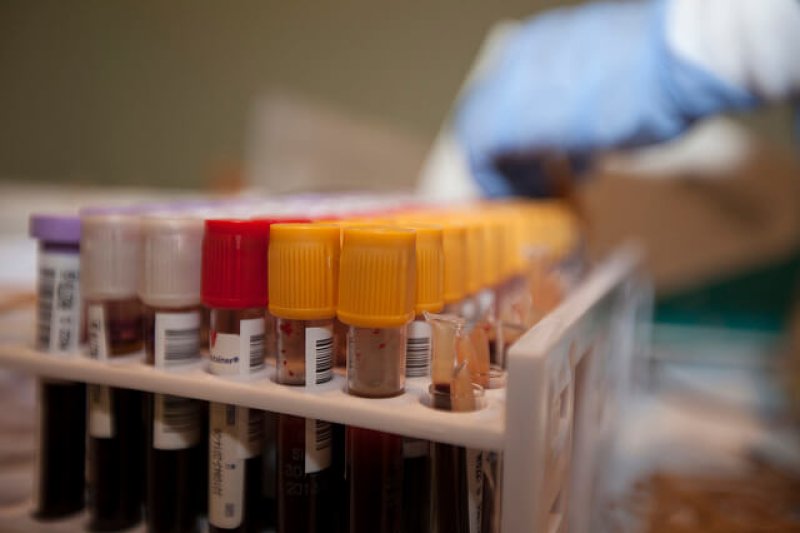
In a bid to detect cancers early and in a noninvasive way, scientists at the Johns Hopkins Kimmel Cancer Center report they have developed a test that spots tiny amounts of cancer-specific DNA in blood and have used it to accurately identify more than half of 138 people with relatively early-stage colorectal, breast, lung and ovarian cancers. The test, the scientists say, is novel in that it can distinguish between DNA shed from tumors and other altered DNA that can be mistaken for cancer biomarkers.

The sequencing method is based on deep sequencing, which reads each chemical code in DNA 30,000 times. “We’re trying to find the needle in the haystack, so when we do find a DNA alteration, we want to make sure it is what we think it is,” says [Victor Velculescu, professor of oncology at the Johns Hopkins Kimmel Cancer Center].

Such deep sequencing, covering more than 80,000 base pairs of DNA, has the potential to be very costly, but Velculescu says sequencing technology is becoming cheaper, and his research team may eventually be able to reduce the number of DNA locations they screen while preserving the test’s accuracy.

The GLP aggregated and excerpted this blog/article to reflect the diversity of news, opinion, and analysis. Read full, original post: Scientists develop blood test that spots tumor-derived DNA in people with early stage cancers

{{ reviewsTotal }}{{ options.labels.singularReviewCountLabel }}
{{ reviewsTotal }}{{ options.labels.pluralReviewCountLabel }}
{{ options.labels.newReviewButton }}
{{ userData.canReview.message }}

Related Articles

Infographic: Global regulatory and health research agencies on whether glyphosate causes cancer

Infographic: Global regulatory and health research agencies on whether glyphosate causes cancer

Does glyphosate—the world's most heavily-used herbicide—pose serious harm to humans? Is it carcinogenic? Those issues are of both legal and ...

Most Popular

Picture1
The Orange Bowl without oranges: Can CRISPR save Florida citrus?
ChatGPT-Image-May-1-2026-11_42_59-AM-2
Viewpoint: NAD is the wellness grifters latest evidence-lite longevity fad. At least the mice are impressed.
Screenshot-2026-04-22-at-12.21.32-PM
Viewpoint: Why the retracted Monsanto glyphosate study doesn’t change the science—the world’s most popular herbicide is safe 
vax-misinformation-main
Facts & Fallacies Podcast: Limit free speech to blunt social media misinfo?
global warming
‘Implausible’: Top climate scientists reject worst-case scenario—soaring temperatures and fast-rising sea levels
ChatGPT Image May 26, 2026, 12_06_53 PM
Fake Ebola cure promoters already cashing in as disinformation videos flood social media
Picture1
The FDA couldn’t find a vaccine safety crisis, so it buried its own research
ChatGPT Image May 24, 2026, 03_16_36 PM
Here come the biohackers' Enhanced Games—The Olympics for athletes doping up on steroids, hormones and peptides. What’s wrong with that?
Screenshot 2026-05-22 at 11.31
‘Realistic and durable’: EPA proposes loosening restrictions on some PFAS ‘forever chemicals.’
Screenshot-2026-05-21-at-12.15.17-PM
UK gene-editing milestone: Livestock barley that increases ruminant value and reduces methane emissions is first-approved CRISPR crop
glp menu logo outlined

Get news on human & agricultural genetics and biotechnology delivered to your inbox.