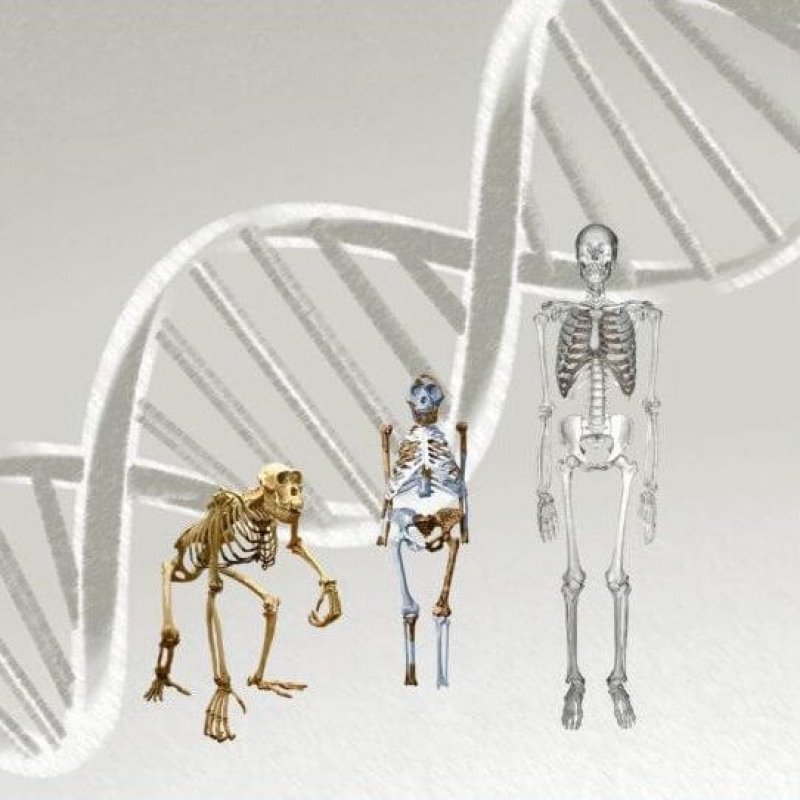
Findings and techniques of anthropologists and geneticists starting to converge

big thumb d aaaa c b b d a f e

If anthropology and genetics seem distant from each other on the scientific spectrum, Connie Mulligan—a professor of anthropology at the University of Florida as well as associate director of the university’s Genetics Institute— enthusiastically makes a case for bridging the gap. “It’s easier not to have to engage with another field’s terminology and culture of collection, but I think the coolest answers come from this type of approach,” she says.

The efforts of archaeologists as well as anthropologists and geneticists have yielded new insights on the prehistory of a dreaded disease. Tuberculosis is commonly thought to have come to the Americas with colonial expeditions from Europe, and the similarity of the Mycobacterium tuberculosisgenome on the two continents today seems to confirm this idea. Thus, anthropologist Anne Stone of Arizona State University was curious to study the genome of tuberculosis lesions that had been found on skeletons at a Peruvian site dating back several centuries before European contact. It was only by sequencing DNA from these lesions that she could identify the source of this ancient American tuberculosis, which turned out to be marine mammals—seals, in fact.
This discovery holds intriguing implications for several fields.

The GLP aggregated and excerpted this blog/article to reflect the diversity of news, opinion, and analysis. Read full, original post: Where Anthropology and Genetics Go Together

{{ reviewsTotal }}{{ options.labels.singularReviewCountLabel }}
{{ reviewsTotal }}{{ options.labels.pluralReviewCountLabel }}
{{ options.labels.newReviewButton }}
{{ userData.canReview.message }}

Related Articles

Infographic: Global regulatory and health research agencies on whether glyphosate causes cancer

Infographic: Global regulatory and health research agencies on whether glyphosate causes cancer

Does glyphosate—the world's most heavily-used herbicide—pose serious harm to humans? Is it carcinogenic? Those issues are of both legal and ...

Most Popular

Screenshot-PM-24
Viewpoint: The herbicide glyphosate isn’t perfect. Banning it would be far worse.
79d03212-2508-45d0-b427-8e9743ff6432
Viewpoint: The Casey Means hustle—Wellness woo opportunism dressed up as medical wisdom
d-b
Blocked arteries, kidney stones, nausea, constipation, fatigue: Long list of health problems caused by too much vitamin D 
ChatGPT-Image-Mar-10-2026-01_39_01-PM
Viewpoint—“Miracle molecule” debunked: Why acemannan supplements don’t work
ChatGPT-Image-Apr-30-2026-05_00_48-PM
Wellness grifter physician turned wellness influencer out as surgeon general nominee
Screenshot-2026-04-30-at-11.33.46-AM
Anti-seed-oil to anti-vax pipeline: MAHA movement spreads to teen influencers
lab grown meat research kelly schultz lehighuniversity main
Profiles of the 10 top global cultured meat companies
Screenshot-2026-04-28-at-1.21.37-PM
How America’s medical system encourages psychiatric overdiagnosis
ChatGPT-Image-Mar-27-2026-11_27_05-AM
The myths of “process”: What science says about the “dangers’ of synthetic products and ultra-processed foods
ChatGPT-Image-Apr-30-2026-12_21_05-PM-2
The tech billionaires behind the immortality movement

Sorry. No data so far.

glp menu logo outlined

Get news on human & agricultural genetics and biotechnology delivered to your inbox.