Dozens of ‘mysterious’ chemicals lurking in our ‘all natural’ fruits and vegetables?

chemicals in food
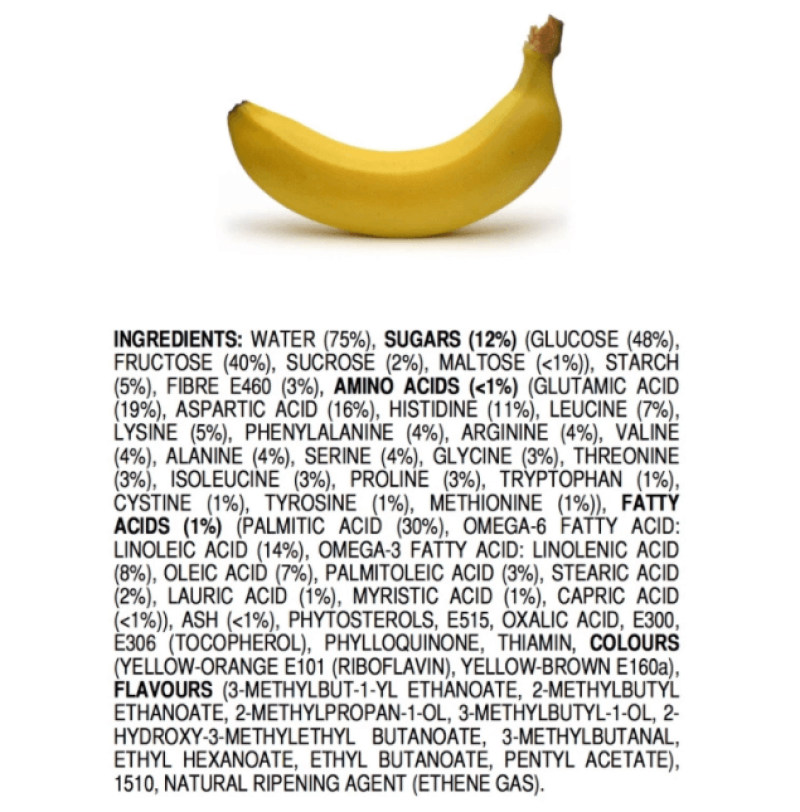
An ingredients list for bananas, which demonstrate how foods can contain ‘scary-sounding’ chemical names that are actually completely safe and natural

Rutin, glycine, and beta carophyllene: if you saw these words on an ingredients list, you’d probably presume the food was artificial and very unhealthy.

But these scary-sounding chemicals are in fact found in all-natural fresh fruit.

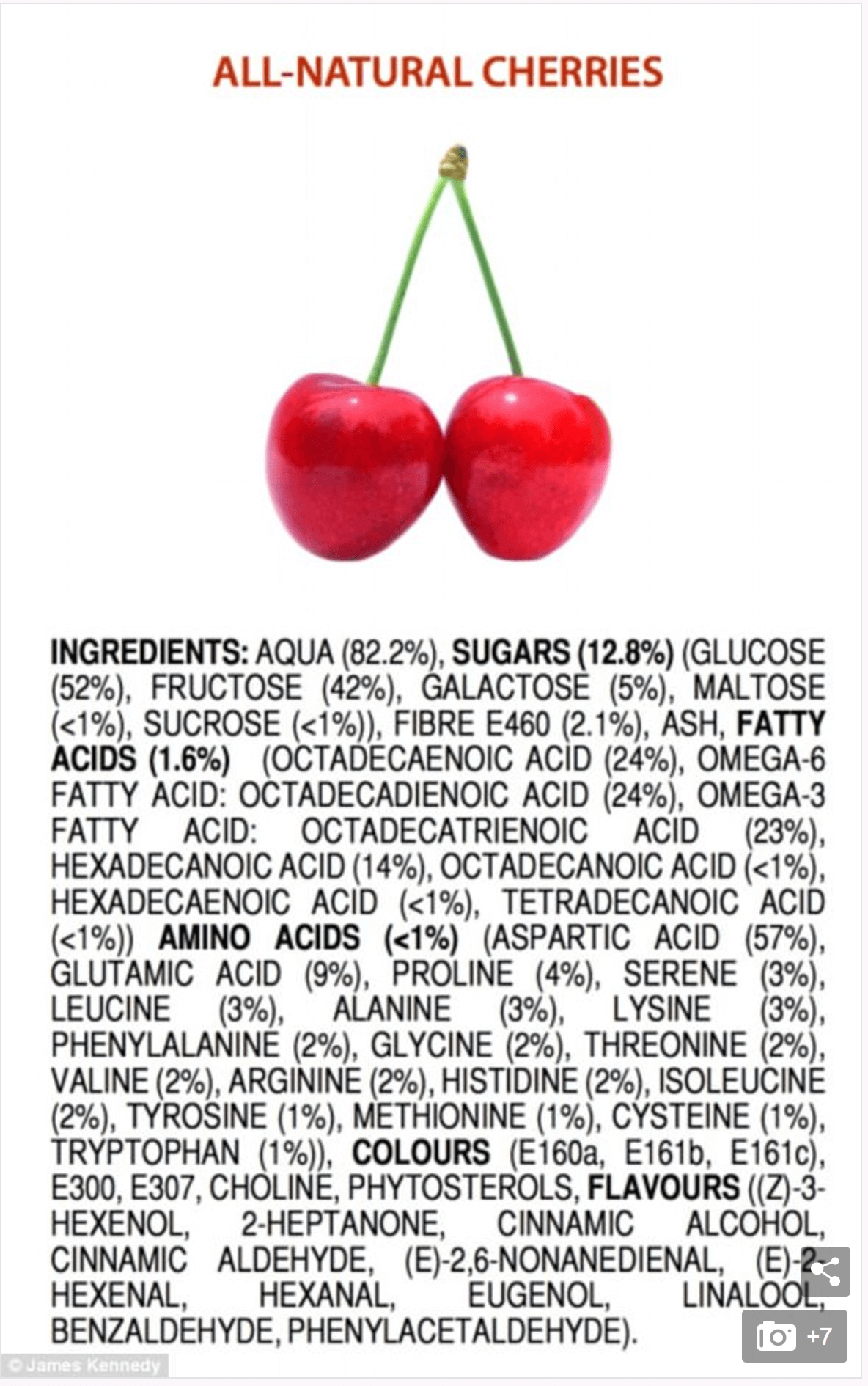
James Kennedy, a high school teacher from Haileybury in Australia, has created ingredients lists for ‘raw’ foods that have not been processed in any way.

And they list as many as 50 different chemicals, and sometimes even more, with some very off-putting scientific names to prove that even the most natural of foods contain acids, E numbers and preservatives.

[Here is an example of 1 of 7 charts of the natural chemicals in common fruits Kennedy assembled.]Screen Shot at PM
Kennedy makes the point that even so-called natural foods such as peaches and bananas are not really natural, as they’ve been genetically engineered by humans over thousands of years.

He states that watermelons used to be hard, bitter fruits the size of walnuts, while peaches used to be the size of cherries with very large pips.

So, should we be wary of all food then?

Quite the opposite, of course, according to Kennedy.

Instead of fearing all chemicals, he wants to educate people so that they know which compounds have risks associated with them, and which are safe to eat.

The GLP aggregated and excerpted this article to reflect the diversity of news, opinion and analysis. Read full, original post: The 50 chemicals lurking in your fresh fruit


{{ reviewsTotal }}{{ options.labels.singularReviewCountLabel }}
{{ reviewsTotal }}{{ options.labels.pluralReviewCountLabel }}
{{ options.labels.newReviewButton }}
{{ userData.canReview.message }}

Related Articles

Infographic: Global regulatory and health research agencies on whether glyphosate causes cancer

Infographic: Global regulatory and health research agencies on whether glyphosate causes cancer

Does glyphosate—the world's most heavily-used herbicide—pose serious harm to humans? Is it carcinogenic? Those issues are of both legal and ...

Most Popular

Picture1
The FDA couldn’t find a vaccine safety crisis, so it buried its own research
Screenshot-2026-04-22-at-12.21.32-PM
Viewpoint: Why the retracted Monsanto glyphosate study doesn’t change the science—the world’s most popular herbicide is safe 
ChatGPT-Image-May-7-2026-12_32_36-PM
Viewpoint: The state of U.S. vaccine policy? Dismal nationally, but some states are stepping up.
placebo
Viewpoint — Alternative medicine and the placebo effect: Selling a reassuring illusion of health
_20250221_nib_rfk_trump
Viewpoint: 'Crisis of public trust': Autism support community shocked RFK continues to peddle false claims about the danger of vaccines
ChatGPT-Image-May-18-2026-01_45_05-PM-2
Newest hantavirus conspiracy: Online disinformation turns outbreak into latest ivermectin grift
ChatGPT-Image-May-18-2026-12_06_18-PM-2
Defying death: The immortality movement goes mainstream
Screenshot-2026-04-13-at-1.39.26-PM
Viewpoint: ‘Safer for children?’ Stonyfield yogurt under fire for deceptive organic marketing
Screenshot-2026-04-22-at-10.46.29-AM
Viewpoint: How to counter science disinformation? Science journalist offers 12 practical tips
Defense_Secretary_Ash_Carter_tours_the_Microsoft_Cybercrime_Center_in_Seattle_March_3_2016
How criminals are using AI to target social media users and steal their money and confidential data
glp menu logo outlined

Get news on human & agricultural genetics and biotechnology delivered to your inbox.