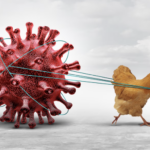
Viruses are responsible for some of the most dangerous and deadly diseases including influenza, ebola, rabies and smallpox. Despite their potential to kill, these potent pathogens are in fact considered to be non-living….
… How can something as nasty as a virus spread so fast, reproduce and infect other living things but not be considered a living creature? The answer is complex and has been a subject of debate since the moment they were first named in 1898.
…
[A] virus isn’t considered living because it doesn’t need to consume energy to survive, nor is it able to regulate its own temperature. Unlike living organisms that meet their energy needs by metabolic processes that supply energy-rich units of adenosine triphosphate (ATP), the energy currency of life, viruses can survive on nothing.…




…
These findings suggest that viruses may have evolved alongside the very first ‘living’ cells.
The GLP aggregated and excerpted this blog/article to reflect the diversity of news, opinion, and analysis. Read full, original post: Why are viruses considered to be non-living?