Rodent-like creature may be our earliest ancestor

The earliest known ancestors of the mammal lineage that includes everything from humans, to blue whales, to pygmy shrews may have been nocturnal, rodent-like creatures that evolved much earlier than previously thought.

The identity of these ancestors comes from their teeth, which were discovered at cliffs on the coast of England. The discovery of the little creatures, which lived about 145 million years ago, may push the evolution of this mammal group back dozens of millions of years, the researchers said.

“Our fossils are definitely of the oldest eutherians known yet in the fossil record,” [researcher Steven] Sweetman said. “They lie at the base of the branch of the tree that led to placentals and, therefore, us.”

Sweetman said the smaller Durlstotherium was likely about the size of a mouse, while the larger Durlstodon was probably about the size of a juvenile rat.
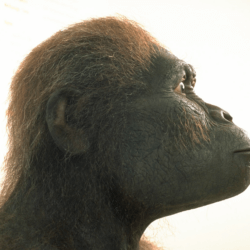
These newly discovered fossils are at least 20 million years older than those previously thought to be the earliest known eutherian fossils, Sweetman said. Moreover, the level of evolutionary differences seen in these newfound teeth compared with those of other ancient mammals “implies that eutherians had a very early beginning, and that diversity in eutherians arose much earlier than previously expected,” Sweetman said.

[Editor’s note: The original study can be found here]

The GLP aggregated and excerpted this blog/article to reflect the diversity of news, opinion, and analysis. Read full, original post: These Rodent-Like Creatures Are the Earliest Known Ancestor of Humans, Whales, and Shrews

{{ reviewsTotal }}{{ options.labels.singularReviewCountLabel }}
{{ reviewsTotal }}{{ options.labels.pluralReviewCountLabel }}
{{ options.labels.newReviewButton }}
{{ userData.canReview.message }}

Related Articles

Infographic: Global regulatory and health research agencies on whether glyphosate causes cancer

Infographic: Global regulatory and health research agencies on whether glyphosate causes cancer

Does glyphosate—the world's most heavily-used herbicide—pose serious harm to humans? Is it carcinogenic? Those issues are of both legal and ...

Most Popular

Screen Shot at AM
Facts & Fallacies Podcast: Right-wing politics bad for your health? Separating speculation from science
ChatGPT-Image-Jun-15-2026-11_00_13-AM-2
Glucosamine alert: Alzheimer’s progresses faster among those taking the popular supplement
ChatGPT-Image-Jun-9-2026-01_11_37-PM
Turmeric supplements: More risks than benefits
ChatGPT-Image-Jun-3-2026-04_29_13-PM
Viewpoint: While unvaccinated children are dying overseas, Congress challenges Trump and Kennedy’s block on aid
ChatGPT-Image-Jun-15-2026-12_13_41-PM
Viewpoint: Behind the effort to re-purpose the tobacco attack strategy to fight ultra-processed foods
Screenshot-2026-06-12-at-2.10.55-PM
Physician warns online statin myths delay care and raise heart risk
ChatGPT-Image-Mar-10-2026-01_39_01-PM
Viewpoint—“Miracle molecule” debunked: Why acemannan supplements don’t work
Screenshot-2026-06-14-at-9.14.26-AM
‘Humanitarian catastrophe’: Trump’s USAID shutdown could help drive nearly 23 million deaths — including 5.4 million children — by 2030, Lancet study warns
ChatGPT-Image-Jun-14-2026-09_41_44-AM-2
Viewpoint—‘The gleeful efficiency of an arsonist’: Administration’s health and science research cuts are ‘sabotaging’ America’s future
ChatGPT-Image-Jun-11-2026-01_15_03-PM
Selective Pressure, Selective Silence
ChatGPT Image Jun 3, 2026, 03_54_37 PM
Viewpoint: “Turn on, tune in, drop out”—Kennedy embraces the Timothy Leary psychedelic revolution
Screenshot-2026-06-05-at-2.12.30-PM
Some plants can poison you. So how did humans figure out what is safe to eat?
glp menu logo outlined

Get news on human & agricultural genetics and biotechnology delivered to your inbox.